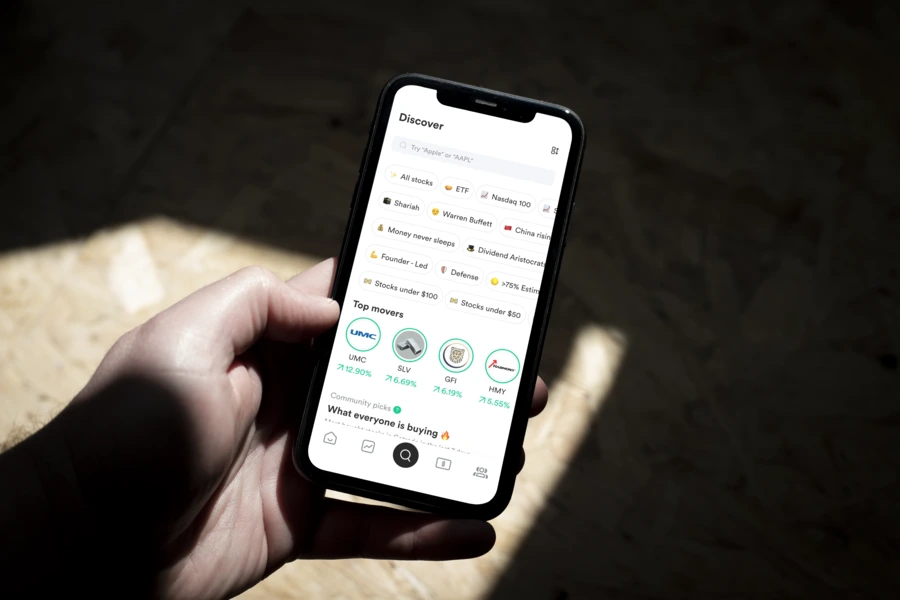
Many people delay investing because they believe it requires a large amount of money. In reality, investing with small money is more accessible today than ever. If you want to start investing with little money, the key is structure, consistency, and realistic expectations.
The size of your capital matters less than how you manage it.
Starting small does not mean thinking small. It means building discipline early.
How Much Money Do You Really Need to Start
There is no universal minimum to begin investing.
What matters more is:
-
Access to diversified assets
-
Low transaction costs
-
Clear risk management rules
-
A long-term mindset
Even modest amounts can compound over time.
For example:
-
Investing $100 per month consistently
-
Avoiding unnecessary withdrawals
The most important step is participation.
Waiting to accumulate a “perfect” starting amount often delays valuable experience and learning.
If you are ready to begin gradually, you can use Gotrade App to access global markets without needing large upfront capital.
Fractional Shares Explained
One of the biggest barriers to small investors used to be high share prices.
Some global companies trade at hundreds or even thousands of dollars per share. Fractional shares solve this problem.
Fractional shares allow investors to buy a portion of a stock rather than a full share.
For example:
-
If a stock costs $500
-
You can invest $50
-
You own 0.1 share
This makes diversification possible even with limited capital.
Fractional investing enables:
-
Exposure to large companies
-
Flexible allocation
-
Efficient use of available funds
Instead of concentrating your entire account in one low-priced stock, you can spread smaller amounts across multiple assets.
Diversifying With Limited Funds
Diversification reduces risk by spreading exposure across different assets. With small capital, diversification should be simple and focused.
Practical approaches include:
-
Broad market ETFs
-
Exposure to different sectors
-
Mixing growth and defensive assets
-
Avoiding overconcentration in a single stock
Even with limited funds, diversification is possible through fractional shares or diversified ETFs. Avoid the temptation to chase high-risk trades in hopes of accelerating growth.
Consistency often outperforms speculation.
Managing Risk With Small Accounts
Small accounts require even stronger risk control.
Common mistakes include:
-
Taking oversized positions
-
Overtrading to “grow faster”
-
Using leverage too early
-
Ignoring transaction costs
With limited capital:
-
Risk a small percentage per trade
-
Avoid concentrating more than a manageable portion in one asset
-
Focus on steady growth rather than rapid gains
Because small accounts can feel slow to grow, emotional discipline becomes crucial.
Patience protects capital.
Long-Term Growth Strategy for Small Capital
The advantage of starting small is time.
Compounding works best when:
-
Contributions are consistent
-
Returns are reinvested
-
Risk is managed carefully
Consider this example:
-
Invest $200 monthly
-
Earn an average 8 percent annual return
-
Continue for 10 years
Even modest contributions can grow significantly through compounding.
Long-term growth requires:
-
Regular contributions
-
Strategic diversification
-
Avoiding panic selling during volatility
-
Maintaining perspective during market cycles
Investing with small money is less about quick wins and more about building habits.
If you are ready to take the first step begin investing using Gotrade App with structured allocations aligned to your financial goals.
Small capital today can become meaningful capital tomorrow.
Conclusion
You do not need a large sum to begin investing. To start investing with little money, focus on access, discipline, diversification, and time in the market.
Fractional shares and diversified ETFs make investing accessible even with limited funds. Risk management and consistency are more important than starting size.
The key is not how much you begin with, but how consistently you continue.
FAQ
Can I start investing with small money?
Yes. With fractional shares and ETFs, you can begin investing even with modest capital.
How do I diversify with limited funds?
Use broad market ETFs or fractional shares to spread exposure across multiple companies.
Is investing with small capital risky?
All investing carries risk, but proper diversification and disciplined position sizing help manage it.
References
-
Smartmoney, Starting to Invest, 2026.
-
Charles Stanley, The Power of Compounding for Future Wealth, 2026.