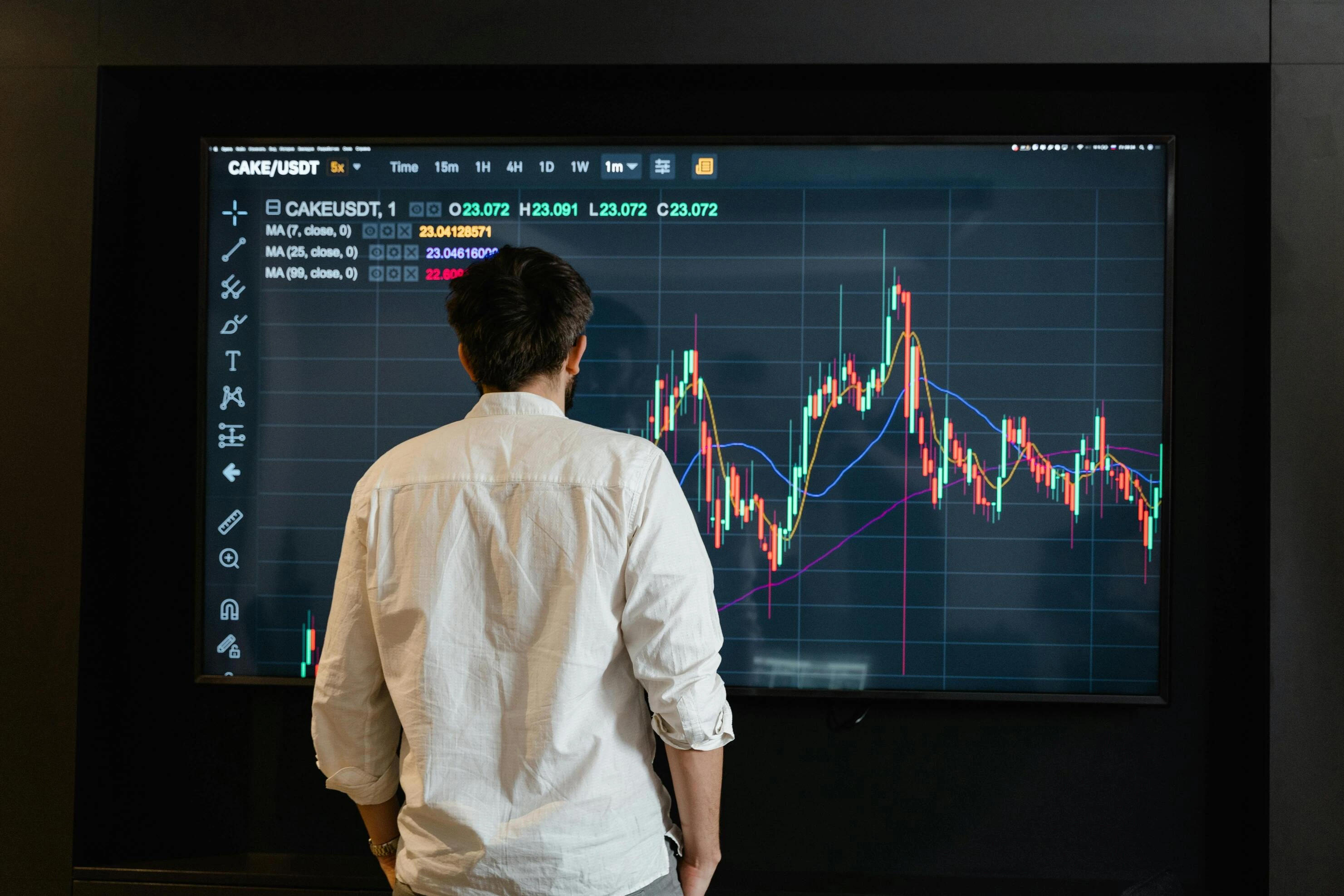
Extreme volatility changes everything. Price moves faster, reversals happen more frequently, and even strong setups can fail without warning.
If you are asking high volatility market what to do, the answer is not to increase activity, but to increase control. A strong approach to trading volatile market conditions is built on risk adjustment, selectivity, and discipline.
What to Do When the Market Is Extremely Volatile
1. Reduce position size
Volatility directly increases the risk per trade. When price swings expand, the same position size exposes you to larger potential losses. Many traders overlook this and end up taking oversized risks without realizing it.
Reducing position size allows you to:
- keep risk per trade consistent
- survive unexpected price swings
- avoid emotional decision-making
For example, if your normal setup risks 1% per trade, volatile conditions may require reducing size to risk 0.5% or less. This adjustment alone can significantly improve survival during unstable markets.
2. Widen stop loss based on structure
In volatile markets, tight stops are often ineffective because they sit within normal price noise.
However, widening stops does not mean placing them randomly.
Stops should still be based on:
- key support and resistance levels
- recent swing highs and lows
- market structure
For example:
- placing stops below a major support level instead of a minor fluctuation
- using volatility-based measures like ATR to estimate realistic ranges
The key rule is:
- wider stop → smaller position size
This keeps your overall risk controlled while allowing the trade enough room to develop.
3. Focus only on high-quality setups
Volatility creates more movement, but not more clarity. In fact, many setups become less reliable because:
- price overshoots levels
- false breakouts increase
- signals become noisier
This is why selectivity becomes critical. High-quality setups in volatile markets usually have:
- clear structure
- strong confirmation
- alignment with broader market direction
If a setup feels unclear or forced, it is usually not worth taking. In volatile conditions, fewer trades often lead to better outcomes.
4. Avoid overtrading
Volatility can create the illusion of constant opportunity. Fast price movements trigger:
- fear of missing out
- emotional reactions
- impulsive entries
This often leads to overtrading. Overtrading in volatile markets results in:
- increased transaction costs
- inconsistent execution
- rapid drawdowns
To avoid this, traders should:
- limit the number of trades per day
- step away after consecutive losses
- avoid chasing large candles
Discipline matters more than activity.
5. Be selective with strategy type
Not all strategies work equally well in volatile environments. Volatility can take two forms:
- directional volatility where price moves strongly in one direction
- erratic volatility where price swings unpredictably
In directional volatility:
- breakout and momentum strategies tend to perform better
In erratic volatility:
- mean reversion or waiting strategies may be more effective
The mistake is using the same strategy regardless of market behavior. Adapting your strategy to the type of volatility improves decision-making.
6. Manage exposure and correlation
During volatile periods, correlations between assets often increase.
This means:
- multiple positions may move against you at the same time
- diversification may not provide as much protection
For example:
- holding several tech stocks may feel diversified
- but during volatility, they may all decline together
To manage this risk:
- reduce the number of open positions
- avoid stacking similar trades
- monitor total portfolio exposure
Managing correlation is just as important as managing individual trades.
7. Consider staying out when conditions are unclear
One of the most important decisions in trading is knowing when not to trade.
If the market feels:
- unpredictable
- highly erratic
- difficult to read
the best decision may be to stay out. Sitting on the sidelines helps:
- preserve capital
- maintain mental clarity
- avoid unnecessary losses
Not trading is not a missed opportunity. It is a strategic choice. The best traders understand that capital preservation during chaos creates opportunity later.
Why Volatility Requires a Different Mindset
Volatility is not just a technical challenge. It is also psychological. During extreme conditions, traders often:
- overestimate their ability to react quickly
- underestimate risk
- become more emotional after rapid gains or losses
This leads to inconsistent behavior. A strong mindset during volatility focuses on:
- slowing down decision-making
- sticking to predefined rules
- prioritizing survival over profit
In these conditions, protecting capital is more important than maximizing returns.
Conclusion
When markets become extremely volatile, the priority shifts from opportunity to control. By reducing position size, adjusting stops, focusing on high-quality setups, managing exposure, and knowing when to step aside, traders can navigate uncertainty more effectively.
A disciplined approach to trading volatile market conditions is not about doing more, but about doing less with greater precision.
FAQ
What should I do in a highly volatile market?
Reduce risk, focus on high-quality setups, and avoid unnecessary trades.
Is volatility good for trading?
It creates opportunities, but also increases risk. Adjustments are necessary to manage both.
Should I trade less during volatility?
Yes. Being more selective often leads to better results than increasing trade frequency.
References
- Investopedia, Trade Volatility Like a Pro: 5 Essential Options Strategies, 2026.
- CFA Institute, Introduction to Risk Management, 2026.