You probably think of Nvidia when someone says AI chips. That is fair, but it skips a step.
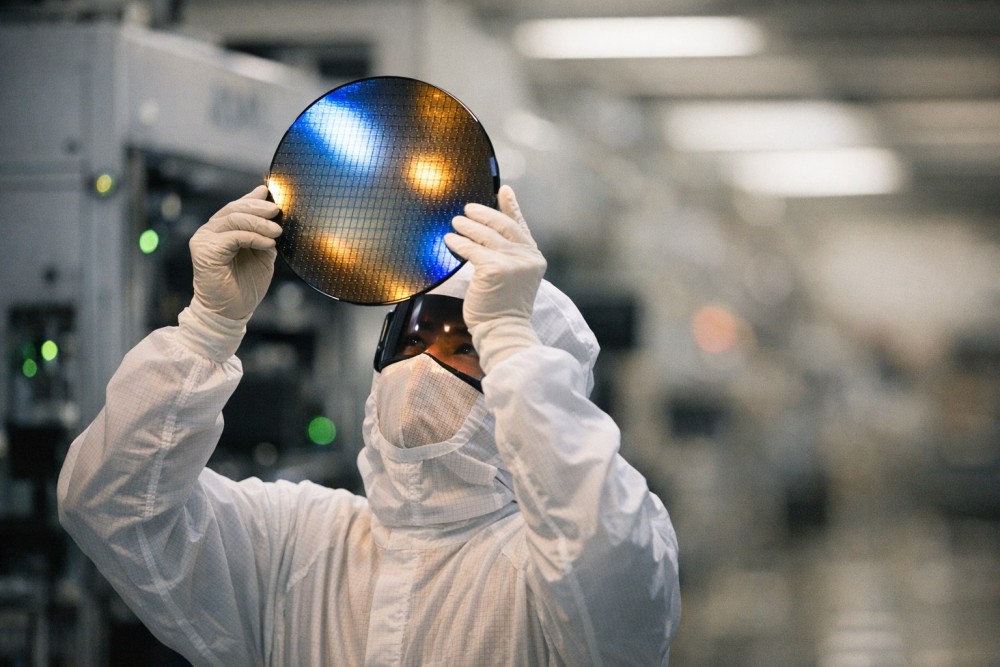
Every leading-edge AI accelerator has to be made somewhere. That somewhere is almost always TSMC.
This is the TSMC investment thesis in 2026. You will see the revenue mix, the AI angle, the valuation gap, and how to size the position.
Revenue Mix and Advanced Node Leadership
TSMC reported Q1 2026 revenue of NT$1.134 trillion, roughly $35 billion. Net income jumped 58% year over year.
The product mix tells the real story. Advanced nodes (7nm and below) made up 74% of wafer revenue.
Inside that, 3nm contributed 25% and 5nm contributed 36%. Two years ago 3nm was just 6% of the business.
According to CNBC's coverage of the print, AI chip demand was the explicit driver behind the record run.
This matters because advanced nodes carry the highest gross margin. Q1 gross margin printed at 66.2%.
Now the next leg. The taiwan semi 2nm node enters volume production in 2H 2026.
Apple has booked over half of the initial 2nm capacity for the A20 and M6 chips. AMD is using 2nm for the Zen 6 "Venice" EPYC server CPUs.
Nvidia and MediaTek have also taped out 2nm designs. Every wafer through 2026 is reportedly already sold.
If you want context on the equipment side, the EUV monopoly and semi capex picture explains why this lead is hard to copy.
AI Accelerator Revenue Trajectory
High performance computing (HPC) is now 61% of TSMC revenue, up from 55% the prior quarter.
HPC is the bucket that holds AI accelerators, server CPUs, and networking silicon. That is the part of the business compounding fastest.
The AI accelerator market itself is in a high growth phase. Multiple research firms forecast double digit annual growth through the end of the decade.
That growth flows directly into TSMC's order book. Hyperscaler capex is the underlying driver.
Amazon, Google, Microsoft, and Meta all design custom silicon. Every one of those chips taped out to TSMC.
You can buy Nvidia for the GPU. You can buy Broadcom for the custom ASIC angle.
You can also buy TSM and own the factory floor that makes both. That is the TSM stock ai winner framing.
It is the picks and shovels view. TSMC sells to every winner.
Forward Valuation vs Nvidia and Broadcom
Here is where the thesis gets interesting. Forward P/E ratios diverge sharply.
| Ticker | Forward P/E | Profile |
|---|---|---|
| TSM | ~23x | Foundry, picks and shovels |
| NVDA | ~25x | GPU + CUDA moat |
| AVGO | ~29x | Custom ASIC + networking |
TSMC trades at a meaningful discount to Broadcom and a small one to Nvidia. The gap reflects geopolitical risk, not weaker fundamentals.
You can add TSM to your portfolio with Gotrade. It pairs cleanly with chip designers you already hold, without paying a 30x multiple.
For ETF context, the semiconductor ETF buying guide shows why TSM is a top three weight in most chip baskets.
Geopolitical Risk Premium: How to Frame It
The discount has a name. It is the Taiwan risk premium.
Markets price in cross strait tension. They also price in the slow but real Arizona, Japan, and Germany fab build out.
Frame the risk as a probability tree, not a binary. Most years nothing happens, fundamentals print, and the discount slowly closes.
If the worst case scenario plays out, every chip equity drops, not just TSM. Your portfolio is already exposed.
The defensive move is a smaller TSM position, not zero TSM. A zero allocation also costs you the upside if the discount narrows.
TSMC's overseas fab strategy slowly chips away at the concentration risk. Arizona Fab 21 is producing 4nm chips at meaningful volume.
Japan's Kumamoto fab is running 28nm and 22nm output. Germany's Dresden fab is on track for 2027.
None of this fully replaces Taiwan, but it changes the curve over five years. Investors should weight that drift, not just the headline risk.
Position Sizing for Long-Term Investors
You should treat TSM as a core semiconductor holding, not a trade.
A reasonable approach is 3% to 5% of a diversified equity sleeve. Pair it with NVDA or AMD for the design side.
Average in over 6 to 12 months. The 2nm ramp creates volatility around quarterly prints.
Set a review trigger on the gross margin trend. A move below 60% would be the first real warning sign.
Also watch the HPC mix. If HPC slips below 55% for two quarters, the AI demand story is weakening.
Reinvest dividends if you hold the ADR. Compounding at this scale is the quiet edge.
Conclusion
TSMC sells the rails for the AI build out. The Q1 2026 print, the 2nm pipeline, and the valuation gap line up cleanly.
You can start a position in TSM on Gotrade with fractional shares and average in over time. That keeps risk sized to your conviction.
FAQ
Is TSM a buy in 2026?
At 23x forward earnings with HPC at 61% of revenue and 2nm ramping, the setup is constructive for patient capital.
How does TSM compare to NVDA for AI exposure?
NVDA is the design winner with higher growth, while TSM is the manufacturing layer with lower multiple and broader customer mix.
What is the biggest risk to the thesis?
Geopolitical disruption around Taiwan is the single largest risk and the main reason for the valuation discount.
When does the 2nm node start mass production?
Volume production begins in the second half of 2026, with Apple as the first major customer.