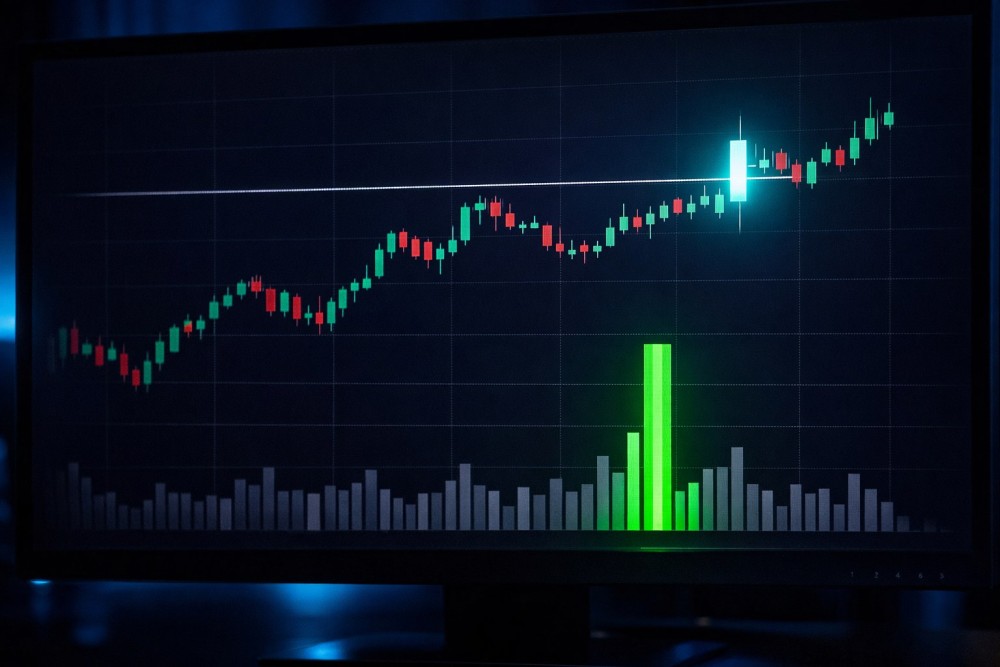
A choppy market describes a market environment where prices move erratically without a clear or sustained direction. Instead of smooth trends or well-defined ranges, prices fluctuate frequently, reversing direction over short periods. This creates an environment that feels noisy, unpredictable, and difficult to navigate.
Understanding choppy market meaning helps investors and traders recognize when price movement is driven more by short-term reactions than by sustained conviction. Choppy markets are not uncommon and often appear during periods of uncertainty or transition.
Choppy Market Definition
A choppy market is characterized by frequent price swings, rapid reversals, and lack of follow-through. Prices move up and down repeatedly without establishing a stable trend or range.
Key traits of a choppy market include:
-
Short-lived price movements
-
Frequent false breakouts and breakdowns
-
Low directional conviction among participants
Choppiness reflects indecision and competition between buyers and sellers rather than clear dominance by either side.
How Choppy Markets Form
Conflicting market signals
Choppy markets often arise when economic data, earnings, or policy signals send mixed messages. Investors struggle to agree on direction.
As a result, prices react quickly to new information, only to reverse as sentiment shifts again.
Low conviction and short-term positioning
When participants lack strong conviction, trades tend to be short-term. Positions are entered and exited quickly.
This rapid turnover increases noise and contributes to erratic price movement.
Transition between market regimes
Choppy markets frequently appear during transitions. They may occur as markets shift from bullish to bearish conditions, or vice versa.
During these transitions, old trends lose strength while new ones fail to establish themselves.
Characteristics of a Choppy Market
Frequent reversals
Choppy markets are defined by repeated direction changes. Moves that appear promising often reverse shortly after.
This behavior increases the likelihood of false signals and frustration.
Lack of trend structure
Unlike trending markets, choppy markets do not produce consistent higher highs or lower lows. Price structure remains disorganized.
This lack of structure makes traditional trend-following approaches less effective.
Elevated noise relative to progress
In choppy conditions, price movement is active but net progress is limited. Markets appear busy without meaningful advancement. This creates a sense of activity without clarity.
Choppy Market vs Sideways Market
Range clarity
Sideways markets typically move within defined support and resistance levels. Choppy markets often lack clear boundaries.
Prices in choppy markets may overlap repeatedly without respecting levels.
Volatility behavior
Choppy markets can be more volatile on a short-term basis. Price swings may be sharp but short-lived. Sideways markets tend to show more controlled and predictable oscillations.
Signal reliability
Signals in choppy markets are less reliable. Breakouts and reversals fail more frequently.
Sideways markets may still support range-based expectations.
Why Choppy Markets Are Challenging
Increased false signals
Choppy markets generate frequent false signals. Indicators may suggest direction, only to reverse quickly. This environment punishes impatience and overconfidence.
Emotional strain
Frequent reversals test emotional discipline. Losses may accumulate through small, repeated setbacks.
This can lead to frustration-driven decisions.
Strategy mismatch
Strategies designed for trending markets often struggle in choppy conditions. Following momentum becomes difficult.
Recognizing choppiness helps avoid forcing unsuitable approaches.
Choppy Markets in Trading Context
Short-term focus dominance
Choppy markets are often dominated by short-term traders. Long-term participants may step back until clarity improves. This imbalance increases sensitivity to minor news and order flow.
Liquidity and order flow dynamics
Liquidity may fluctuate rapidly in choppy markets. Sudden bursts of activity are followed by pauses.
These shifts contribute to unstable price behavior.
Transition signals
Extended choppiness can signal that a market is preparing for a larger move. Compression of conviction often precedes expansion. However, timing remains uncertain.
Implications for Long-Term Investors
Reduced significance of short-term noise
For long-term investors, choppy markets are largely noise. Short-term reversals may not alter long-term fundamentals. Maintaining perspective helps avoid unnecessary action.
Patience and discipline
Choppy markets reward patience. Waiting for clearer conditions can be more effective than constant adjustment. This approach helps preserve capital and focus.
Portfolio awareness
Choppy conditions may reveal portfolio sensitivity to volatility. Observing reactions can inform risk assessment. However, drastic changes are often unnecessary.
Choppy Markets Across Asset Classes
Equities and indices
Stock indices frequently become choppy around major macro events or earnings seasons. Conflicting signals drive erratic movement.
Individual stocks may behave differently based on company-specific factors.
Currencies and commodities
Currency and commodity markets often experience choppy phases during policy uncertainty or balanced supply-demand conditions. These phases can persist until clarity emerges.
Fixed income markets
Bond markets can also become choppy during periods of shifting interest rate expectations.
Price movement reflects uncertainty rather than trend.
Conclusion
A choppy market is defined by erratic price movement, frequent reversals, and lack of clear direction. Understanding choppy market meaning helps investors and traders recognize when markets are driven by uncertainty rather than conviction.
While choppy markets can be challenging, they are a natural part of market behavior, especially during transitions. Observing how markets behave during these phases can improve awareness of risk and strategy suitability.
Platforms that allow investors to monitor price movement and volatility, such as the Gotrade app, can help users better understand and adapt to choppy market conditions.
FAQ
What is a choppy market?
A choppy market is one with frequent price swings and no clear direction.
Is a choppy market the same as a sideways market?
No. Choppy markets are more erratic and less structured than sideways markets.
Why are choppy markets difficult to trade?
They generate false signals and frequent reversals.
Do choppy markets last long?
They can last from days to months, depending on uncertainty levels.
Reference
- TradingSim, Choppy Markets, 2026.
- CFA Institute, Market Volatility and Structure, 2026.