

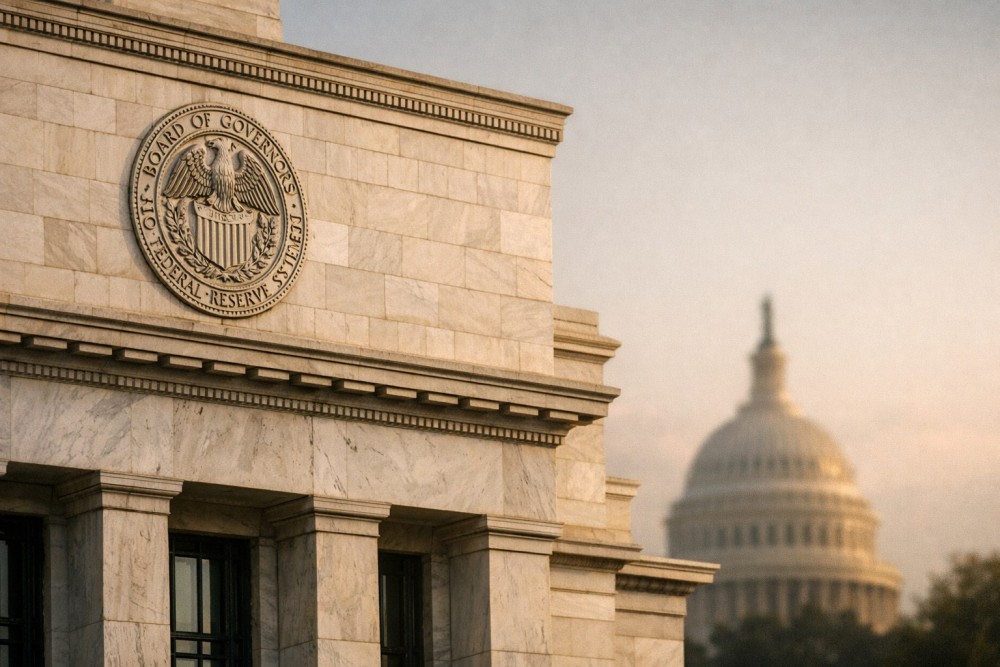
Gotrade News - Four Federal Open Market Committee members broke with Chair Jerome Powell's dovish statement at the April 29, 2026 meeting. The split surfaced as President Donald Trump's affordability agenda continued stalling ahead of the November midterm elections.
The Federal Reserve held the policy rate at 3.5 to 3.75 percent according to the official FOMC release. Divided monetary policy signals and domestic political pressure are now key drivers of market sentiment this week.
- Four of twelve FOMC members dissented against the latest policy statement.
- Inflation remains above the 2 percent target so room for rate cuts is narrowing.
- Trump's affordability agenda is stuck in Congress and adds uncertainty to economic policy direction.
The four dissenters were Stephen Miran, Neel Kashkari, Lorie Logan, and Beth Hammack per the Federal Reserve release. Miran preferred a 0.25 percent rate cut while three others rejected dovish language in the formal statement.
Dallas Fed President Lorie Logan said inflation needs more time to return durably to the 2 percent target. She opposed forward guidance suggesting any bias toward rate cuts under current economic conditions.
The FOMC statement noted economic activity remains solid yet job gains stay modest and inflation remains elevated. The Committee also flagged Middle East developments as creating significant uncertainty about the broader economic outlook.
Financial markets responded to the split signal with rotation into major banks and financial sector ETFs. Investors are watching exposure to JPMorgan Chase and Bank of America as risk appetite gauges.
US Treasury volatility also climbed amid the internal Fed debate over the medium-term rate path. Bond ETFs such as iShares 20+ Year Treasury remain a key reference point for long-duration investors.
On the political side, Bloomberg reported Trump's affordability agenda faces significant headwinds ahead of the November midterms. The largest housing legislation in a decade is stuck on Capitol Hill due to lawmaker objections.
The proposed 10 percent credit card interest rate cap has been pulled after pushback from banking industry stakeholders. Two executive orders on mortgage credit access and builder deregulation also remain only partially implemented.
According to Fox News, December Consumer Price Index logged a 2.7 percent annual gain and core CPI rose 2.6 percent. Trump called the data a positive signal though it stays above the Federal Reserve's inflation target.
A CNBC first-quarter 2026 survey showed 60 percent of respondents disapprove of the Trump administration's economic handling. The combined signals raise uncertainty about the future direction of fiscal and monetary policy.
US equities are tracking the implications for valuations across rate-sensitive sectors including banks and large-cap technology names. Benchmarks such as SPDR S&P 500 ETF remain primary gauges for global retail investors.
Analysts expect the next inflation print to determine whether the FOMC dissent intensifies or eases over coming weeks. Global investors should monitor this closely before adjusting allocation toward US equities or bond exposures.