

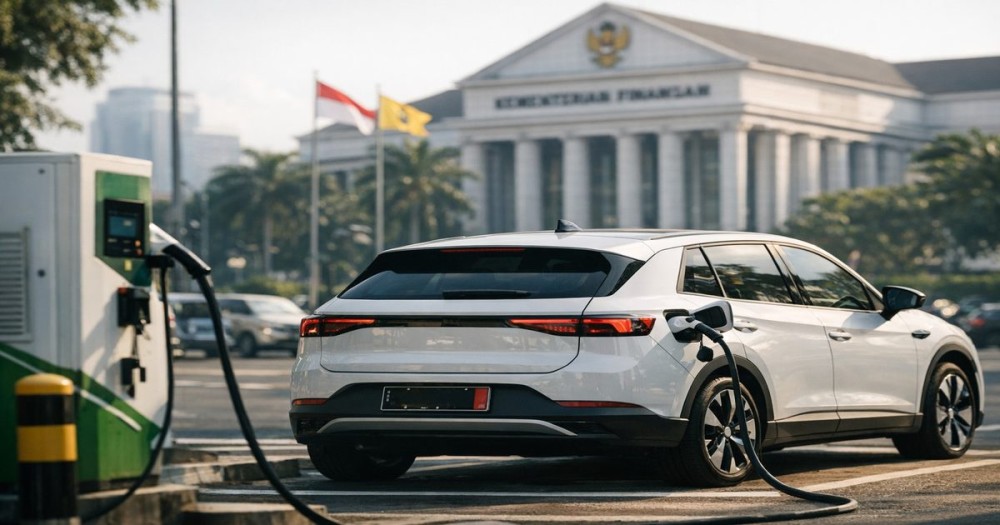
Gotrade News - Indonesia's Finance Minister Purbaya Yudhi Sadewa has confirmed that electric vehicle taxes are not increasing under the country's new tax framework. The statement was made at the Ministry of Finance on Monday (21/04) to address growing public concern.
The new Regional Minister Regulation No. 11 of 2026 reclassifies battery-based electric vehicles as taxable motor vehicle objects. However, the minister emphasized that the total tax burden consumers pay remains identical to the previous scheme.
Key Takeaways:
- Indonesia's Finance Minister confirmed total EV tax burden is unchanged, only the collection mechanism shifts
- Regional Regulation No. 11/2026 makes EVs subject to standard motor vehicle tax and transfer tax
- Regional governments now have authority to set their own EV tax incentives, creating potential variation across provinces
Minister Purbaya stated clearly that the net tax burden has not changed compared to the previous framework. "The total tax is the same, nothing changes, it just shifts from one place to another," he said.
Under the previous system, battery-based electric vehicles received various incentives including import subsidies. The old scheme provided tax exemptions through a centralized mechanism managed by the national government.
The new regulation now classifies electric vehicles as objects of both the annual Motor Vehicle Tax and the Vehicle Transfer Tax. This means EVs enter the standard regional taxation system for the first time.
Regional Governments Gain EV Tax Authority
The key difference lies in who determines electric vehicle tax incentives going forward. Regional governments now have the authority to set their own incentive structures within their jurisdictions.
This means tax amounts could vary significantly between provinces and could potentially reach zero. Article 19 of the regulation still preserves the central government's option to provide national-level incentives.
What the Numbers Look Like
According to Bloomberg Technoz simulations, the Vehicle Transfer Tax ranges between 1% and 12% of the assessed vehicle value. The actual rate depends on each regional government's policy decisions.
For example, a consumer purchasing a used electric vehicle valued at Rp200 million would pay approximately Rp2 million in transfer tax at the 1% rate. Total costs including annual tax and administrative fees would reach approximately Rp4.5 million.
Administrative fees covering registration documents amount to roughly Rp500 thousand in total. The final amount varies depending on the province where the vehicle is registered.
The policy signals that the Indonesian government is not withdrawing support for electric vehicles. The collection mechanism has changed, but the commitment to accelerating EV adoption in the country remains intact.
Sources:
- Kompas Money, Menkeu Tegaskan Pajak Mobil Listrik Tak Naik, Hanya Ubah Skema, 2026.
- Bloomberg Technoz, Simulasi Perhitungan Bea Balik Nama Mobil Listrik Usai Kena Pajak, 2026.