

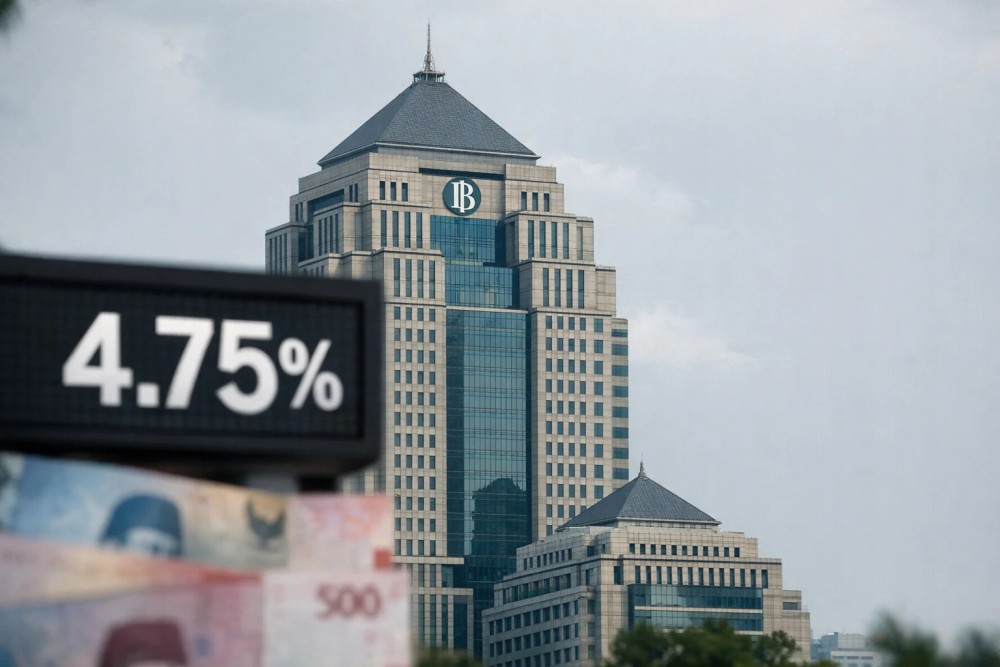
Gotrade News - Bank Indonesia held its benchmark interest rate steady at 4.75% following its April 21-22, 2026 board meeting. The decision aims to strengthen rupiah stabilization amid worsening global economic conditions driven by Middle East conflict.
Governor Perry Warjiyo affirmed the central bank's readiness to deploy stronger monetary measures if needed. The inflation target for 2026-2027 remains at 2.5% plus or minus 1%.
Key Takeaways:
- BI Rate unchanged at 4.75% since January 2026, after five cuts totaling 125 bps throughout 2025
- Rupiah weakened to Rp17,172/USD, down 0.87% from end-March 2026
- March inflation fell to 3.48% YoY from 4.76% in February, within BI target range
The hold continues the central bank's stance since early 2026. Throughout 2025, BI cut rates five times from 6% to the current 4.75% level.
The deposit facility rate remains at 3.75% while the lending facility stays at 5.5%. All three benchmark rates are unchanged from the previous meeting.
Currency pressure was the primary consideration in this decision. Bloomberg data showed the rupiah trading at Rp17,172/USD on Wednesday afternoon.
The exchange rate weakened approximately 0.87% from end-March 2026 levels. BI has been purchasing significant volumes of government securities to support the rupiah.
On the inflation front, price pressures show a positive downward trend. March 2026 headline inflation registered 3.48% year-on-year, falling from 4.76% in February.
Macroprudential Policy Remains Accommodative
BI maintained the countercyclical capital buffer at 0% to support credit growth. The PINISI program for accelerating banking intermediation also continues for the real sector.
Globally, BI revised its world economic growth projection down to just 3%. Middle East conflict and financial market volatility are the key drivers behind this revision.
Market Response and Investment Implications
Jakarta's composite index (IHSG) closed 0.24% lower on Wednesday following the rate announcement. Investors remain cautious given ongoing global economic uncertainty.
Emerging market rate decisions influence foreign capital flows into Southeast Asian markets. Global banking stocks like JPMorgan Chase and Goldman Sachs monitor these developments closely.