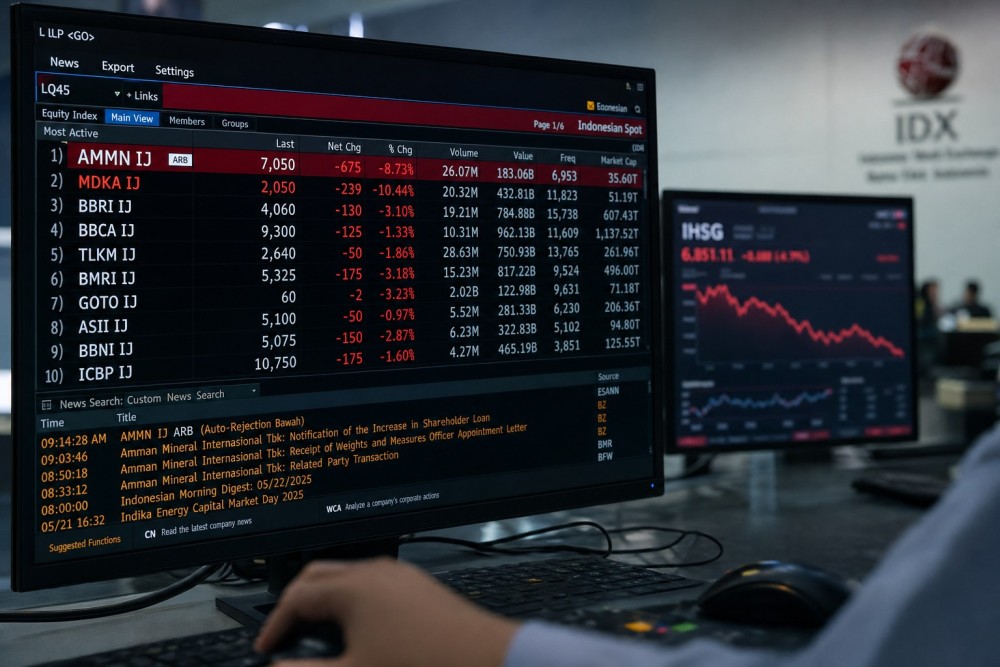

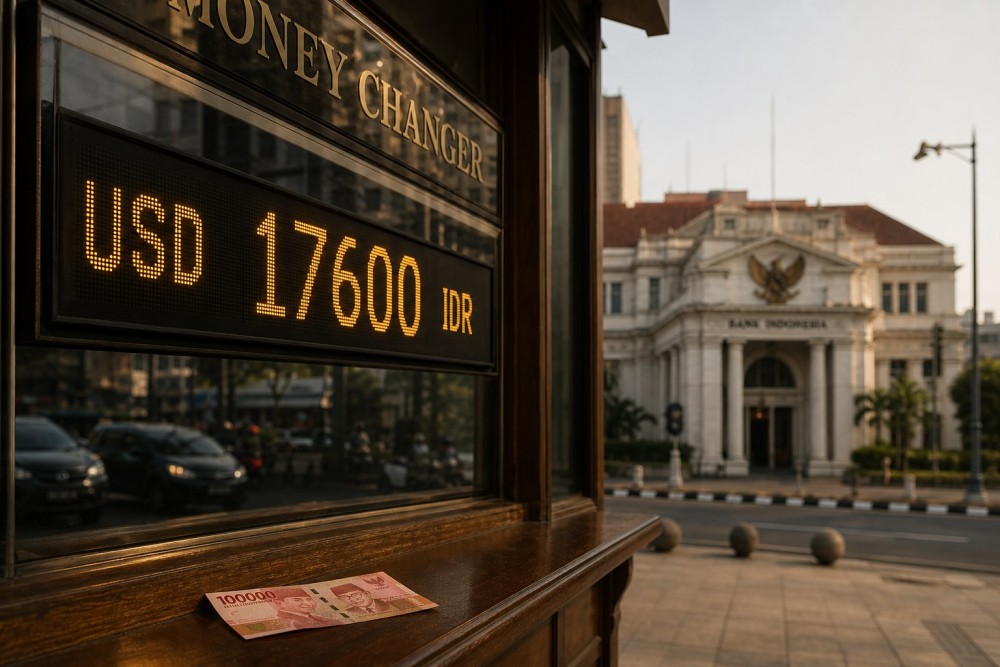
Gotrade News - The Indonesian rupiah crashed to Rp 17,645 per US dollar on Monday, May 18, 2026. The 1.17% slide pushed year-to-date depreciation to 5.99% against the greenback.
Surging oil prices and capital outflows from Asian emerging markets drove the selloff. Indonesia's Parliament Commission XI grilled Bank Indonesia (the central bank) over the limits of its intervention firepower.
Key Takeaways
- Rupiah hit Rp 17,645 per USD, the weakest level in Indonesian history, down 5.99% year-to-date.
- Foreign reserves fell from USD 156 billion to USD 146.2 billion through the intervention cycle.
- Lawmakers stressed the situation differs from 1998 given lower private USD debt today.
According to Kompas, Brent July crude rose 1.98% to USD 111.42 per barrel. WTI June also jumped 2.43% to USD 107.98, weighing on Indonesia which imports 1.5 million barrels daily.
Geopolitical tensions around the Strait of Hormuz triggered the latest oil rally. US President Donald Trump's warnings on Iran nuclear talks added to risk-off sentiment across emerging market currencies.
Parliament Pressures the Central Bank
As reported by Bloomberg Technoz, Commission XI member Harris Turino questioned the effectiveness of Bank Indonesia's policy toolkit. Foreign reserves have fallen from USD 156 billion to USD 146.2 billion during the defense cycle.
Indonesia's policy rate has risen to 6.41% during the defense cycle. BI's government securities holdings also ballooned from Rp 332 trillion in 2025 to Rp 465 trillion in 2026.
Per Kabar Bursa, lawmaker Muhammad Kholid urged coordinated messaging from BI, OJK, and the Finance Ministry. The goal is to anchor investor confidence through a single, consistent policy narrative.
Kholid stressed conditions differ fundamentally from the 1998 Asian financial crisis when private dollar debt was far larger. Indonesia also navigated the 2008 crisis, the 2013 Taper Tantrum, and Covid-19 without a structural collapse.
Spillover to Indonesian Equities
According to Bloomberg Technoz, Salim Group consumer giants INDF and ICBP face margin pressure from USD-denominated loans and import bills. Management disclosed the group does not run a formal hedging policy against currency exposure.
For global investors, the iShares MSCI Indonesia ETF (EIDO) is the cleanest proxy for foreign positioning in Indonesian equities. Sustained EIDO outflows typically signal foreign caution toward rupiah-denominated assets.
Emerging market banks such as JPMorgan Chase (JPM) face indirect spillover through cross-border lending and FX trading desks. Regional currency stress historically tightens funding conditions for EM-exposed US lenders.
The iShares China Large-Cap ETF (FXI) serves as a broader Asia EM sentiment gauge alongside EIDO. Correlated weakness across both ETFs often signals a regional dollar squeeze rather than an isolated Indonesia story.
Since October 2024, the rupiah has depreciated roughly 12% from levels near Rp 15,400 per USD. Analyst Ibrahim Assuaibi flagged that Prabowo's public comments appeared to downplay the impact on ordinary Indonesians.
Inconsistent official messaging risks widening risk premiums on rupiah-denominated assets. A unified narrative from BI, the Finance Ministry, and the presidency is now the key variable for stabilizing flows.