
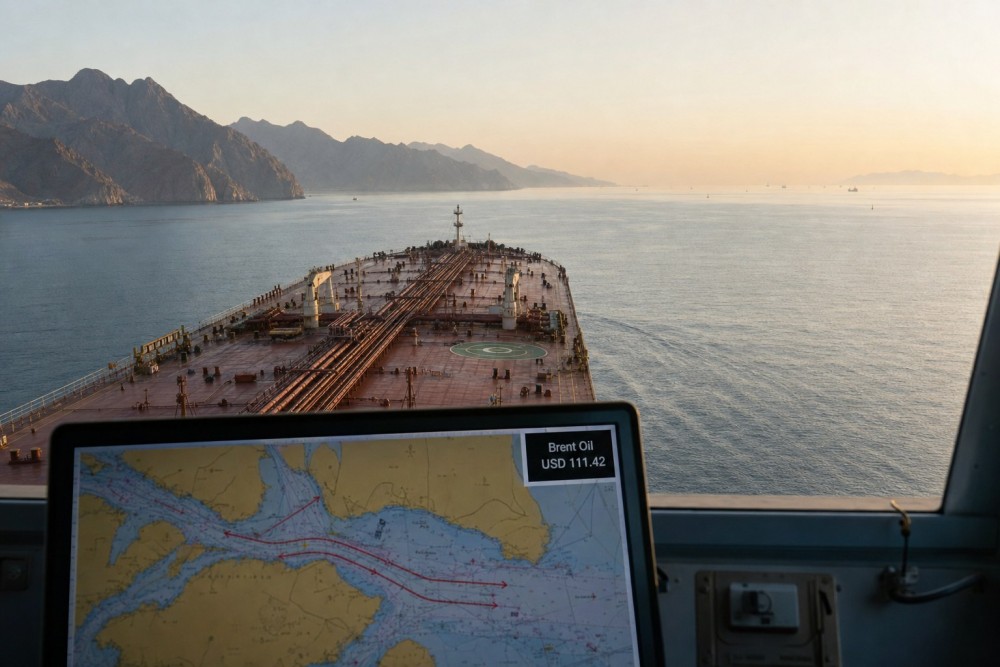
Gotrade News - Oil prices surged on Monday after a stark warning from President Donald Trump to Iran. Brent crude for July climbed 1.98% to $111.42 per barrel, while WTI for June gained 2.43% to $107.98.
Investors across Asia fear renewed US-Iran conflict could disrupt the critical Strait of Hormuz shipping lane. The narrow chokepoint handles roughly 20% of global oil flow on a typical trading day.
Key Takeaways
- Brent and WTI hit monthly highs as geopolitical tensions escalated overnight.
- The Strait of Hormuz remains a critical pressure point if Iran tensions persist.
- US oil majors stand to benefit, while airlines warn of rising jet fuel costs.
According to Kompas.com, Trump issued a sharp message to Iran via Truth Social on Sunday evening US time. He warned that time was running out for Tehran and urged the country to move quickly on US demands.
US-Iran tensions remain elevated despite a fragile ceasefire since April. Iran continues partial blockades at Hormuz while the US tightens port enforcement.
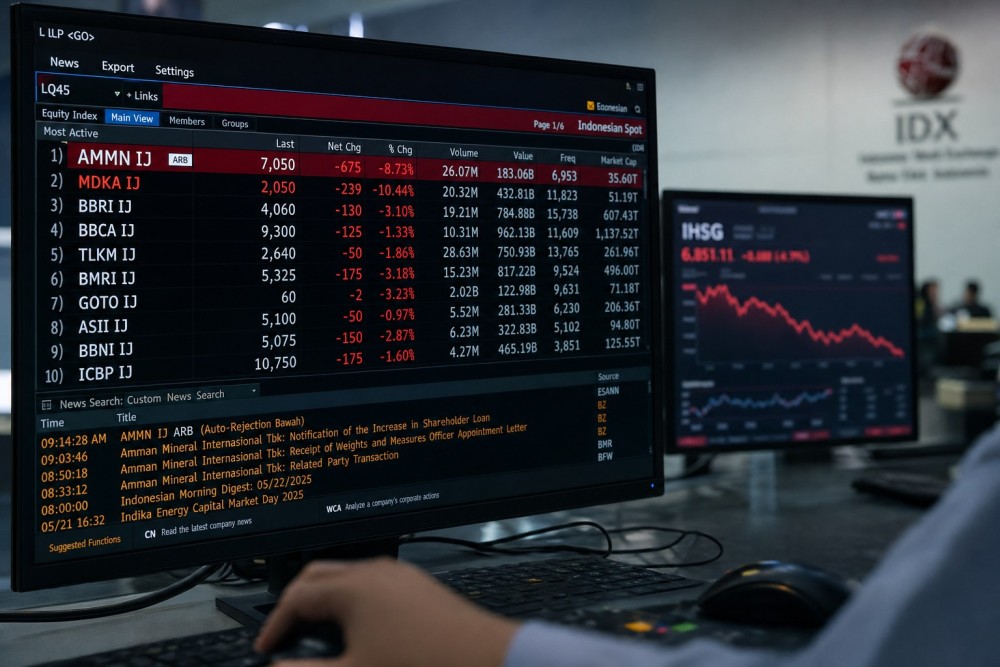
As reported by Metrotv News, Asian markets fell broadly on the Middle East escalation Monday. The Nikkei dropped 1.1%, the Kospi slipped 0.1%, and the MSCI Asia-Pacific index lost 0.9%.
Drone attacks on UAE nuclear facilities deepened the negative sentiment. Analysts warned global supply could reach critical levels by late June.
Market Winners And Losers
Higher crude prices typically provide a tailwind for large US oil producers. Names like Exxon Mobil (XOM) and Chevron (CVX) could benefit from stronger realized prices.
Investors seeking direct crude exposure often look at the United States Oil Fund (USO) as an alternative vehicle. The ETF tracks daily moves in WTI crude futures through near-month contract holdings on regulated exchanges.
UBS projects global oil reserves could near historic lows by late May. Inventories may approach 7.6 billion barrels if demand stays steady.
The US 10-year Treasury yield rose to 4.631% on Monday, marking a fresh 15-month high. Persistent energy-driven inflation fears pushed investors out of long-duration government bonds globally.
Per Bloomberg Technoz, Ryanair warned unit costs could climb mid-to-high single digits. The Irish carrier's fuel bill has already jumped by several hundred million euros.
About 80% of Ryanair's fuel needs are hedged at $67 per barrel. The remaining 20% is exposed to the current price spike in spot markets.
According to Bloomberg Technoz, clean energy is seen as relatively insulated. The Energy Transition Commission noted renewables avoid single-point geographic risk.
Investors are leaning toward a barbell strategy to balance the exposure. Oil names act as a hedge while transport stocks face margin pressure.
Analysts say Brent could climb to $130 or $140 per barrel if the Strait of Hormuz actually closes. The extreme scenario would reinforce the case for US oil majors as a short-term portfolio hedge.