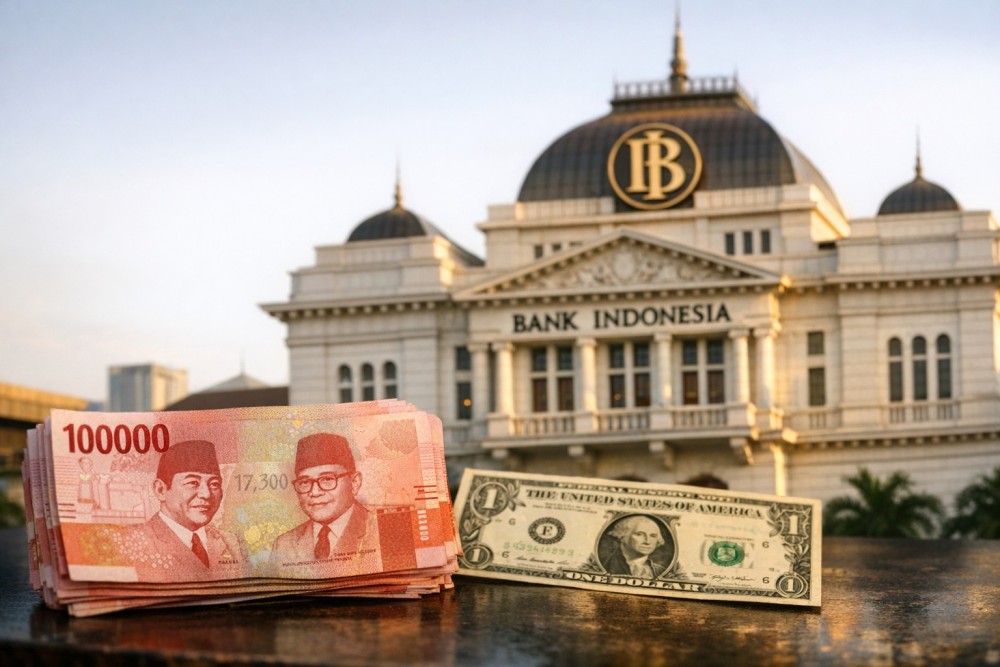

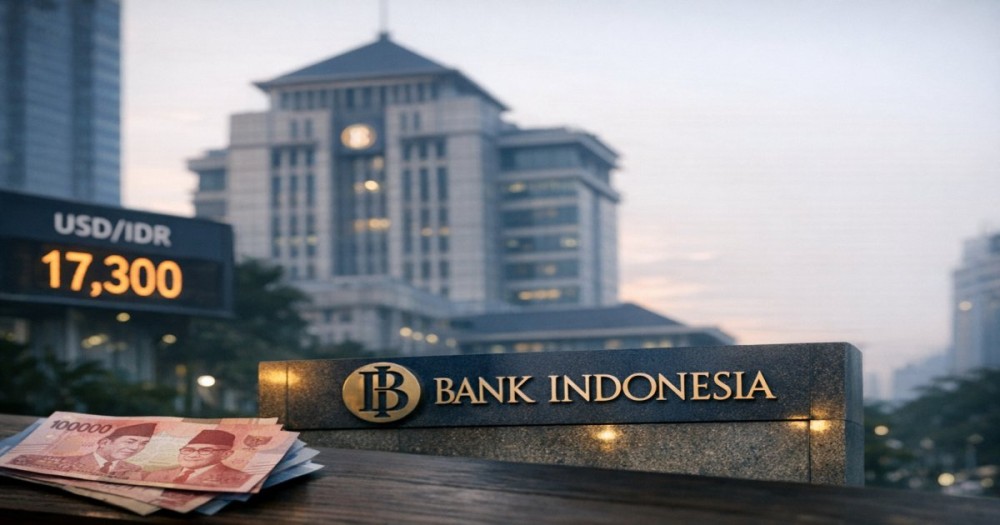
Gotrade News - Indonesia's rupiah broke through the psychological Rp 17,300 per US dollar level on Thursday (23/04) at 10:33 local time. The move came earlier than analyst forecasts that had pegged this level for late April 2026, making the rupiah the weakest currency in the ASEAN region during the session.
Trading Economics logged the pair at Rp 17,295 per USD by 10:40 WIB, a drop of 108 points or 0.63 percent from the prior close. The depreciation reflects mounting pressure from both external geopolitical strain and Indonesia's energy import bill.
Key Takeaways:
- Rupiah broke Rp 17,300/USD on April 23 2026, the weakest currency in ASEAN for the session
- Bank Indonesia Governor Perry Warjiyo stated the rupiah is undervalued relative to fundamentals
- Analyst Ibrahim Assuaibi projects the pair could reach Rp 17,400/USD by end of April
Currency analyst Ibrahim Assuaibi attributed the move primarily to US-Iran geopolitical tension. Talks mediated by Pakistan broke down after Iran declined new US conditions tied to the Strait of Hormuz and uranium stored in the United States.
Brent crude touched US$ 103 per barrel while WTI traded near US$ 98, amplifying the pressure on Indonesia's energy bill. Indonesia imports around 1.5 million barrels per day against daily consumption of 2.1 million barrels, making oil price spikes a structural drag on the current account.
Indonesia's 2026 state budget assumes an oil price of US$ 70 per barrel with a maximum cap of US$ 92. Current prices have breached that threshold, widening the fuel subsidy gap and pressuring fiscal space.
A Pertamina tanker reportedly remains stuck in the Strait of Hormuz as a result of the broader tension. This tightens domestic fuel supply while adding strain to the balance of payments in the near term.
Bank Indonesia Governor Perry Warjiyo argued the rupiah is now trading below its fundamental value. He cited high economic growth, low inflation, and attractive domestic asset yields as reasons to expect a rebound.
Warjiyo emphasized that monetary-fiscal coordination between Bank Indonesia and the government will tighten. The objective is to stabilize the currency and rebuild investor confidence in the recovery trajectory.
Coordinating Minister Airlangga Hartarto added that Indonesia's economic fundamentals remain resilient against global shocks. Domestic money supply reached Rp 10,355 trillion as of March 2026, suggesting liquidity conditions remain orderly.
Capital outflow pressure persisted in equity markets during the same session. The benchmark IHSG fell 1.27 percent to 7,445 in the morning session, mirroring the rupiah's weakness.
Retail investors are watching Middle East geopolitical developments and oil price action as the next catalyst. The Rp 17,400 level is seen as the next technical resistance for the pair through the remainder of April 2026.
Conclusion: The rupiah's breach of Rp 17,300 per USD reflects a combination of Middle East geopolitical risk and Indonesia's structural oil import dependence. Bank Indonesia sees the move as temporary given strong fundamentals, but further weakness toward Rp 17,400 remains on the table.
For international retail investors, rupiah volatility highlights how emerging-market FX can move sharply on commodity and geopolitical shocks. Gotrade offers access to hundreds of US stocks from as little as US$ 1, making it easier to diversify into USD-denominated assets and reduce exposure to any single emerging-market currency.