

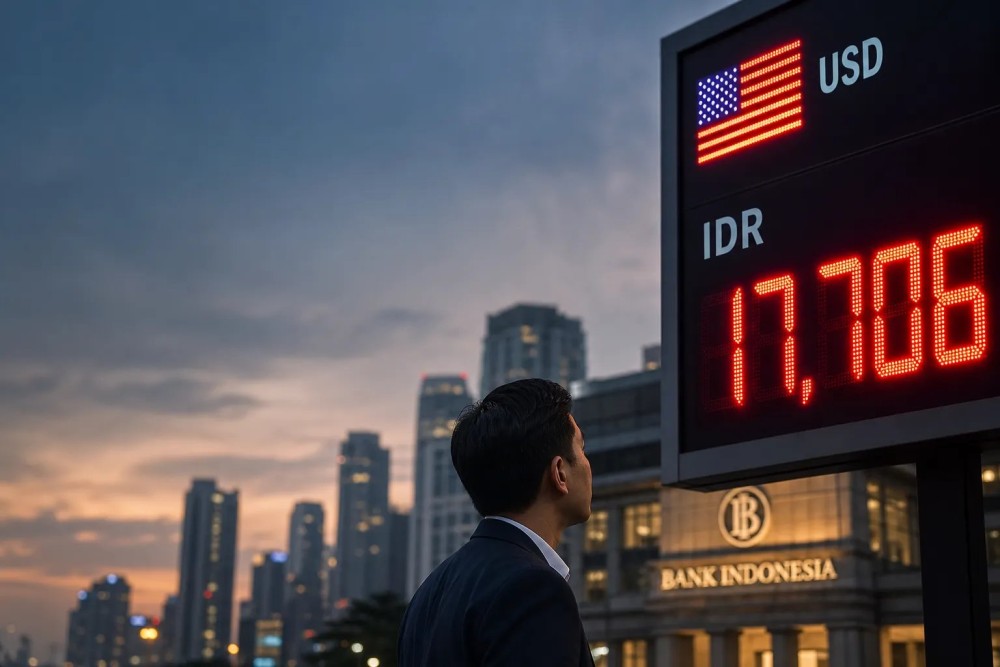
Gotrade News - Indonesia's rupiah closed at 17,706 per US dollar on Tuesday, May 19, 2026. The currency touched an intraday low of 17,733, the weakest level on record.
The Jakarta Composite Index (JCI) plunged 3.46% to 6,370 the same session. Foreign outflows, dividend repatriation, and a stronger dollar are pressuring Indonesian assets across the board.
Key Takeaways
- Rupiah set a fresh all-time low at 17,733 intraday and closed at 17,706 per US dollar.
- JCI fell 3.46% to 6,370, signaling broad risk-off pressure on Indonesian equities and currency.
- Bank Indonesia faces calls to hold rates, while analysts blame fiscal communication, not monetary policy.
According to Tirto, the rupiah extended losses for a fifth straight session. The slide brings the currency within striking distance of the symbolic 18,000 threshold.
Local exporters have been slow to convert foreign exchange earnings back into rupiah. Bank Indonesia urged exporters to release dollar holdings to ease pressure on the domestic currency.
What Is Driving The Rupiah Selloff
Hot money outflows from Indonesian bonds and equities are the primary driver. Foreign investors trimmed exposure amid global dollar strength and weakening emerging market sentiment.
Seasonal factors are compounding the pressure on the rupiah. Annual dividend transfers by foreign-owned companies and Hajj-related dollar demand both peak during this period.
Bank Indonesia reserves stood at US$146.1 billion at the end of April. That buffer remains substantial, giving the central bank room to intervene in spot and forward markets.
As reported by Bloomberg Technoz, Maybank Indonesia economist Myrdal Gunarto argued against a rate hike. He warned higher rates would burden the real sector through elevated borrowing and expansion costs.
The iShares MSCI Indonesia ETF (EIDO) offers global investors direct exposure to Indonesian equities. The fund typically moves with both JCI performance and rupiah currency strength.
Global Context And Investor Response
The rupiah's slide reflects broader emerging market currency stress this quarter. The iShares MSCI Emerging Markets ETF (EEM) has tracked similar pressure across Asian and Latin American currencies.
Dollar strength remains the dominant macro force pushing emerging market currencies lower. The Invesco DB US Dollar Index Bullish Fund (UUP) reflects the greenback's broad rally against major and minor currencies.
Per KabarBursa, currency analyst Ibrahim Assuaibi pointed to fiscal communication as the core issue. He said market frustration sits with the presidential palace's economic team, not Bank Indonesia.
BI Governor Perry Warjiyo publicly affirmed Board of Governors solidarity amid the volatility. The statement aimed to reassure markets that monetary policy will remain coordinated and predictable.
Middle East geopolitical uncertainty is also weighing on global risk appetite this week. Safe-haven flows into US Treasuries and gold are siphoning capital from emerging market assets.
For Indonesian retail investors, the episode highlights the appeal of US dollar-denominated investments. Diversifying into US equities or dollar-strength instruments can hedge against further rupiah weakness.