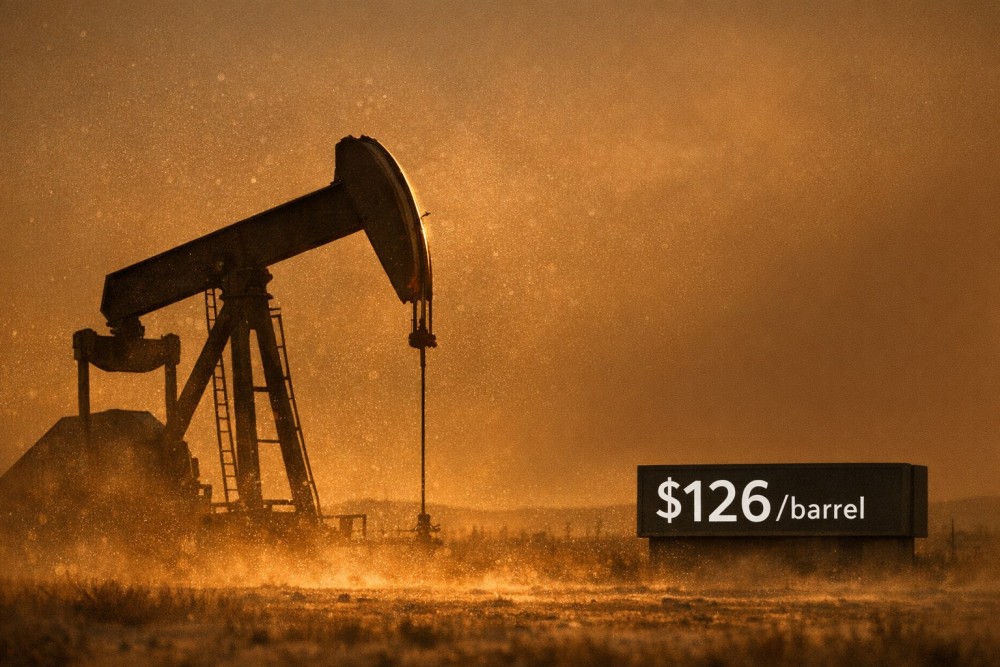


Gotrade News - Global markets opened cautiously on Thursday (30/04) as the Iran conflict spillover pushed crude oil sharply higher. Asia stocks slipped, European equities wavered, and the French economy unexpectedly stalled in the first quarter as the geopolitical shock fed through.
The oil move is the central transmission channel into both equity benchmarks and big-economy GDP prints today. Energy-heavy US tickers and defense contractors are seeing the most direct repricing, while EU industrial corners absorb the input-cost hit.
Key Takeaways:
- Oil surge from the Iran conflict is dragging risk assets globally and stalling EU growth, putting a bid under USO, XOM, and CVX.
- Defense exposure is bid as the spillover risk extends, lifting LMT and RTX on demand expectations.
- Europe is the macro pressure point, with French Q1 GDP flat and UK markets watching the Bank of England rate path closely.
According to Investing.com, Asian benchmarks slipped on Thursday as traders weighed the oil rally against the Federal Reserve outlook and mixed tech earnings. The combination of war-driven crude and uneven AI guidance kept regional indices defensive into the European open.
Crude has become the dominant macro input for risk allocators this week, displacing the usual Fed-and-earnings narrative. Higher oil immediately tightens financial conditions for energy-importing regions, which is exactly what Europe now faces.
EU Growth Hit and UK Rate Watch
According to Bloomberg, the French economy unexpectedly failed to grow in the first quarter as the Iran shock hit consumer and corporate sentiment. Energy import costs and confidence damage are the two channels analysts now point to for the GDP miss.
The UK is the next major data point, with the Bank of England rate decision in focus and the pound slipping ahead of the announcement. Sterling weakness and oil strength together raise import-inflation risk for British households over the next two quarters.
Unilever India also flagged war-led volatility in its results even as profit beat forecasts. The flag suggests multinational consumer companies are starting to socialise the spillover risk into their forward-looking commentary.
Japanese utilities have moved further by withholding earnings guidance entirely as fuel costs bite. The blackout on guidance shows how much input-cost uncertainty the conflict has injected into power-sector planning across Asia.
Implications for US Energy and Defense Exposure
The cleanest US exposure to the oil rally runs through major integrated producers and broad oil ETFs. XOM and CVX tend to outperform when crude regimes shift higher and stay elevated for several weeks.
For traders without a single-name view, USO offers a direct futures-linked vehicle that tracks front-month WTI movements. The vehicle is the simplest expression of a tactical view that the geopolitical premium will not fade quickly.
Defense exposure is the second leg of the trade, with LMT and RTX bid on conflict-duration expectations. Order books for missile defense and air systems typically reset higher as Gulf tensions persist beyond a single quarter.
The risk to the bullish energy thesis is a fast-moving diplomatic de-escalation that compresses the geopolitical premium quickly. For now, EU GDP weakness and Asian utility caution suggest market positioning expects the spillover to last well into the second quarter.