
Gotrade News - Crude oil prices held steady Thursday after four supertankers were reported to have safely transited the Strait of Hormuz. Brent edged up 0.09% to $105.72 per barrel, while WTI added 0.15% to $101.17 per barrel.
The stabilization came as oil flows through the critical chokepoint gradually improved amid the ongoing conflict with Iran. Investors remained cautious as energy supply disruption risks have not fully eased, leaving US energy stock sentiment broadly neutral.
Key Takeaways
- Brent stabilized at $105.72 per barrel and WTI at $101.17 per barrel in the latest session.
- Four supertankers, each carrying roughly 2 million barrels, successfully crossed the Strait of Hormuz.
- Iran geopolitical risk remains the primary focus for global oil markets this week.
Oil Flows Through Hormuz Improve
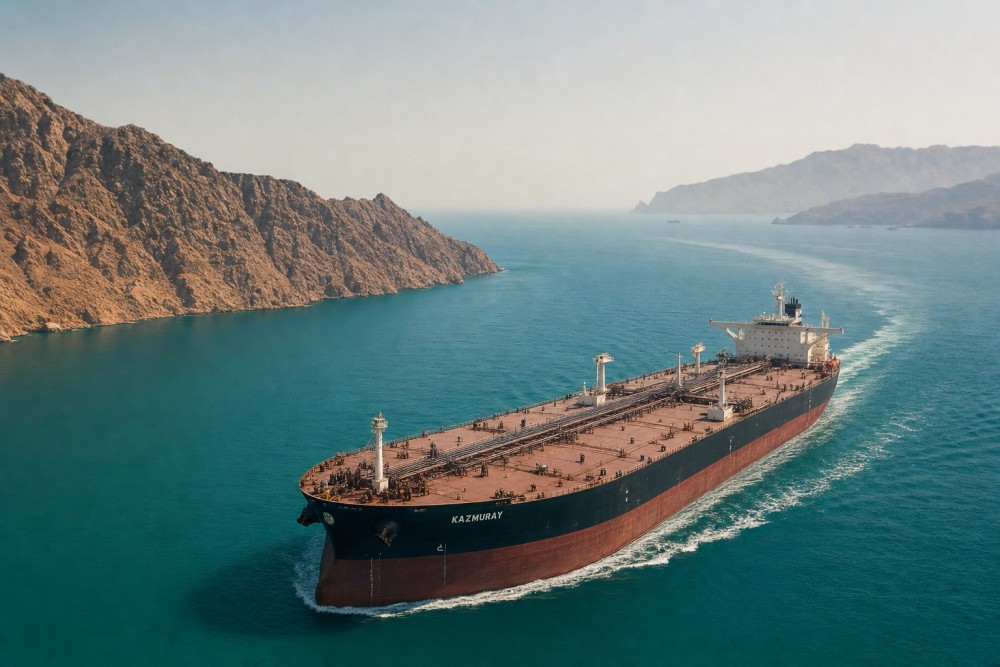
According to Bloomberg Technoz, four supertankers transited the Strait of Hormuz carrying roughly 2 million barrels each. Most of the cargo originated from Iraq based on vessel tracking data compiled by Bloomberg.
Oil flows through the critical chokepoint have gradually increased as shipping lane disruptions ease. The improvement offers modest relief to a market that was rattled by supply concerns last week.
As reported by IDX Channel, Iranian state media said roughly 30 vessels passed through the Strait of Hormuz on May 14, 2026. That figure suggests the trade route remains active even as geopolitical tensions stay elevated.
The supply stabilization is a constructive signal for major energy names such as Exxon Mobil (XOM) and Chevron (CVX). Both integrated majors carry significant exposure to global crude price movements.
Risks Still Looming
Per IDX Channel, an attack on one vessel and the seizure of another continue to stoke concerns about energy supply continuity amid the Iran conflict. Brent briefly touched an intraday high of $107.13 before retreating in the following session.
Investors are also weighing US monetary policy signals that could weigh on prices. Brent fell more than $2 per barrel on May 13, driven by worries about higher US interest rates.
According to Bloomberg Technoz, citing reporting by Alex Longley, Weilun Soon, and Julian Lee, the pickup in flows has been gradual and does not yet reflect full normalization. The market is still waiting to see whether tanker transits will continue without fresh disruption.
For investors seeking broader exposure to crude movements, instruments such as the United States Oil Fund (USO) are often used as a proxy. The ETF tracks WTI crude prices, the primary benchmark for the US oil market.
Overall, the current stability in oil prices remains fragile and highly dependent on developments in the Strait of Hormuz. The combination of improving supply and persistent geopolitical risk keeps short-term energy market sentiment broadly neutral.