
Gotrade News - Global oil prices held near multi-week highs after President Donald Trump rejected Iran's latest peace proposal late Monday. Brent settled above US$104 per barrel while WTI climbed 2.8% to US$98.03 in the prior session.
The rejection extends the Strait of Hormuz closure and tightens an already strained global energy supply chain. The move lifts US oil majors and energy ETFs while raising fresh inflation concerns across Wall Street.
Key Takeaways:
- Brent rose 2.9% to US$104.22 and WTI gained 2.8% to US$98.03 after Trump rejected Tehran's response.
- Trump described the US-Iran ceasefire as "critical" on Monday, May 11, 2026, calling Iran's reply "garbage."
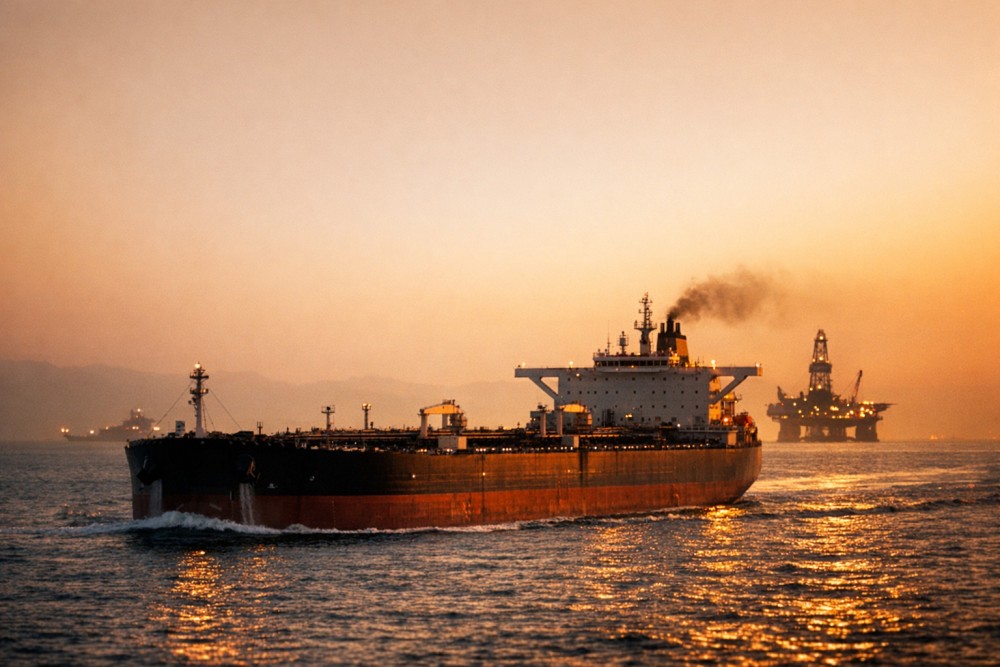
- The Strait of Hormuz remains closed, disrupting crude, natural gas, and fuel flows to global markets.
Trump's Rejection and Iran's Demands
According to Bloomberg, Trump told reporters in the Oval Room he "didn't even finish reading" Tehran's proposal document. He labeled Iran's response "garbage" and said the deal was at its weakest point.
Iran's offer demanded Washington lift its naval blockade and ease economic sanctions on Tehran's energy sector. Iran also insisted on retaining full control over commercial traffic through the Strait of Hormuz.
Trump stopped short of confirming a return to direct military strikes against Iranian assets. In a Fox News interview, he signaled potential revival of a US Navy ship-escort program for commercial vessels.
The ceasefire had broadly held since early April despite scattered ship attacks in regional waters. Monday's statement marks the sharpest deterioration in the ten-week diplomatic standoff between the two governments.
Energy Equities and Inflation Risk
As reported by Metro TV, both crude contracts had dropped over 6% last week on early peace optimism. The reversal came within hours of Trump's Monday evening statement at the White House.
The US national average gasoline price stood at US$4.52 per gallon before the latest spike. Senator Josh Hawley announced legislation to suspend the 18.4-cent federal gas tax on consumers nationally.
Higher crude prices typically benefit US producers like Exxon Mobil (XOM) and Chevron (CVX). The United States Oil Fund (USO) ETF also tracks WTI moves closely for traders seeking direct exposure.
Saudi Aramco CEO Amin Nasser said full market rebalancing would take months once the Strait of Hormuz reopens. Extended closure of several more weeks would push full normalization out to 2027, he added in a separate briefing.
Per Bloomberg, US crude inventories are projected to decline 1.3 million barrels for the week ending May 8. Macquarie strategist Walt Chancellor sees Strategic Petroleum Reserve releases reaching 1.2 million barrels per day.
Traders should monitor the EIA weekly inventory release and any Trump administration commentary this week. Volatility in WTI and Brent will likely persist while the Middle East trade lane stays disrupted by diplomatic tension.
Market watchers also flag reports of Iran deploying mini-submarines for regional surveillance and reconnaissance. Navigation signal disruption near the Strait of Hormuz has been reported intermittently over the past several weeks.
US energy stocks have been a top S&P 500 contributor through the first half of 2026 so far. If Brent crude holds above US$100, oil major quarterly earnings could continue beating analyst consensus estimates.
Sources:
- Oil Prices Held High After Trump Doubted Iran Peace Deal (Bloomberg Technoz)
- Trump Calls US-Iran Peace Deal in Critical Condition (Bloomberg Technoz)
- Global Oil Prices Lifted by US-Iran Conflict Uncertainty (Metro TV)