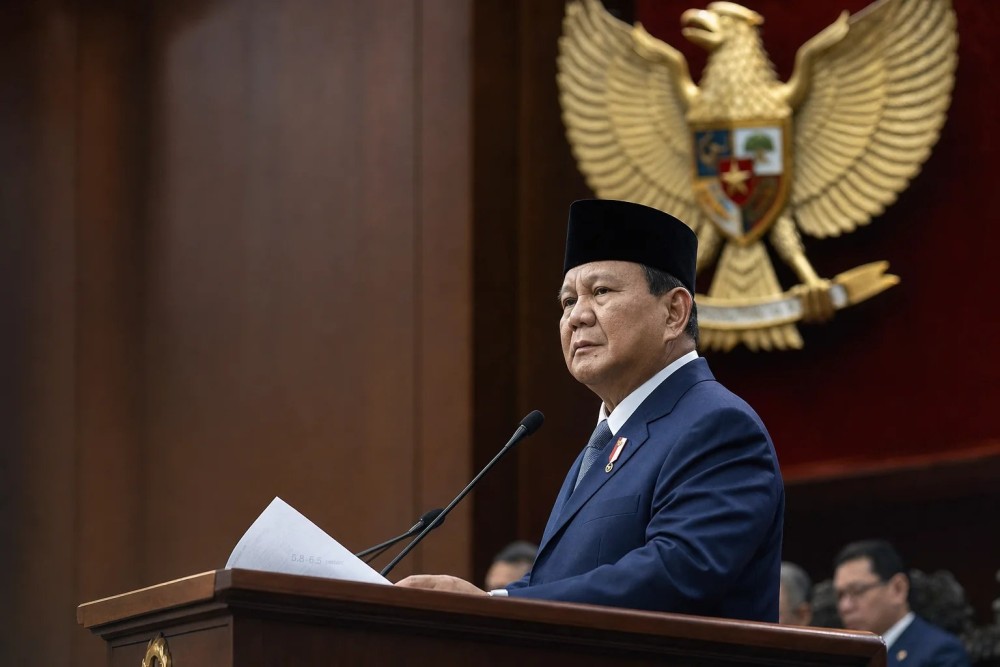

Gotrade News - Indonesian President Prabowo Subianto flagged three structural concerns in his 2027 budget address to parliament on May 20, 2026. He called the country's revenue-to-GDP ratio the lowest among G20 members.
The fiscal weakness signal arrived alongside an order for state banks to cut interest rates on credit for poor borrowers. Markets are weighing the combined pressure on revenue and bank pricing.
Key Takeaways
- Indonesia's revenue-to-GDP ratio sits near 11 percent, well below Mexico at 25 percent and India at 20 percent.
- Cumulative GDP growth of 35 percent since 2017 coincided with poverty rising 3.4 percentage points.
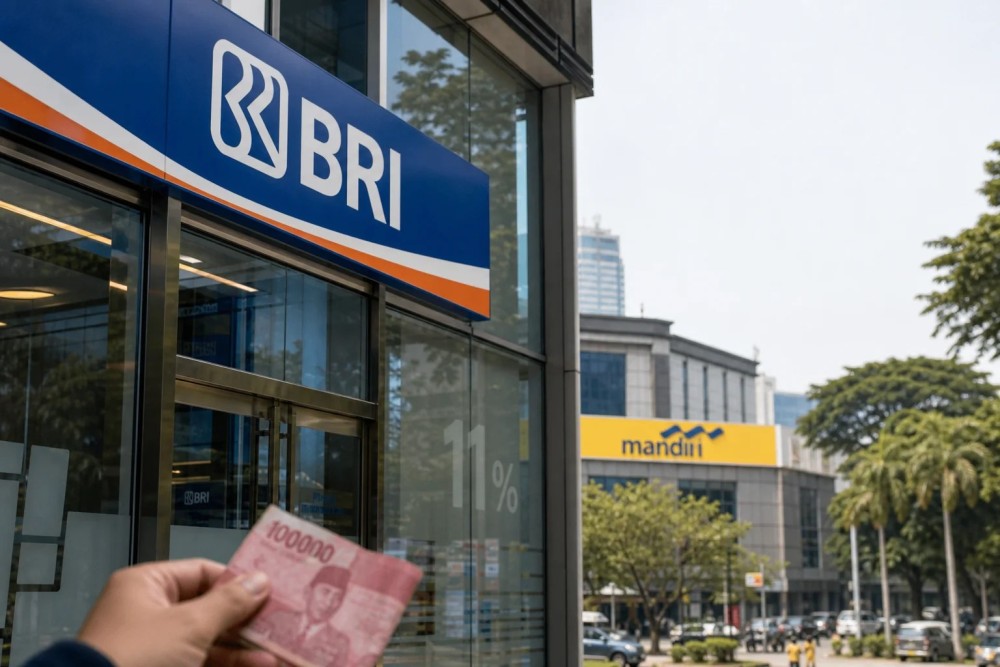
- Himbara, the state-bank consortium of BRI, Mandiri, BNI, and BTN, was directed to lower lending rates for poor citizens.
Lowest G20 Revenue Ratio
According to Kumparan, Prabowo said Indonesia's state revenue ratio is the lowest in the Group of Twenty. He questioned why the country lags Malaysia and Cambodia on collection.
IMF data cited in his speech showed Mexico at 25 percent, India at 20 percent, and the Philippines at 21 percent. Indonesia sat near 11 percent, while Cambodia reached 15 percent.
Prabowo noted Indonesia earns more than 65 billion US dollars annually from coal, iron alloys, and related commodities. Yet fiscal revenue stays low despite 5 percent annual GDP growth over the past seven years.
For investors holding the iShares MSCI Indonesia ETF (EIDO), the message points to a constrained fiscal cushion. Limited revenue room narrows the government's ability to offset shocks without leaning on state-owned banks.
Poverty Rising And Rate-Cut Order
As reported by Kumparan, Prabowo asked how 35 percent cumulative growth since 2017 coincided with rising poverty. The headcount rose from 46.1 million to 49.5 million people.
The middle class shrank from 22.1 million to 17.4 million over the same period. Prabowo said the economic system is on an incorrect trajectory.
Per Bloomberg Technoz, Prabowo ordered BRI, Mandiri, BNI, and BTN to cut credit rates for poor borrowers. He argued banks have been lending mainly to wealthy clients.
The directive challenges the margin model of state-owned lenders that rely on net interest income. Global financial sector benchmarks like the SPDR Financial Sector ETF (XLF) provide context on how markets price rate intervention.
The earlier 5 percent KUR microcredit program is a potential reference point for implementation. State-bank margins could compress further if reallocation toward higher-risk segments expands.
Payment networks with Indonesian exposure such as Visa (V) may also watch consumer credit dynamics closely. Lower lending rates could expand near-term card and digital payment volumes if disbursement reaches new borrower cohorts.
Combined revenue weakness, rising poverty, and rate intervention sketch a complex emerging-market risk profile. Foreign investors tend to demand higher risk premia when fiscal signals and bank pricing move in opposite directions.
Currency strain remains the channel to watch as the rupiah absorbs fiscal-policy ambiguity. The next budget defense in parliament will likely set the tone for how state-bank earnings revisions land into 2027.