
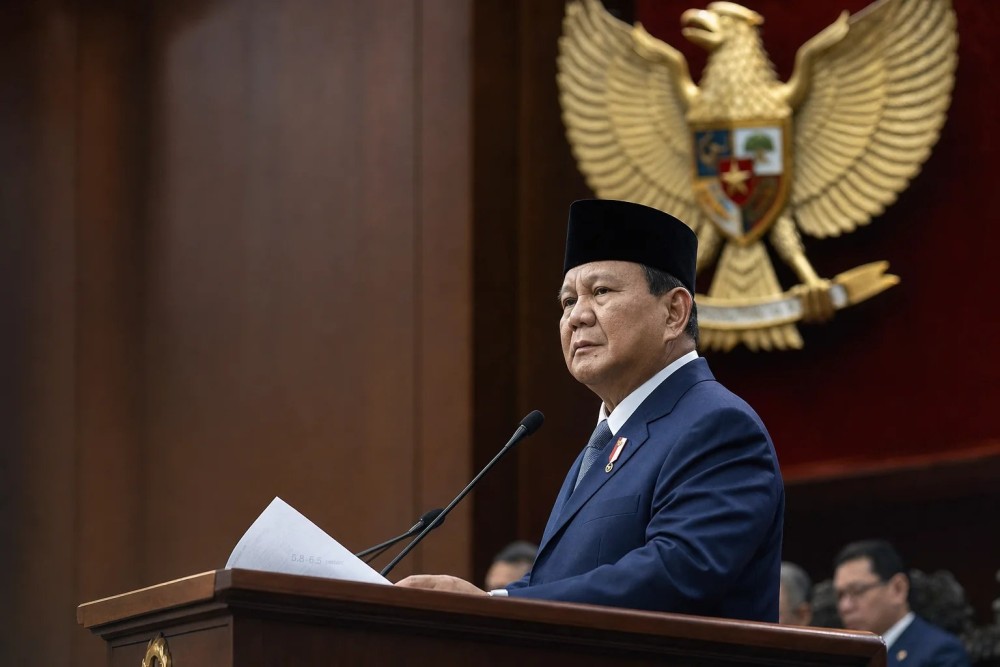
Gotrade News - Indonesian President Prabowo Subianto unveiled the 2027 state budget (RAPBN) macro assumptions to parliament on May 20, 2026. The plan targets growth of 5.8-6.5%, rupiah Rp 16,800-17,500 per US dollar, and a deficit of 1.8-2.4% of GDP.
The wide rupiah band signals Jakarta expects continued FX pressure through next year. For global investors, the framework shapes the outlook for Indonesia-linked equities and emerging-market currency exposure.
Key Takeaways
- Indonesia's 2027 budget targets 5.8-6.5% GDP growth, a stepping stone toward Prabowo's 8% goal by 2029
- Rupiah assumption of Rp 16,800-17,500 per USD implies the government is not pricing in sharp currency appreciation
- Fiscal deficit kept at 1.8-2.4% of GDP, well below the 3% statutory ceiling, signaling budget discipline
According to Kompas, Prabowo said fiscal and monetary strategy must keep the currency stable next year. The Rp 16,800-17,500 range tells markets Jakarta does not expect a sharp rupiah rally in 2027.
Inflation is assumed at 1.5-3.5%, with Indonesia's crude oil price set at $70-95 per barrel. Ten-year sovereign bond yields are projected at 6.5-7.3%, reflecting expectations that global rates remain elevated.
RAPBN is Indonesia's annual state budget proposal, submitted by the President to parliament. This was the first time a sitting President personally presented the macro framework, signaling a shift in fiscal accountability.
What It Means For Indonesia Exposure
The 5.8-6.5% growth target is an acceleration from the roughly 5% pace Indonesia has sustained for a decade. Investors seeking Indonesia exposure on US exchanges often use the iShares MSCI Indonesia ETF (EIDO) as the primary vehicle.
However, the rupiah band of 16,800-17,500 highlights continued FX translation risk for dollar-based investors. Further rupiah weakness can erode returns even when local-currency equity prices rise.
As reported by Liputan6, Prabowo emphasized that growth must translate into tangible welfare gains. The assumption also anchors central and regional government spending plans for next year.
State spending is projected at 13.62-14.80% of GDP, with revenue at 11.82-12.40%. The gap produces the 1.8-2.4% deficit range now under parliamentary review for the 2027 budget cycle.
Signal For Safe Haven Assets
The wide rupiah band leaves room for further depreciation, supporting demand for dollar hedges. The Invesco DB US Dollar Index Bullish Fund (UUP) is often used by investors to hedge emerging-market currency weakness.
Meanwhile, the 6.5-7.3% sovereign yield assumption mirrors expectations that global rates stay high. The iShares 20+ Year Treasury Bond ETF (TLT) moves inversely to US Treasury yields and tracks Fed easing expectations.
Per Liputan6, Prabowo said the government will keep working to narrow the deficit. Fiscal discipline is critical to maintaining Indonesia's sovereign credit rating with global agencies.
Indonesia also targets a poverty rate of 6.0-6.5% by end-2027. The spending posture is designed to leave room for social assistance programs and food security initiatives.
The RAPBN 2027 numbers remain indicative and will be debated in parliament before final approval. Actual outcomes can shift with global and domestic developments over the coming months.