Regulators Sound Alarm on AI Risk and Private Credit
Rendy Andriyanto
Gotrade Team
Reviewed by Gotrade Internal Analyst
Share this article
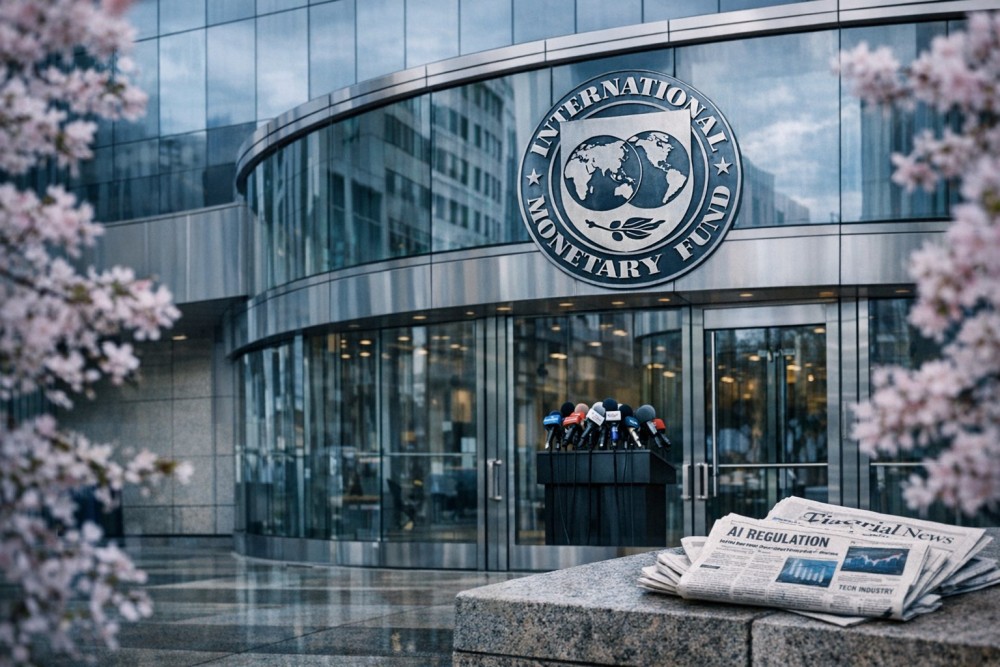
Gotrade News - Financial regulators gathered at the IMF and World Bank spring meetings in Washington this week to confront two escalating threats to global stability. Advanced AI models that can identify software vulnerabilities faster than human defenders and a $2 trillion private credit sector operating beyond transparency standards dominated the agenda.
Bank of England Governor Andrew Bailey, who also chairs the Financial Stability Board, called the AI challenge "a very serious challenge for all of us." ECB President Christine Lagarde warned that no framework exists "to actually mind those things," exposing a governance gap at the highest levels.
Anthropic's Claude Mythos Preview model has discovered thousands of high-severity vulnerabilities in major operating systems, alarming global regulators
The U.S. Treasury is conducting one-on-one meetings with private credit leaders and demanding written data disclosures from the $2 trillion sector
Only about 40 companies have limited access to the most advanced AI security tools, creating an uneven global defense landscape
The specific concern centers on Anthropic's Claude Mythos Preview model, which can identify and chain vulnerabilities at unprecedented speed and scale. Approximately 40 companies, including Amazon, Apple, and J.P. Morgan Chase, have limited access to the model.
The Treasury Department is seeking its own access to evaluate the model's capabilities and risks. Anthropic is also preparing to offer Mythos to British banks, further broadening the technology's reach into the financial system.
Officials face a fundamental dilemma in supporting AI's economic benefits while preventing regulatory gaps that only become visible after damage occurs. Uneven global access to advanced AI tools outside the U.S. complicates any coordinated international response.
On the private credit front, the U.S. Treasury has intensified oversight through months of one-on-one meetings with industry leaders. Officials are now requesting written data responses about business models, liquidity practices, and connections to the regulated financial system.
The Federal Reserve on April 10 asked major banks to disclose their exposure to private credit firms after a wave of redemptions raised concerns. Private credit exists largely outside transparency standards applied to traditional banking, with loans typically held in private portfolios and valued internally.
The American Investment Council pushed back, with CEO Will Dunham arguing that "private credit funds are well regulated and provide extensive data to federal and state financial regulators." Whether current disclosure requirements match the sector's $2 trillion scale remains the central regulatory question.
Gotrade is the trading name of Gotrade Securities Inc., which is registered with and supervised by the Labuan Financial Services Authority (LFSA). This content is for educational purposes only and does not constitute financial advice. Always do your own research (DYOR) before investing.