
Gotrade News - The S&P 500 and Nasdaq Composite both surged to all-time record highs on Tuesday, completing a remarkable recovery that erased every loss from the U.S.-Iran conflict. The rally was powered by a combination of ceasefire optimism, strong corporate earnings, and inflation data that came in below forecasts.
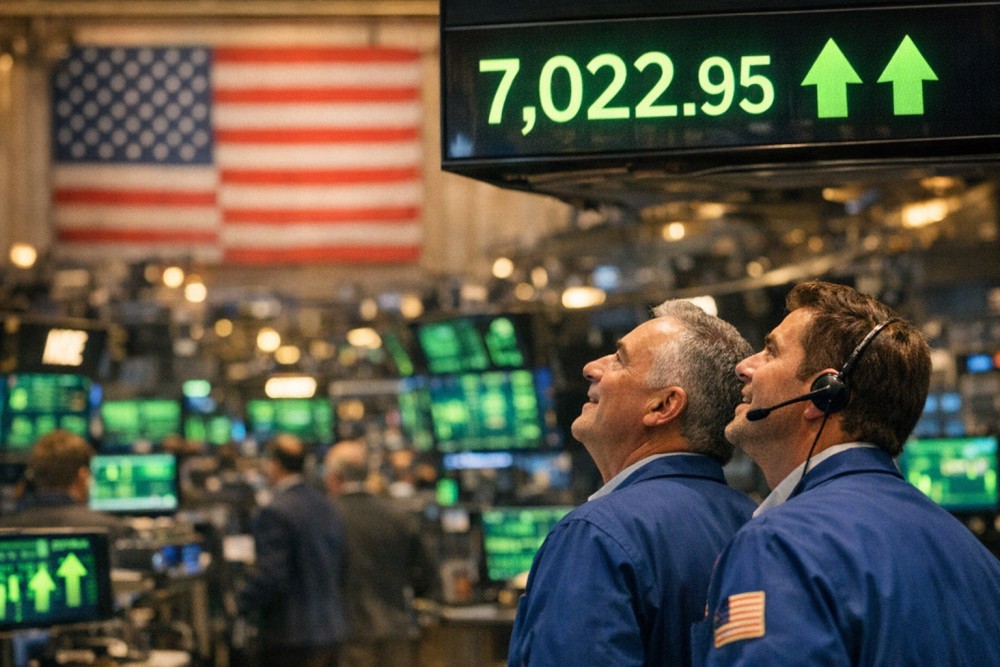
The S&P 500 closed at 7,022.95, gaining 0.80% on the day and surpassing its previous record of 6,978.6 set on January 27. The Nasdaq Composite climbed 1.59% to finish at 24,016.02, beating its October 29 closing high of 23,958.47.
Key Takeaways
- The S&P 500 has erased its nearly 8% peak-to-trough decline during the Iran conflict, closing at a new all-time high of 7,022.95.
- Technology stocks led the charge, with Microsoft (MSFT) surging 4.64% and ServiceNow jumping 7.29% in a single session.
- Wall Street projects S&P 500 earnings growth exceeding 16% in Q1 2026, the highest level in four years, providing a fundamental floor beneath the rally.
Tech Sector Powers the Breakout
Technology stocks drove the bulk of the gains as investors rotated back into growth names. Software companies showed particular strength, with Microsoft (MSFT) climbing 4.64% and Oracle (ORCL) advancing 4.27% on the day.
Salesforce (CRM) gained 3.67% as enterprise software demand remained resilient despite geopolitical uncertainty. ServiceNow led the software rally with a 7.29% jump, reflecting renewed confidence in recurring revenue business models.
The Dow Jones Industrial Average was the outlier, slipping 0.15% to close at 48,463.72. This divergence highlighted the tech-heavy nature of the rally, according to The Motley Fool.
Mark Hackett of Nationwide observed that extended trading ranges followed by breakouts from pessimistic sentiment tend to produce historically powerful rallies. The current move fits that pattern precisely, with weeks of war-related selling creating a coiled spring of pent-up demand.
Financial stocks also participated in the advance. Morgan Stanley gained 4.52% while Bank of America (BAC) rose 1.82%, reflecting improved risk appetite across the banking sector.
The March correction had reset technology valuations to more attractive levels, according to Investing.com. This valuation reset drew renewed investor interest once geopolitical risks began to fade.
The breadth of the rally extended beyond just mega-cap names. Robinhood Markets surged 10.41% after the SEC approved new day-trading rules for retail investors, according to The Motley Fool.
Notably, the Allbirds pivot to AI-focused operations sent its shares up an extraordinary 582.33% in a single session. While this was an outlier, it illustrated the intensity of risk appetite that characterized Tuesday's trading.
Oil prices also played a supporting role in the equity rally. WTI crude declined from its wartime peak of $112 to $91 per barrel, relieving pressure on transportation and manufacturing costs across the economy.
Recovery Speed Defies Historical Patterns
The speed of the S&P 500's recovery surprised even seasoned market watchers. The index fell nearly 8% at its lows during the Iran conflict before staging a complete reversal over several weeks, according to research from The Motley Fool.
Historical data supports this pattern of post-conflict rebounds. Three months after the start of the Korean War, the Gulf War, the Iraq War, and the Afghanistan War, the S&P 500 was up in the double-digit percentile in each case.
Oliver Pursche of WealthSpire Advisors attributed the rally to three converging factors. "Strong corporate earnings, better-than-forecast inflation data, and belief in a U.S.-Iran deal are driving performance," he told Investing.com.
The inflation component deserves particular attention from investors watching the Federal Reserve. Below-forecast price data reduces the pressure on the Fed to maintain restrictive monetary policy, which supports equity valuations.
Wall Street's earnings outlook reinforces the bullish case. Analysts project S&P 500 earnings growth exceeding 16% in Q1 2026, which would be the highest growth rate in four years.
This earnings growth projection is especially significant because it suggests corporate America is performing well despite geopolitical headwinds. Companies are demonstrating pricing power and operational efficiency that investors had questioned during the conflict.
Adam Sarhan of 50 Park Investments added that short-covering contributed to the rally's intensity. Many traders had positioned defensively during the conflict, and the ceasefire extension forced rapid unwinding of bearish bets.
The mechanical nature of short-covering creates a feedback loop that amplifies upward moves. As prices rise, short sellers are forced to buy shares to close positions, pushing prices even higher and triggering more covering.
The S&P 500 ETF (SPY) and Nasdaq 100 ETF (QQQ) both hit intraday records, giving passive investors full participation in the historic session. The Vanguard S&P 500 ETF (VOO) similarly reached new highs, confirming the broad-based nature of the advance.
For retail investors who stayed invested during the turbulence, the lesson is clear and consistent with decades of market history. Panic selling during geopolitical crises has historically been the wrong move.
Long-term data shows that the longer investors hold stocks, the less likely they are to experience losses. This principle was validated once again as those who held through the Iran-related volatility saw their portfolios reach new highs within weeks.
Sources:
- The Motley Fool, The S&P 500 Has Erased Every Loss From the Iran War, 2026.
- The Motley Fool, Stock Market Today: April 15 - S&P 500 and Nasdaq Reach New Highs, 2026.
- Investing.com, Instant View: S&P 500, Nasdaq Notch Fresh Records, Casting Aside War Fears, 2026.