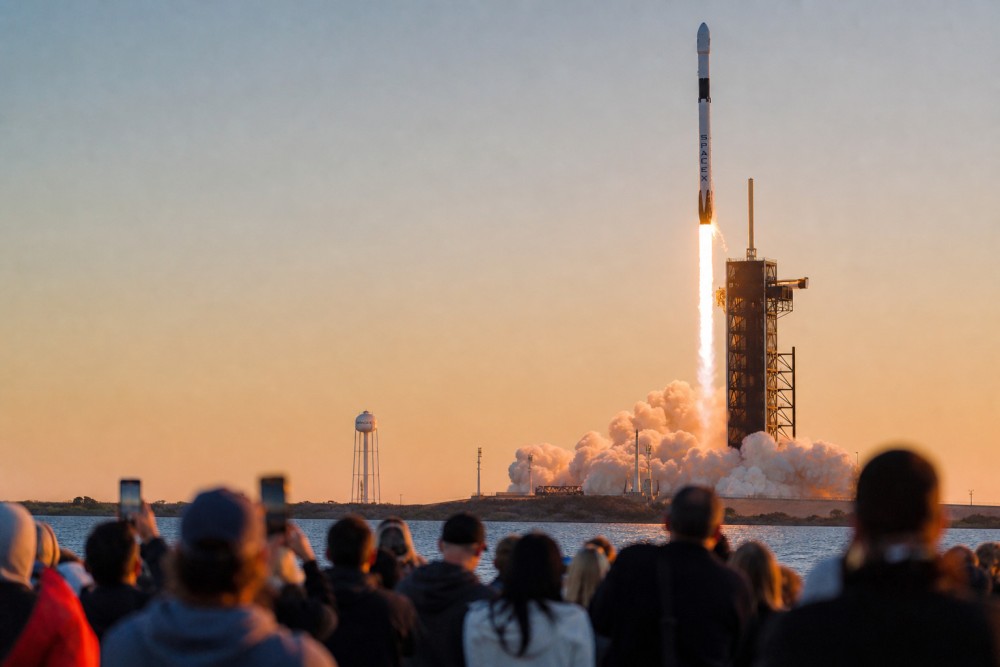
Gotrade News - SpaceX priced its IPO at $135 per share for a roughly $1.77 trillion valuation. The deal raises about $75 billion through 555.6 million newly issued shares.
Investor demand surged sharply ahead of the company's Nasdaq trading debut later this week. An offering this large could reshape money flows across the entire US equity market.
Key Takeaways
- SpaceX priced at $135 per share for a roughly $1.77 trillion valuation.
- Order books ran two times oversubscribed, with demand near $150 billion.
- Retail investors received a 30% allocation, far above the usual IPO share.
As reported by The Motley Fool, SpaceX's order book ran twice oversubscribed. Total orders reached roughly $150 billion against a fundraising target of just $75 billion.
Final pricing is set for June 11, with shares expected to begin trading the next day on June 12. The offering releases only about 4% of the entire company to public market investors.
An oversubscribed deal means investor demand far exceeds the number of shares currently available. SpaceX could tap its greenshoe option to add fresh supply and absorb part of the excess demand.
An Unusual Retail Window
SpaceX reserved roughly 30% of its public shares specifically for individual retail investors. That figure sits well above the typical 5% to 10% range seen in most large IPOs.
According to The Motley Fool, allocations run through Robinhood, Schwab, Fidelity, SoFi, and E*TRADE. Even so, only a limited pool of retail buyers will receive direct share allocations.
Because the deal is heavily oversubscribed, not all investor orders are expected to be filled. The remaining buyers must purchase on the open market once the stock begins trading publicly.
Per The Motley Fool, SpaceX posted about $18.7 billion in revenue during 2025. Despite that scale, the company still booked a net loss of roughly $2.6 billion that same year.
What It Means for Index Funds
Nasdaq's revised rule, effective May 1, 2026, targets very large new market listings. A top-40 company by market cap can now join the Nasdaq-100 after just 15 trading days.
That means holders of a Nasdaq-100 fund like the Invesco QQQ Trust (QQQ) could gain automatic exposure. Passive funds would then be forced to buy the low-float newcomer once inclusion formally takes effect.
The S&P 500, by contrast, requires a full 12 months of seasoning before a company can enter. Its major index trackers will likely stay on the sidelines until at least sometime in 2027.
Analysts estimate the new index rules could force roughly $22 billion to $27 billion in automatic buying. That forced demand comes from passive funds tracking the Nasdaq-100 and the broad Russell indexes.
The frenzy is also drawing fresh investor attention to other publicly traded space names. Stocks such as Rocket Lab (RKLB) and AST SpaceMobile (ASTS) often ride similar sector sentiment.
History shows the biggest IPOs rarely deliver large gains during their first year of public trading. Investors shut out of the initial allocation may still find cheaper entry points down the line.
Sources