
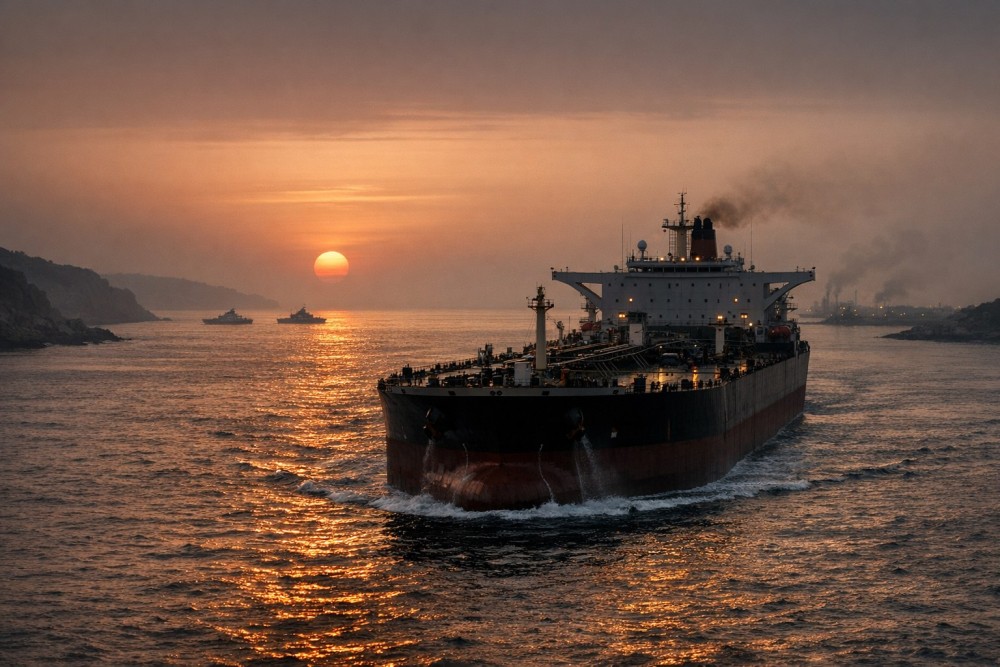
Gotrade News - Geopolitical risk took center stage on Monday after fresh tensions in the Strait of Hormuz rattled global markets and pushed crude oil sharply higher. Iran was reported to have struck vessels in the waterway and set ablaze an oil port in the UAE on May 4, 2026, in response to U.S. military operations, reigniting fears about energy supply through the world's most critical oil chokepoint.
Key Takeaways
- Crude oil surged about 6% on Monday, with WTI closing near $104.41 and Brent around $113.31, before settling lower in subsequent sessions.
- The S&P 500 fell 0.41% to 7,200.81, the Dow dropped 1.13% to 48,941.90, and the Nasdaq slipped 0.19% to 25,067.80.
- Energy and defense names came back into focus, while airlines, logistics, and rate-sensitive sectors faced renewed cost pressure.
Oil Spikes As Hormuz Risk Returns
According to Investing.com, the attacks on tankers in the Strait of Hormuz triggered a roughly 6% jump in crude prices in a single session before some of those gains faded. The strait carries close to a fifth of seaborne oil supply, so any disruption tends to flow straight into refining margins and pump prices globally.
U.S. integrated majors like Exxon Mobil (XOM) and Chevron (CVX) tend to be direct beneficiaries when Brent and WTI move higher, given their upstream production exposure. Broad energy exposure is often expressed through XLE, while USO tracks WTI futures more directly.
Equities Wobble, Defense Names In Play
As reported by Investing.com, the energy sub-index gained 0.85% on the day even as the broader market drifted lower, with declining stocks outnumbering gainers by 2.2 to 1. One strategist noted that "the kind of big asymmetric risk is still to the downside" despite current odds suggesting a contained outcome.
Defense and military hardware names tend to attract flows during sustained Middle East flare-ups. RTX (RTX), the parent of Raytheon, sits at the center of that trade given its missile defense and propulsion exposure. Palantir also climbed 1.4% ahead of earnings as investors leaned into defense-software beneficiaries.
Spillover Risk For Airlines And Banks
According to Investing.com, the secondary impact is already visible across Asia Pacific corporates. Air New Zealand suspended earnings guidance on jet fuel volatility, Qantas raised its fuel cost outlook by up to A$800 million and delayed a A$150 million buyback, and Virgin Australia flagged A$30 to A$40 million in additional H2 fuel costs.
Banks are positioning for credit stress as well. National Australia Bank flagged A$706 million in credit impairment charges, while Westpac lifted provisions to COVID-era highs, citing energy market shocks. Norwegian Cruise Line slashed its annual forecast on higher Middle East-related fuel costs.
What Investors Are Watching Next
Markets are now focused on whether Pakistan-brokered U.S. talks with Iran can de-escalate the standoff, while keeping an eye on AMD, Shopify, KKR, and MicroStrategy earnings on Tuesday and April nonfarm payrolls on Friday. A clean ceasefire path could unwind the energy premium quickly. A failed one would put the energy and defense trade firmly back in the driver's seat.
Sources
Investing.com, U.S. stock futures subdued after Hormuz tensions flare.
Investing.com, Factbox: from airlines to banks, Australian and New Zealand firms feel heat of Gulf crisis.
Investing.com, U.S. stock futures mixed as Middle East risks remain in focus.