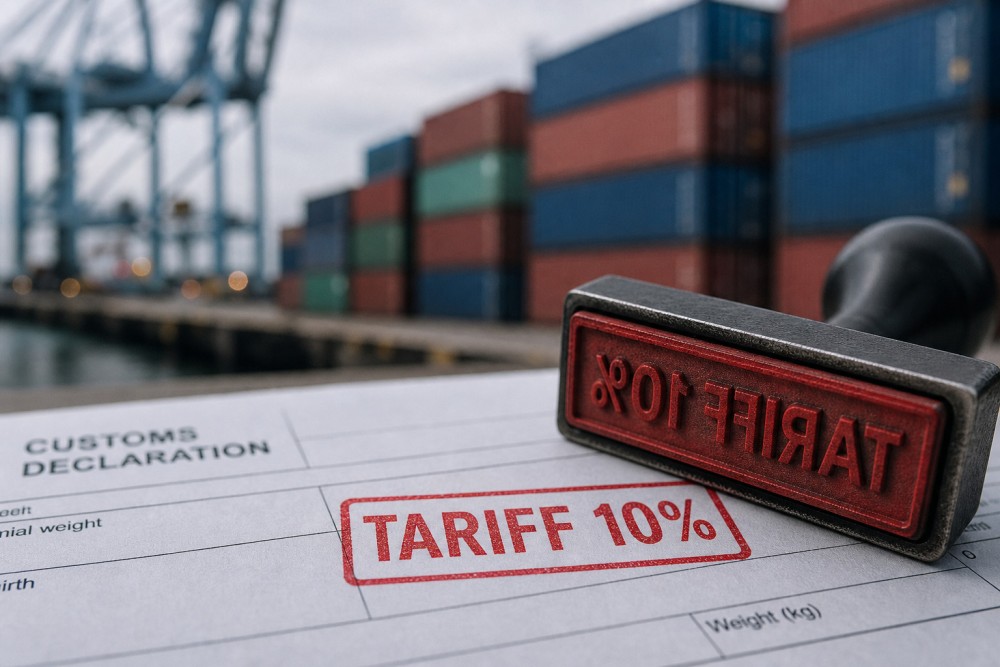
Trump Proposes New 10% Tariffs on 60 Nations as Markets Slip
Rendy Andriyanto
Gotrade Team
Reviewed by Gotrade Internal Analyst
Share this article
Gotrade News - The Trump administration proposed new import tariffs of at least 10% on roughly 60 major trading partners. The plan was unveiled on Wednesday, June 3, 2026, framed around enforcement of forced-labor import bans.
The news pressured market sentiment that had assumed the tariff wall was being dismantled. Investors must now reprice the risk of a fresh escalation in global trade tensions.
Key Takeaways
About 60 nations face proposed tariffs of 10% to 12.5% under Section 301.
China, Japan, and South Korea sit in the higher 12.5% tariff group.
Earlier emergency tariffs were struck down by the Supreme Court in February 2026.
According to investingLive, a 10% tariff is proposed on about 60 countries including Canada, Mexico, the EU, Taiwan, and the UK. A higher 12.5% rate targets China, India, Japan, South Korea, Brazil, and Switzerland.
As reported by CBS News, 16 countries seen as taking enforcement steps would face the lower 10% rate. Certain goods including beef, tomatoes, and coffee are exempt from the new tariffs.
The legal basis now shifts to Section 301 of the Trade Act of 1974. According to investingLive, that authority replaces the emergency powers struck down by the Supreme Court in February 2026.
Officials describe the new approach as legally more robust than the prior tariff mechanism. The move closes the legal gap that had seen earlier Trump tariffs fall in court.
Higher import tariffs threaten to squeeze margins at retailers and consumer-goods companies. Large retailers such as Walmart (WMT) rely heavily on supply chains in the targeted countries.
Brands with cross-border production like Nike (NKE) are also exposed to rising import costs. A 12.5% rate on key trading partners could lift their cost of goods sold.
The auto industry is among the most sensitive to shifts in global tariff policy. Manufacturers such as General Motors (GM) face the risk of pricier imported components.
Higher component costs typically feed through to steeper sticker prices for vehicles. That burden risks eroding consumer demand at a time when inflation remains sticky.
Timeline And Official Reaction
As reported by CBS News, US Trade Representative Jamieson Greer said American workers are forced to compete on an unlevel field. He argued many nations lack robust prohibitions on forced labor.
According to investingLive, written public comments are due July 6, with panel hearings beginning July 7. The administration wants the new tariffs in place before the older Section 122 global tariff expires in July.
That July deadline puts a tight clock on the US trade team. The narrow window pushes negotiations with trading partners to move faster than usual.
Per CBS News, Treasury Secretary Scott Bessent expects the Section 301 duties to replace temporary tariffs within five months. He called the new legal framework more durable against court challenges.
Several trading partners quickly pushed back on the basis for the proposed tariffs. They argued the claim of weak forced-labor enforcement is not fully grounded.
For retail investors, the lesson is to track the comment and hearing schedule into early July. The final tariff details will determine how much consumer prices ultimately feel the impact.
Gotrade is the trading name of Gotrade Securities Inc., which is registered with and supervised by the Labuan Financial Services Authority (LFSA). This content is for educational purposes only and does not constitute financial advice. Always do your own research (DYOR) before investing.