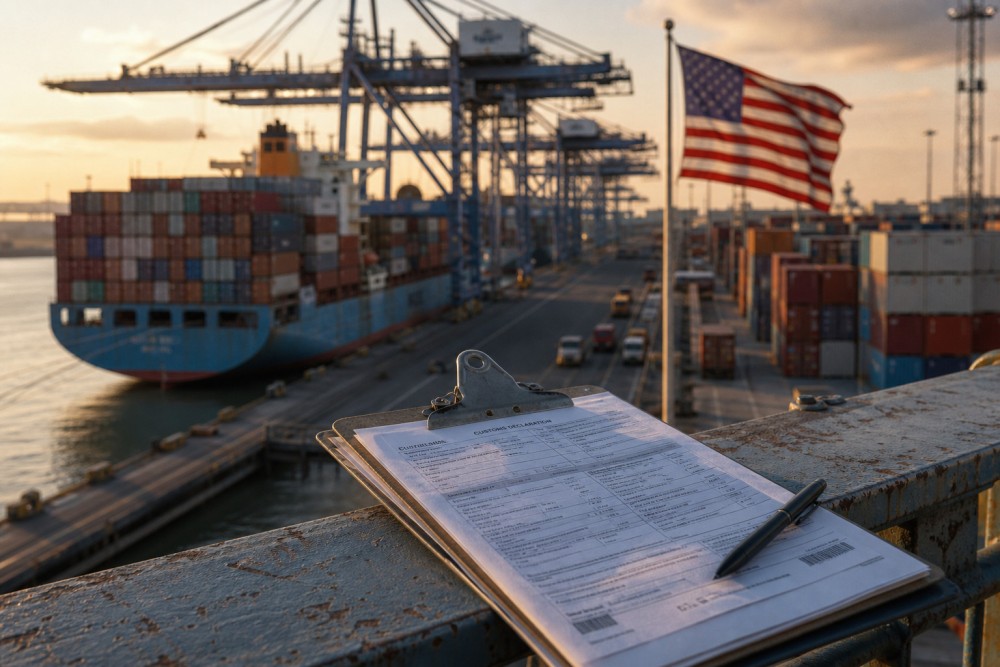
Gotrade News - The United States is reviewing new tariffs on 60 trading partners over weak enforcement of forced-labor import bans. The measures, announced June 3, range up to 12.5% under Section 301 of the Trade Act of 1974.
The move targets countries the US says have failed to block goods made with forced labor. Higher import duties could lift costs across global supply chains and pressure margins for affected importers.
Key Takeaways
The US is reviewing tariffs of up to 12.5% on 60 trading partners, effective after review.
A public comment period runs through July 6, with hearings scheduled for July 7.
Higher import costs threaten margins for retailers and Asia-manufacturing multinationals.
According to Kompas, the US Trade Representative is weighing additional tariffs of up to 12.5% on 60 partners. The action falls under Section 301, citing failure to enforce bans on forced-labor imports.
USTR Jamieson Greer said inaction by major trading partners on forced labor is "unacceptable." He argued it leaves American workers competing on an uneven playing field.
The proposed structure sets a minimum 10% rate for partners and 12.5% for major economies. A public comment period runs through July 6, with hearings on July 7.
As reported by Liputan6, six countries face a proposed 10% tariff. That group includes Canada, Ecuador, the European Union, Indonesia, Mexico, and Pakistan.
Per the same report, 44 other nations face the higher 12.5% rate. Indonesia also appears on a separate 15-country overcapacity probe list.
What This Means for Importers
Higher duties tend to flow through to companies that source heavily from overseas manufacturing hubs. Import-reliant US retailers face the most direct cost exposure if the measures take effect.
Big-box chains such as Walmart (WMT) and Target (TGT) rely on global suppliers for a large share of inventory. Added tariffs could squeeze margins or push prices higher for shoppers.
Brands that manufacture across Asia carry similar risk on the production side. Nike (NKE) sources much of its footwear and apparel from the region, leaving it sensitive to new duties.
Deborah Elms of the Hinrich Foundation called Section 301 a very powerful tool unlikely to be overturned. That assessment signals the proposals could carry real staying power for affected sectors.
Exemptions reportedly include beef, tomatoes, bananas, coffee, and orange juice. Certain metals and chemicals are also expected to be carved out from the new measures.
Gotrade is the trading name of Gotrade Securities Inc., which is registered with and supervised by the Labuan Financial Services Authority (LFSA). This content is for educational purposes only and does not constitute financial advice. Always do your own research (DYOR) before investing.