AI-powered contentSome parts of this article are powered by AI.
Share this article
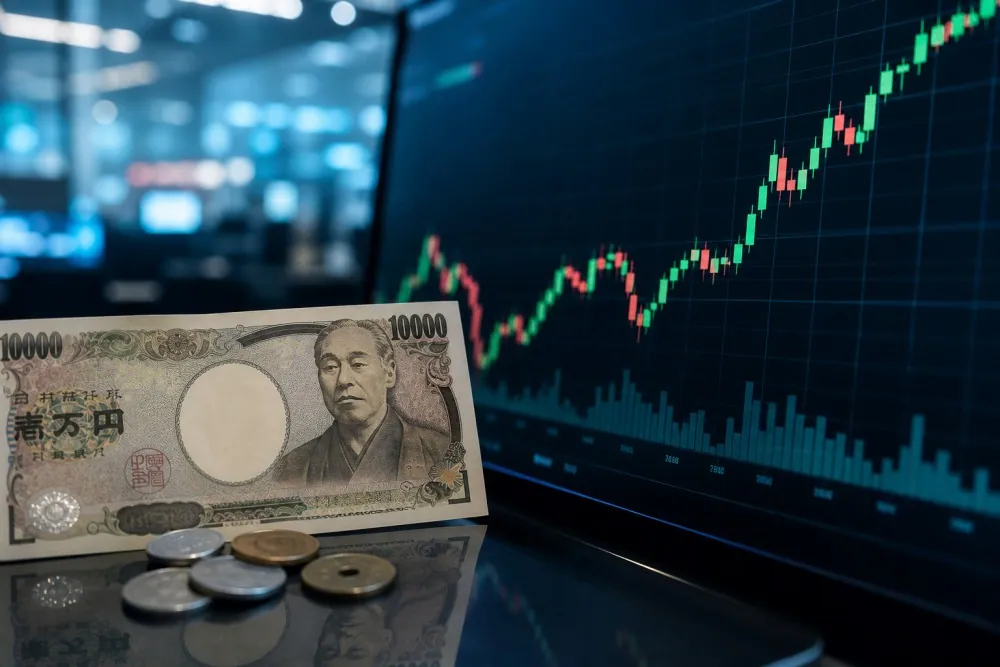
Gotrade News - The Japanese yen climbed to a six-month high, trading below 153 per US dollar, as investors ramped up bets that the Bank of Japan will keep raising interest rates.
According to investingLive, the rally followed an upward revision to Japan's second-quarter GDP and the strongest July wage growth since 1997, with speculation over a possible shift in the giant GPIF pension fund adding fuel.
A stronger yen and higher Japanese rates matter well beyond Tokyo. They squeeze the yen carry trade, the long-running strategy of borrowing cheaply in yen to buy higher-yielding assets around the world, US stocks included, and an unwind of those positions is exactly what American investors need to watch.
The yen hit a six-month high below 153 per dollar as markets price further BOJ tightening.
A rising yen pressures the carry trade, and forced unwinds can spill into US equities.
Morgan Stanley estimates roughly $500 billion in outstanding yen carry positions are still in the market.
So far the US read-through is muted: S&P 500 futures were only about 0.1% lower.
How the Yen Carry Trade Reaches US Stocks
In a carry trade, investors borrow in a currency with near-zero rates, and the yen has been the classic funding currency for years, then plow the proceeds into higher-returning assets, from the S&P 500 ETF (SPY) to high-growth technology names.
The trade works as long as the yen stays weak and Japanese rates stay low. When the yen surges and the BOJ tightens, both legs turn against investors at once, and some are forced to sell US holdings to repay yen loans that have suddenly become more expensive.
Why This Move Is Bigger Than a Currency Swing
The scale is what makes the current setup worth watching. As reported by Investing.com, Morgan Stanley estimates around $500 billion in yen carry positions remain outstanding across global markets. A disorderly unwind of even part of that pile can amplify selling in the most crowded, highest-beta corners of the US market, which is why leveraged technology leaders like NVIDIA (NVDA) and the tech-heavy Nasdaq 100 ETF (QQQ) tend to move first when carry trades come undone.
Not every US stock reacts the same way when a carry trade unwinds. The pressure tends to land hardest on the fastest-moving, most heavily-owned parts of the market, the same names that ran higher while cheap yen funding was flowing in. Three groups usually move first:
High-growth tech and semiconductors. Momentum-driven leaders like NVIDIA and the broader chip group, tracked by the semiconductor ETF (SMH), carry rich valuations and fast money, so they typically see the sharpest swings.
Small-cap stocks. Baskets like the Russell 2000 ETF (IWM) are more sensitive to shifts in risk appetite and liquidity, and they tend to fall faster than large caps when investors de-risk.
Broad momentum and mega-cap tech. A carry unwind is at heart a liquidity shock, and the most crowded trades, concentrated in the Nasdaq 100, are often the first ones investors trim to raise cash.
Defensive corners of the market behave differently. Utilities, consumer staples, and lower-valuation value names have historically held up better when a yen-driven de-risking wave hits, because they lean less on the cheap leverage a carry trade supplies. None of this is a forecast of a sell-off; the aim is simply to know where the sensitivity sits, so a sharp move in the yen is not a surprise for your watchlist.
What Past Yen Shocks Did to Markets
History offers a clear template. In August 2024, a sudden yen surge triggered a roughly 12% single-day crash in Japan's Nikkei 225 and a sharp sell-off across global equities, per Investing.com.
When the BOJ last raised rates in December 2025, lifting its policy rate to 0.75%, the highest in three decades, the move again rippled through risk assets, pushing the VIX volatility gauge higher and knocking emerging-market stocks lower.
Episode
Trigger
Market impact
Aug 2024
Sudden yen surge, BOJ hike
Nikkei 225 fell about 12% in a day; global equities sold off
Dec 2025
BOJ hike to 0.75%
VIX jumped; emerging-market stocks slipped
Sep 2026 (now)
Yen at six-month high, hike bets firm
S&P 500 futures about 0.1% lower so far
What US Investors Should Watch Next
For now the reaction is calm. As reported by Global Banking and Finance Review, S&P 500 futures were only about 0.1% lower even as the yen touched its strongest level since February. The key event is the BOJ's policy meeting next week: a hawkish signal that speeds up the tightening path would put the carry trade under fresh pressure, while a cautious tone could let the unwind fade.
Until then, the muted futures move is a sign the market is watching rather than panicking, but the sheer size of the outstanding carry trade is reason enough to keep a close eye on your US positions.
Gotrade is the trading name of Gotrade Securities Inc., which is registered with and supervised by the Labuan Financial Services Authority (LFSA). This content is for educational purposes only and does not constitute financial advice. Always do your own research (DYOR) before investing.
M. Alfathan Rahman is a content writer with over 3 years of experience developing digital content strategies across various industries, including fintech. He has experience producing content for tax-related websites and financial education platforms. His focus areas include data research, and crafting financial articles that are informative, accurate, and accessible to investors of all experience levels.