
Apple supply chain stocks tend to move sharply in the 48 hours around an iPhone print, and the setup heading into AAPL's Q2 FY26 release on Thursday Apr 30 is no different. With iPhone consensus pegged at $56.5B on roughly 60M units, the read-through to Apple's biggest semiconductor partners is unusually clean this quarter.
If you trade Apple's ecosystem rather than just the stock itself, the call commentary on unit ramp, modem strategy, and RF content is where the alpha sits. Three names sit directly in that line of fire.
Why Apple Supply Chain Names Move on AAPL Earnings
Apple discloses iPhone revenue but rarely unit volumes, so analysts reverse-engineer shipment trajectory from gross margin commentary, channel inventory language, and forward guidance tone. Each of those data points feeds directly into supplier order books for the September build cycle.
According to CNBC, supply chain checks ahead of the print suggest a steady iPhone 17 ramp, with Apple holding firm on premium pricing despite a softer China backdrop. That keeps Apple's tier-one chip and RF partners squarely in focus.
The names below all derive a meaningful slice of revenue from Apple, and each one tends to gap on specific phrases from Tim Cook and Luca Maestri. Knowing which sentence to listen for is the edge.
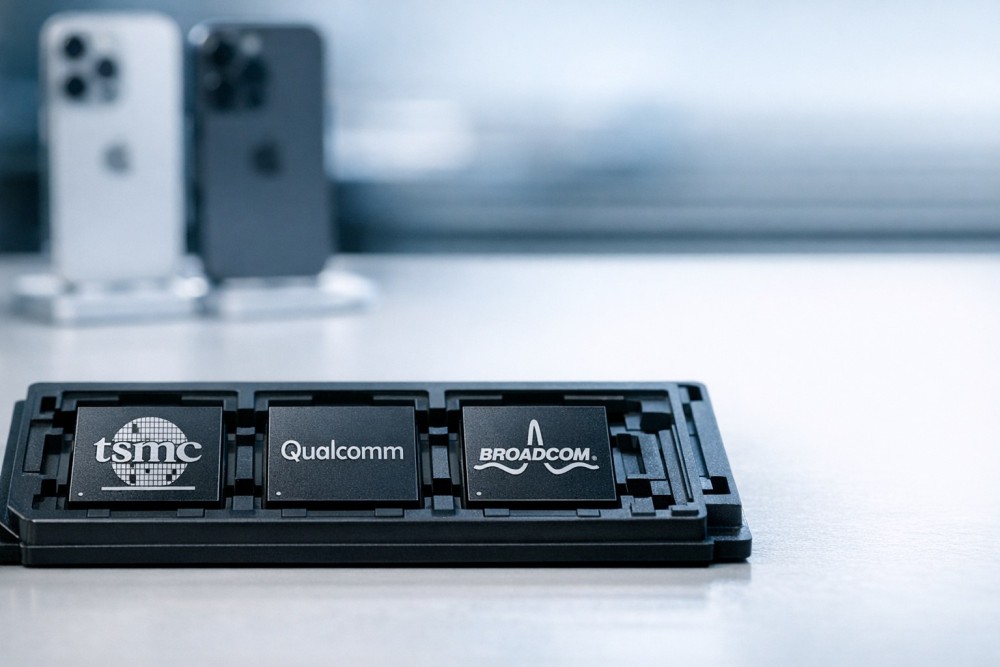
The 3 Supply Chain Names to Track
1. TSMC (TSM)
TSMC fabs the A18 and A19 chips that power Apple's iPhone, iPad, and Mac line, making TSM the single most leveraged name to iPhone unit guidance. Apple is TSMC's largest customer at roughly 23% of revenue, and any commentary on advanced node demand reads through directly to the foundry's 2nm and N3P loading for 2027.
What to listen for: any softening in Apple's "Services and Products mix" language, or an unexpected gross margin compression callout. Both signal weaker iPhone unit ramp into the September quarter, which historically pulls TSM down 2-3% in the next session even when TSMC's own numbers were fine. Watch for Cook's exact phrasing on China demand, since TSMC's ADRs are particularly sensitive to that subsegment.
2. Qualcomm (QCOM)
Qualcomm still supplies the modem for the iPhone 17 lineup, but Apple's in-house C2 modem is rolling into more SKUs each cycle. QCOM trades on the timeline of that displacement as much as on its own diversification story.
What to listen for: any Apple commentary on "vertical integration progress" or modem-related R&D spend. Bloomberg reports the latest agreement extends Qualcomm modem shipments through 2027, but the mix shift is the key variable. If Cook hints at faster in-house adoption, expect QCOM to gap lower on the open Friday.
3. Broadcom (AVGO)
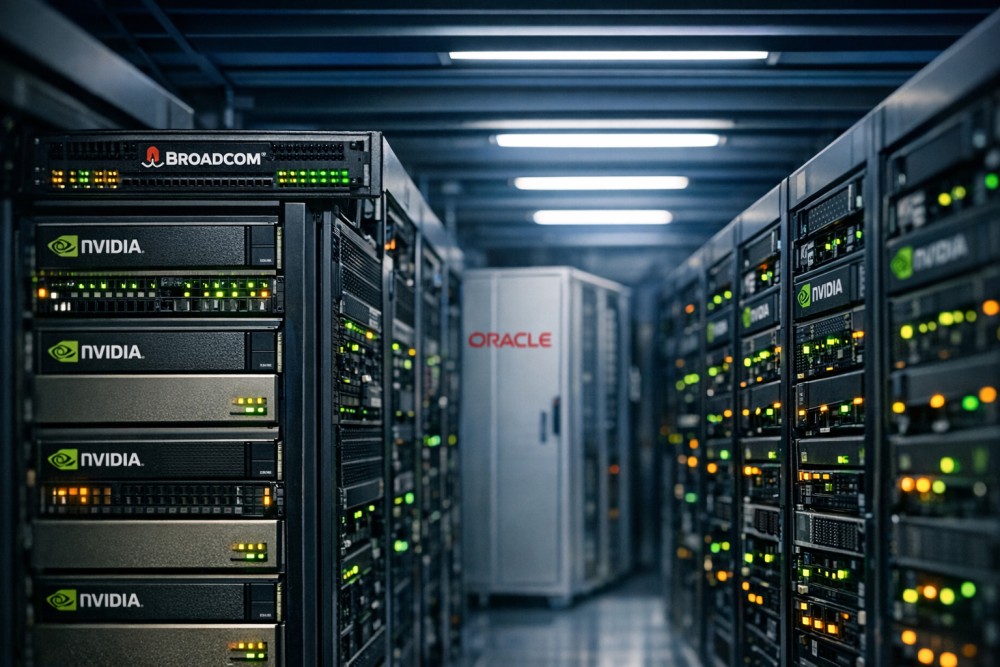
Broadcom supplies Apple with wireless connectivity chips, RF front-end components, and Touch ID and display IC content, generating roughly 20% of AVGO's wireless segment from Cupertino. The relationship was extended through 2026, but ASP and content-per-device commentary moves the stock more than headline revenue.
What to listen for: Apple's tone on iPhone Pro mix and Vision Pro shipment color. Higher Pro mix means richer Broadcom content per unit, and any Vision Pro acceleration reads through to AVGO's custom silicon revenue stream. Watch for AVGO follow-through trades 30 minutes after the AAPL call wraps, especially if Maestri quantifies Wearables and Home segment growth, where Broadcom's connectivity content is overweight.
Pre-print prep: add AAPL, TSM, QCOM, and AVGO to your Watchlist on Gotrade now so you're set up to react to Thursday's commentary in real time. Trading the supplier names off Apple's call is a classic activation play, and the setup window closes at 4 PM ET Apr 30.
Conclusion
The cleanest framing for this print is to treat AAPL as the data source and the three suppliers as the trade vehicles. Apple guidance on iPhone units, Pro mix, and modem strategy each map to a specific name, so you don't need to guess which way the supply chain moves. You just need to listen for the right sentence.
Most retail traders will focus on Apple's own gap reaction, but the supplier moves often offer cleaner risk-reward because they're less crowded and more sensitive to specific call commentary. TSMC for unit ramp, Qualcomm for modem timeline, Broadcom for content-per-device. Three names, three distinct catalysts, one earnings call.
If you want to position into Thursday's print across the full Apple ecosystem, Gotrade gives you fractional access to AAPL plus all three suppliers in one app, so you can size each name to your conviction without committing to a single full-share position.
That flexibility matters most around earnings, when volatility is the whole point and entry timing is the difference between a clean trade and a chase. Build the basket now and let Apple's call do the work for you.
FAQ
When does Apple report Q2 FY26 earnings?
Apple reports after the market close on Thursday, April 30, 2026, with the conference call following at 5 PM ET.
Which Apple supplier is most sensitive to iPhone unit guidance?
TSMC, because it fabs every A-series chip and roughly 23% of its revenue comes from Apple.
Why does Qualcomm trade on Apple's earnings call?
Apple is rolling out its own in-house modem, so any commentary on vertical integration timing directly impacts Qualcomm's forward royalty stream.
How quickly do Apple suppliers move after the call?
Most of the move happens in the 30-90 minutes following the conference call, often before the next session's open.