
Buying the dip can be a powerful strategy, but not every dip is worth buying. Many traders confuse a temporary pullback with the start of a deeper decline.
Using a structured dip buying checklist helps you distinguish between healthy pullbacks and potential downtrends. By focusing on key buy the dip signals, you can improve timing and reduce unnecessary risk.
Buy the Dip Signals
1. Strong long-term trend intact
The first and most important rule is to confirm that the overall trend is still intact. A valid dip usually occurs within an uptrend, where price continues to form:
If the trend structure is broken, the dip may not be a buying opportunity but the start of a reversal. For example:
- if price breaks below a key higher low, the trend may be weakening
- buying in a broken trend increases risk
Always zoom out to higher timeframes to confirm the bigger picture before entering.
2. Support level holding
Dips often retrace to key support levels before continuing higher. Common support zones include:
- previous resistance turned support
- moving averages
- demand zones
A strong dip-buying setup typically shows:
- price testing support
- buyers stepping in to defend the level
Waiting for confirmation that support is holding can improve entry quality and reduce downside risk.
3. Volume stabilizing
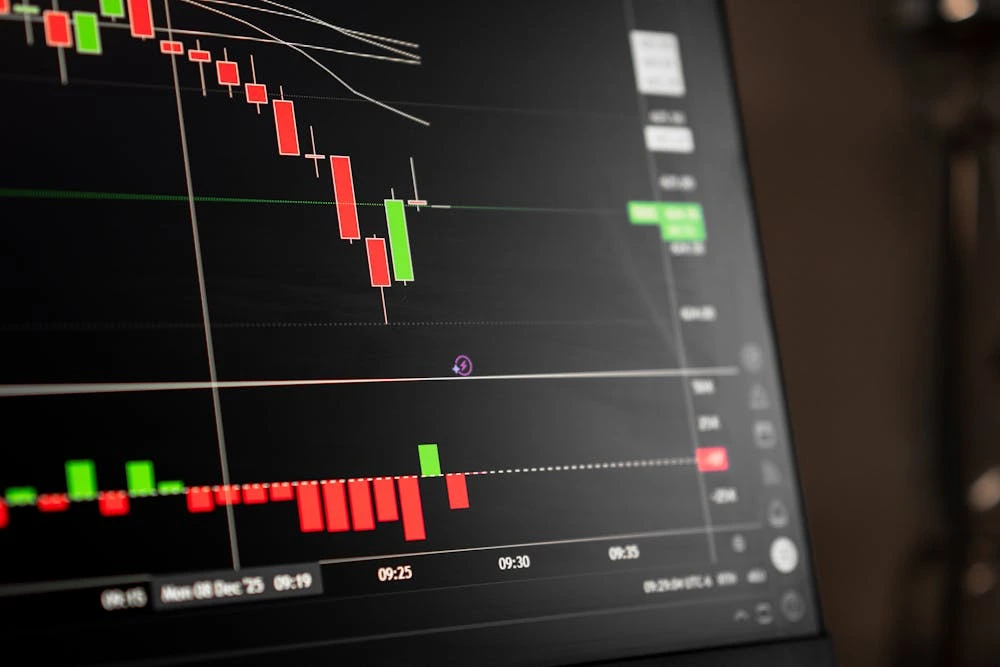
Volume provides insight into selling pressure. During a pullback:
- high volume suggests strong selling pressure
- declining volume suggests that selling is slowing
A healthy dip often shows:
- decreasing volume during the pullback
- increasing volume when price starts to bounce
This shift indicates that sellers are losing control and buyers may be returning.
4. No major negative catalyst
Before buying the dip, it is important to understand why price is falling.
Ask:
- is this a temporary reaction or a structural issue?
Avoid buying dips caused by:
- poor earnings results
- regulatory problems
- major changes in business fundamentals
Dips driven by short-term sentiment or market-wide movements are often safer than those caused by fundamental deterioration.
5. Momentum slowing on downside
Momentum indicators can help identify whether the decline is losing strength.
Look for:
- RSI moving out of oversold levels
- bullish divergence (price makes lower low, indicator does not)
- smaller bearish candles
These signals suggest that the downward move is weakening. A slowing decline often indicates that the market may be preparing to reverse.
6. Market sentiment not extremely bearish
Sentiment provides important context. While fear can create opportunities, extreme bearish sentiment can also signal deeper risk.
Check whether:
- the broader market is stable
- panic selling is occurring
- news flow is excessively negative
If sentiment is extremely negative due to major macro events, the dip may continue further. Balanced or mildly negative sentiment is generally more favorable for dip buying.
Why Timing Matters in Dip Buying
Buying too early is one of the most common mistakes. Even in strong trends, price can continue falling before stabilizing.
Waiting for confirmation such as:
- support holding
- momentum slowing
- volume stabilizing
can improve timing and reduce drawdowns. Dip buying is not about catching the exact bottom, but about entering when probability improves.
Conclusion
Buying the dip can be an effective strategy when applied with discipline. By following a structured buy the dip signals checklist, traders can better identify high-quality setups and avoid entering during weak conditions.
Confirming trend strength, support levels, volume behavior, and market context helps improve decision-making and reduces the risk of buying into deeper declines.
FAQ
What is the best signal to buy the dip?
There is no single signal. Combining trend confirmation, support levels, and volume analysis provides stronger setups.
Is buying the dip always profitable?
No. Buying dips in broken trends or weak fundamentals can lead to losses.
Should beginners use dip buying strategies?
Yes, but only with proper risk management and confirmation signals.
References:
- Investopedia, What Buying the Dip Mean, 2026.
- Corporate Finance Institute, Market Timing, 2026.