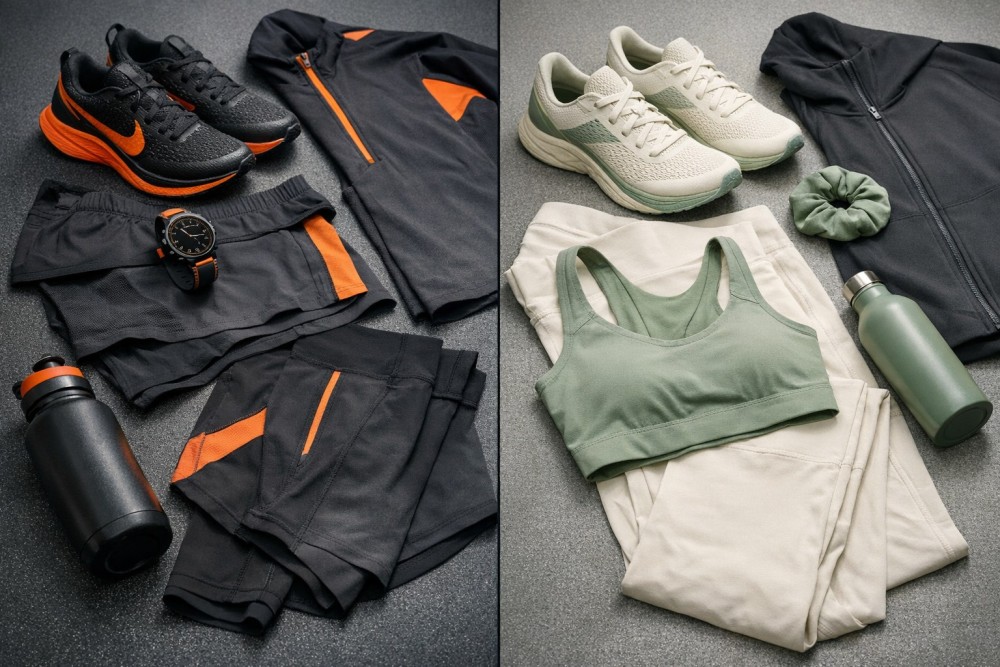
Nike and Lululemon dominate athletic apparel, but they win in very different ways. One sells global scale; the other sells premium margin.
The setup matters for any consumer discretionary sleeve. Nike trades on a turnaround narrative, Lululemon on durable profitability.
This comparison covers brand moat, margins, geography, direct-to-consumer, and valuation, then issues a five-year verdict.
Brand Moat: Global Scale at Nike vs Premium Niche at Lululemon
The two brands compete in the same closet but defend very different territory. Scale is the moat at one, pricing power is the moat at the other.
Nike (NKE)
Nike (NKE) is the largest athletic apparel brand on earth, with a multi-decade endorsement flywheel and a wholesale network that reaches almost every meaningful sports retailer.
That scale produces real advantages in sourcing, marketing leverage, and shelf dominance. It also creates exposure when consumer trends shift faster than a global supply chain can respond.
Lululemon (LULU)
Lululemon (LULU) built a tighter moat around premium yoga and athleisure, then extended into running, training, and men's apparel.
The brand commands full-price selling that most apparel peers cannot match. Community-led marketing through ambassadors and studios reinforces pricing power.
Margin Profile: Why LULU Operating Margins Lead the Industry
The margin gap is the cleanest single number in this comparison. Lululemon's operating margin sits well above almost every apparel peer.
According to Lululemon Investor Relations, full-year fiscal 2024 revenue rose 10% to $10.6 billion and operating margin reached 23.7%, up 150 basis points year over year.
Nike's fiscal 2025 third-quarter gross margin compressed 330 basis points to 41.5%, with operating margin running well below Lululemon's level after promotional pressure and inventory cleanup.
The structural reason is mix. Lululemon sells fewer SKUs at higher average prices through company-operated stores, while Nike carries a much heavier wholesale footprint and broader price ladder.
Geographic Mix: NKE's China Exposure vs LULU's Expansion Runway
Geography is where the risk profiles diverge most sharply. One brand is over-indexed to a slowing market, the other has fresh runway.
Nike (NKE)
Greater China is roughly 14% of Nike revenue and has been a multi-quarter drag. Q3 fiscal 2025 China sales fell 7% year over year, the seventh consecutive quarterly decline.
The local competitive set has hardened around Anta and Li-Ning, and consumer sentiment toward Western brands has cooled. Recovery is possible but no longer a base case for the next 12 months.
Lululemon (LULU)
Lululemon's international segment, especially China and Europe, is still in build phase. China grew above 30% in fiscal 2024 off a much smaller base.
That asymmetry matters. The same geography is a headwind for one stock and a tailwind for the other.
Direct-to-Consumer: Both Brands' Digital Strategies Compared
Direct-to-consumer (DTC) is the shared battleground. Both brands want a higher share of revenue from owned channels because the unit economics are better.
Nike (NKE)
Nike Direct revenues hit $4.7 billion in Q3 FY2025, down 12% as the company resets a DTC strategy that had been pushed too aggressively over the prior cycle.
The current playbook restores wholesale partnerships with retailers like Dick's Sporting Goods (DKS) and Foot Locker, while keeping owned channels as the premium showcase.
Lululemon (LULU)
Lululemon's model is DTC-native. Roughly 90% of revenue runs through company-operated stores and lululemon.com, with almost no wholesale dependency.
That structure protects margin and brand control, but every store opening carries more weight per dollar of revenue.
Want exposure to both brands without picking just one? Open your Gotrade watchlist and review your apparel sleeve here.
Valuation: P/E, EV/Sales, and Growth Premium
Valuation tells you what the market is currently paying for each story. The premium is not where most investors expect.
According to Yahoo Finance, Nike trades around a 29x trailing P/E with a 3.7% dividend yield, reflecting depressed earnings and turnaround uncertainty.
Lululemon trades closer to a 17x to 20x forward P/E with no dividend, which is unusually cheap historically for a brand growing high single digits with industry-leading margins.
The market is essentially paying up for Nike's recovery optionality and discounting Lululemon's growth deceleration. Both views could be wrong.
Verdict: Which Apparel Stock Wins for the Next Five Years
For a five-year horizon, Lululemon has the cleaner thesis. Margin leadership, international runway, and DTC structure all compound in its favor.
Nike offers larger upside if China stabilizes and inventory normalizes. The path still requires multi-geography execution and a discount cycle that has not yet ended.
The portfolio answer is rarely binary. A barbell can capture Nike's recovery torque and Lululemon's durable compounding, alongside broader holdings like Costco (COST).
For context on how apparel names behave through the cycle, our primer on cyclical stocks vs defensive stocks is a useful frame.
Review your apparel exposure and build your position in Gotrade app now.
FAQ
Is Lululemon stock better than Nike for long-term investors?
For a five-year horizon, Lululemon currently has the cleaner combination of margin leadership, international runway, and DTC structure.
Why is Nike's gross margin under pressure?
Higher discounting, inventory obsolescence reserves, and channel mix shifts compressed Nike's Q3 FY2025 gross margin by 330 basis points to 41.5%.
How much of Nike revenue comes from China?
Greater China contributes roughly 14% of Nike revenue and has posted seven consecutive quarters of decline through Q3 fiscal 2025.
What is Lululemon's operating margin?
Lululemon's full-year fiscal 2024 operating margin reached 23.7%, among the highest in the global apparel sector.
Does Nike pay a dividend and Lululemon does not?
Nike currently yields about 3.7% on its dividend, while Lululemon returns capital primarily through buybacks rather than a regular dividend.