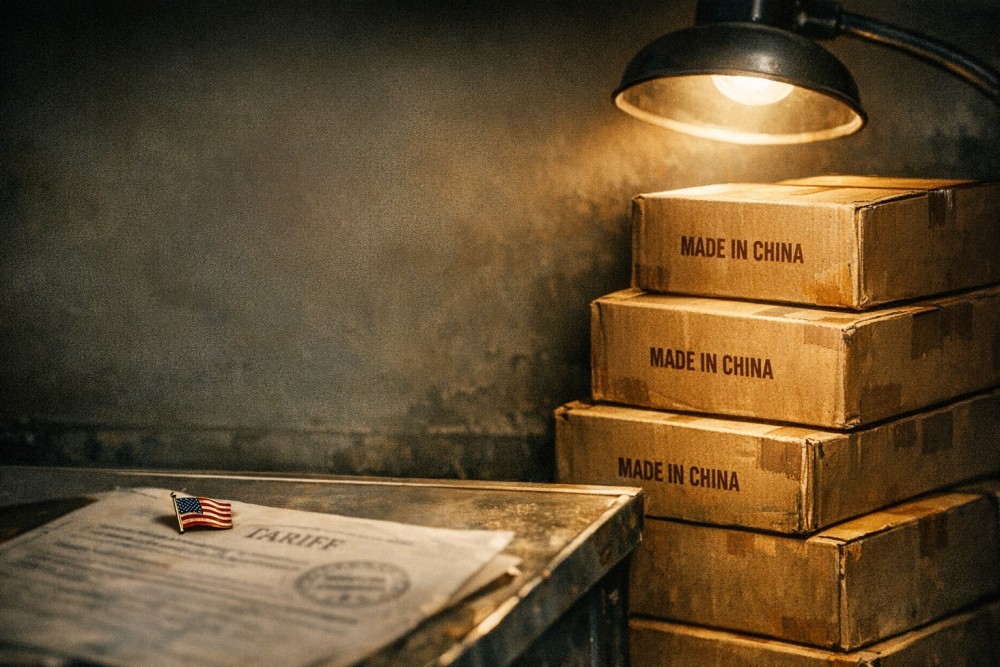
Tariff risk is back at the top of the agenda for US stock investors in 2026.
Fresh duties on imports from China, Mexico, and other partners are reshaping margins across industries.
This guide walks through the policy backdrop, names the most exposed tickers, highlights beneficiaries, and outlines simple hedges.
Tariff Policy Update as of May 2026
The Trump administration spent the first months of 2026 expanding tariffs across major trading partners. Duties on Chinese imports were raised in stages. New levies on autos, steel, and select consumer goods from Mexico and the European Union were also tightened.
According to CNBC, the cumulative effect is now showing up in earnings calls. Management teams cite higher input costs and uncertain demand. Importers face the choice of absorbing duties, passing them on, or rerouting supply chains.
What this means for stocks
Tariffs work like a tax on cross-border goods. Companies that source heavily from tariffed regions see margin compression. Firms with US-based production or government-backed demand often see relative strength.
The market does not punish every importer equally. Pricing power, inventory positioning, and the share of revenue tied to tariffed inputs all matter.
Most Exposed: Apparel, Consumer Electronics, Auto Importers
Three pockets of the US market sit in the tariff line of fire. Each has a different exposure profile.
Apparel and footwear
Apparel brands lean heavily on Asian manufacturing. Nike (NKE) still sources a large share of footwear from Vietnam, Indonesia, and China. Higher duties translate directly into higher landed costs.
The brand has pricing power, but premium sneaker buyers also have alternatives. Analysts now watch gross margin guidance more closely than top-line growth.
Consumer electronics
Hardware names with Chinese assembly lines face similar pressure. Apple (AAPL) assembles most iPhones in China. A growing but still smaller share is built in India and Vietnam.
Apple has the balance sheet to absorb temporary cost pressure. The longer-term question is how quickly it can shift more production out of China.
Auto importers
The auto sector is operationally complex. General Motors (GM) and Ford (F) both run large assembly footprints in Mexico, alongside US plants.
New duties on Mexican-built vehicles raise the cost per unit on popular crossovers and pickups. Both names also depend on cross-border parts flows.
Least Exposed and Beneficiaries: Onshoring, Defense, Domestic Manufacturing
Not every US name suffers when tariffs rise. Some sectors benefit through reshoring demand or fiscal spending that favors domestic suppliers.
Domestic manufacturing equipment
Capex names with strong US footprints often get a tailwind from onshoring. Caterpillar (CAT) sells heavy equipment used in construction, mining, and energy projects.
Deere (DE) dominates US farm and construction equipment. Reshoring of factories and warehouses tends to lift order books for both.
Defense primes
Defense contractors are largely insulated from import duties. Their customer base is the US government and allied militaries. Most production is domestic.
Lockheed Martin (LMT) derives most of its revenue from US defense programs. In a world of higher geopolitical tension, defense budgets tend to stay firm.
Other relative winners
Domestic utilities, regional banks, and US-only software names also trade with less direct tariff sensitivity. They are not immune to a slower economy, but their revenue does not shrink when duties rise on Chinese goods.
Portfolio Hedges Against Tariff Headlines
Tariff news will keep moving the tape through 2026. The aim is to build a portfolio that does not depend on a single outcome.
Diversify across exposure buckets
According to J.P. Morgan, the net effect of tariffs is uneven across sectors. A balanced book mixes tariff-exposed names with domestic-revenue businesses and defense.
Sizing matters. Cutting NKE or AAPL exposure does not mean exiting the names entirely. It can mean trimming back to a level you can hold through volatility.
Use cash and quality as ballast
Keeping some dry powder lets you add on tariff-driven selloffs in high-quality names. Quality means strong free cash flow, low net debt, and durable demand.
Watch margins, not just headlines
Tariff stories often run ahead of the actual earnings impact. Following gross margin trends and management commentary gives a cleaner signal than tracking each new announcement.
Conclusion
Tariff risk in 2026 is real, but it is not uniform. Apparel, consumer electronics, and auto importers carry the most direct exposure. Domestic manufacturing and defense names sit in a more defensive seat.
The practical move is to reposition rather than retreat. Trim concentration in heavy importers and add measured exposure to beneficiaries like CAT, DE, and LMT. With Gotrade, you can buy fractional shares of US stocks from US$1.
FAQ
Which US stocks are most exposed to tariff risk in 2026?
Apparel names like NKE, consumer electronics leaders like AAPL, and auto importers like GM and F carry meaningful exposure. The driver is overseas production and cross-border parts flows.
Which US stocks benefit from tariffs?
Domestic manufacturing equipment names like CAT and DE can benefit from onshoring demand. Defense primes like LMT are insulated because their main customer is the US government.
Are tariffs always bad for stocks?
No. Tariffs hurt importers but can help domestic producers and reshoring beneficiaries. The net market impact depends on sector mix and pass-through behavior.
How should I hedge tariff risk in my portfolio?
Diversify across exposure buckets, keep some cash for selloffs, and focus on margin trends rather than every headline. Size positions you can hold through volatility.
Can I trade these US stocks from Indonesia or other markets?
Yes. With Gotrade, you can buy fractional shares of US stocks from US$1. That gives easy access to names like AAPL, CAT, and LMT.