
The Volatility Index (VIX) is a widely followed market indicator that measures expected volatility in the U.S. stock market. Often referred to as the CBOE VIX, the index is commonly known as the market’s “fear gauge.”
The VIX index meaning reflects how much investors expect the S&P 500 to fluctuate over the next 30 days based on options prices. When uncertainty rises, traders often buy options to hedge risk, pushing the volatility index higher.
Because of this relationship, the VIX is frequently used to assess market risk and investor sentiment.
What Is the Volatility Index (VIX)?
The VIX is a forward-looking volatility measure derived from options prices on the S&P 500 index.
It estimates how much the market expects the S&P 500 to move over the next month.
Unlike traditional volatility measures that analyze past price movements, the VIX reflects expected future volatility based on options market activity.
Key characteristics of the VIX include:
-
Calculated using S&P 500 index options
-
Represents expected volatility over 30 days
-
Often moves inversely to stock prices
When investors anticipate turbulence in the market, demand for protective options rises, causing the volatility index to increase.
If you want to monitor market volatility alongside global stocks, you can use Gotrade App to track market indicators and price movements in real time.
VIX Formula and Calculation
The CBOE VIX is calculated using a complex formula that aggregates prices of multiple S&P 500 index options across different strike prices.
Instead of focusing on a single option contract, the calculation uses a broad range of options to estimate overall market expectations.
Key inputs used in the calculation include:
-
S&P 500 option prices
-
time to expiration
-
strike prices across the options chain
-
risk-free interest rates
The formula essentially measures how much investors are willing to pay for protection against future market swings.
Higher option premiums typically indicate greater expected volatility. Although the calculation is complex, the concept behind it is straightforward: the VIX reflects the market’s collective expectation of future volatility.
What High vs Low VIX Levels Mean
Different VIX levels can signal varying levels of market stress or complacency.
Low VIX levels
A low VIX generally indicates calm market conditions. Typical characteristics include:
-
stable stock prices
-
strong investor confidence
-
limited hedging activity
Low readings often appear during sustained bull markets.
High VIX levels
A high VIX suggests rising uncertainty or fear in the market. Common situations that push the VIX higher include:
-
sharp stock market declines
-
geopolitical tensions
-
economic shocks
Extreme spikes in the volatility index often occur during major market disruptions. However, high volatility can also create trading opportunities for active investors.
How Traders Use the VIX to Measure Market Risk
Traders and investors often monitor the VIX as a barometer of market risk. Common uses include:
Sentiment indicator
The VIX can reflect whether investors are feeling confident or fearful about the market.
Risk management
Higher VIX levels often signal elevated risk and increased price fluctuations.
Market timing signals
Some traders use extreme VIX readings as potential contrarian signals. For example, unusually high volatility may indicate panic-driven selling, which sometimes precedes market rebounds.
However, like all indicators, the VIX should be combined with other analysis methods.
Relationship Between VIX and the Stock Market
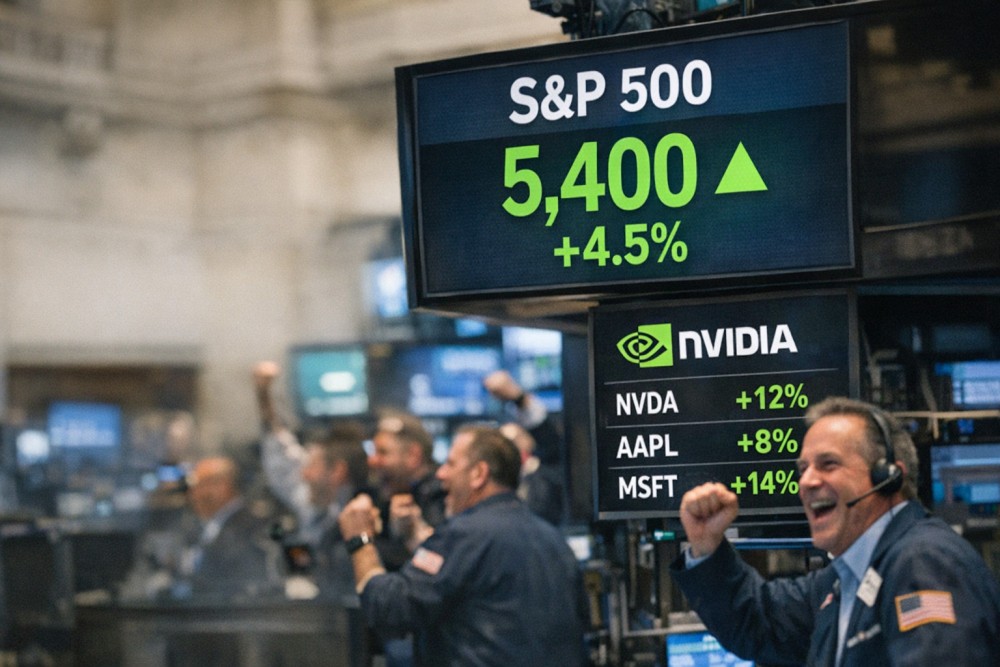
The VIX typically moves inversely to the stock market. When stock prices fall sharply, the volatility index often rises.
This happens because investors rush to buy protective options during market downturns. Conversely, when markets rally steadily, demand for protective options declines, causing the VIX to fall.
This inverse relationship explains why the VIX is frequently called the market fear gauge. Periods of strong market optimism usually coincide with low volatility levels, while market stress often triggers sharp VIX spikes.
Conclusion
The Volatility Index (VIX) measures expected market volatility based on S&P 500 options pricing. As a forward-looking indicator, it provides insight into investor expectations about future market risk.
Because the VIX tends to rise during market stress and fall during stable conditions, it has become a widely used gauge of investor sentiment.
While the volatility index does not predict market direction, it helps investors understand the level of uncertainty in financial markets.
FAQ
What is the VIX index?
The VIX index measures expected volatility in the S&P 500 over the next 30 days based on options prices.
Why is the VIX called the fear index?
Because it tends to rise when investors become fearful and seek protection during market declines.
What does a high VIX mean?
A high VIX indicates higher expected market volatility and increased investor uncertainty.
References
-
CBOE Global Markets, CBOE Volatility Index (VIX) Overview, 2026.
-
CNBC, VIX Volatility Index Definition and Explanation, 2026.