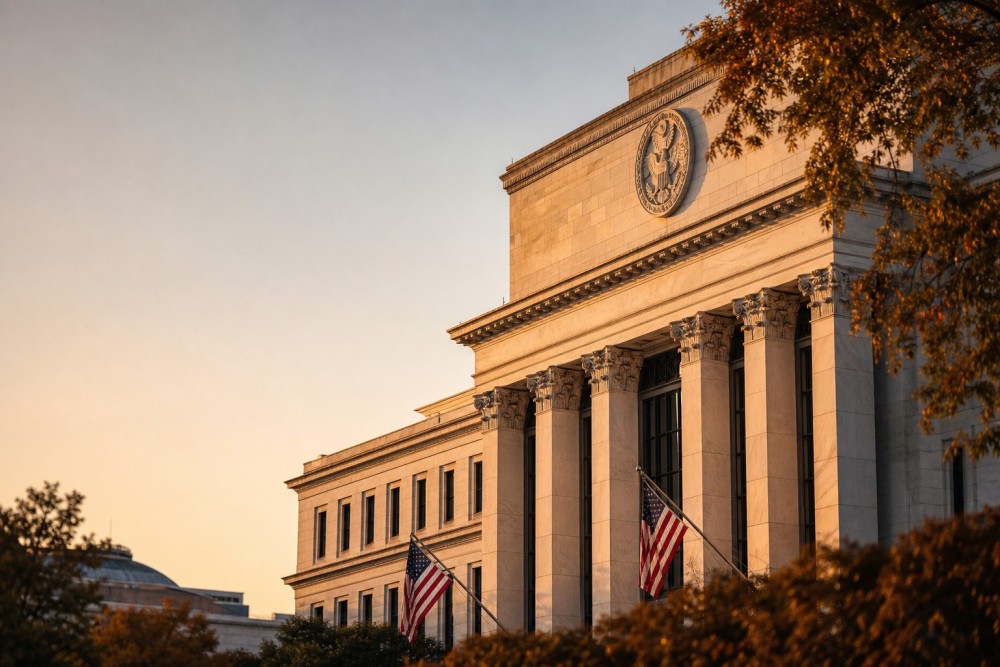
Kevin Warsh was sworn in as the 17th Federal Reserve Chair on May 15, 2026, after a 54-45 Senate vote that ranks as the closest confirmation in the modern era. Jerome Powell exits the chair seat but stays on the board.
Markets now turn to Wednesday, May 20. That afternoon the Federal Reserve will release the minutes from Powell's final FOMC meeting on April 29, the meeting that produced four dissents, the most since October 1992.
The story is not Powell leaving. It is which factions Warsh inherits, and how each one reads the same inflation data differently. Wednesday's release will draw that picture.
Warsh's Hawkish-vs-Dovish Profile and Why Markets Are Split
Warsh is not easy to label. He has spent two years calling for a smaller Fed balance sheet and a return to interest rates as the primary tool. That reads hawkish. On rates, his record is less clean.
He has criticized the 2% inflation target and favors a trimmed-mean gauge over core PCE. That choice can flatter or punish the data depending on the month. Inflation hit 3.8% in April, and futures imply less than a 3% chance of a cut by year-end, with some desks pricing a hike by September.
The balance sheet signal
A faster runoff of the $6.7 trillion balance sheet is the cleanest hawkish lever Warsh can pull without touching the policy rate. Long-duration Treasuries take the first hit if that signal arrives. Holders of TLT should watch the minutes for any mention of accelerated quantitative tightening among the four dissenters.
The communication shift
Warsh has hinted at fewer press conferences and the end of the dot plot. The minutes will tell us how much support that idea already has inside the committee, which would let Warsh move faster after his June 16-17 debut.
What to Watch in the Final Powell-Era Minutes
The April 29 meeting held rates at 3.50% to 3.75%. Governor Stephen Miran wanted a 25 basis point cut. Cleveland's Beth Hammack, Minneapolis's Neel Kashkari, and Dallas's Lorie Logan supported the hold but rejected the easing bias.
That split tells you the committee is not arguing about whether to cut. It is arguing about which direction the next move points. The minutes will show how each camp framed the Iran-related oil shock and the April CPI print.
The inflation language
Look for the word "transitory" or any variant in the outlook section. If it appears, the dovish camp is winning the narrative on energy. If staff describe inflation expectations as "at risk of de-anchoring," the hawkish dissenters carried that section.
The risk-management framing
Powell's FOMC has used balanced wording for two years. A shift to "upside risks predominate" would mark a hawkish pivot baked in before Warsh arrived, and front-end yields would reprice within minutes of release.
Rate-Path Scenarios Under the New Chair: Cut, Hold, or Hike
Three paths frame the rest of 2026. None of them are priced fully into equities yet, which is why the minutes matter for positioning.
Path one: extended hold
This is the base case. Warsh holds at 3.50% to 3.75% through year-end, runs off the balance sheet faster, and waits for inflation to drift below 3% before discussing cuts. Bond volatility falls. Equities trade range-bound with leadership rotating into quality and dividends.
Path two: one cut by December
Energy eases, core inflation cooperates, and Miran's dissent gives Warsh cover to deliver one 25 basis point cut. Small caps and rate-sensitive sectors lead. The S&P 500 takes out its April high.
Path three: a hike by September
The tail risk. If oil stays above $95 and CPI prints above 4% for two straight months, the hawkish dissenters get their pivot. The dollar surges, long bonds reprice, and high-multiple growth stocks suffer the most.
Sector Winners and Losers Across Each Path
Each scenario sorts the market differently. Position the watchlist before the minutes hit, not after the headlines settle.
Under the extended hold, value beats growth and dividends matter. Financials benefit from a steep yield curve. XLF outperforms tech if net interest margins stay wide.
Under the cut scenario, small caps and regional banks lead. IWM and KRE have lagged the S&P 500 by double digits this year. A confirmed cut path closes that gap fast.
Under the hike scenario, energy and short-duration cash beat almost everything. Long bonds, REITs, and unprofitable growth take the worst hit. The 2022 playbook reruns in compressed form.
Conclusion
May 20 will not change the policy rate. It will change the story. The minutes are a window into how four dissenters argued with seven holders, and the language will set the tone for Warsh's first six weeks.
Warsh will not speak publicly on policy until the June 16-17 meeting. That gives traders four weeks to position around the dissent map the minutes draw.
Track the Fed transition and rate-sensitive ETFs in one place with Gotrade. Open an account, fund in minutes, and trade fractional shares of US equities and sector funds from anywhere.
FAQ
When are the May 2026 FOMC minutes released?
The minutes from the April 29 FOMC meeting will be released on Wednesday, May 20, 2026, at 2:00 PM Eastern Time.
Is Kevin Warsh hawkish or dovish?
Warsh is hawkish on the balance sheet but flexible on rates, favoring trimmed-mean inflation measures that can read either way depending on the month.
When is Kevin Warsh's first FOMC meeting as Chair?
His first meeting leading the FOMC is scheduled for June 16-17, 2026, with the policy decision and press conference on June 17.
How many Fed officials dissented at the April 29 meeting?
Four officials dissented, the highest count since October 1992, split between one calling for a cut and three rejecting the statement's easing bias.