If you invest in ETFs or follow the stock market, you interact with indexes all the time, even if you do not realize it. Indexes sit quietly behind many popular investment products and are a key reason why passive investing has become so widely used.
An index helps investors understand how a group of stocks is performing as a whole. It provides a reference point for market performance and acts as the foundation for index funds and ETFs.
This guide explains what an index is, how indexes are built, and why they matter to investors.
What Is an Index?
An index is a benchmark that tracks the performance of a specific group of assets, such as stocks or bonds.
In simple terms, an index measures how a selected basket of securities moves over time.
When people say “the market is up today,” they are usually referring to a major index, not every individual stock. The index acts as a summary of market performance.
What is an index in easy term:
It is a scorecard that shows how a group of investments is performing.
Indexes do not involve direct investing by themselves. You cannot buy an index directly. Instead, you invest in products like ETFs or index funds that are designed to follow an index.
How Are Indexes Built?
Indexes follow specific rules that determine which assets are included and how they are weighted.
1. Selection rules
Each index has criteria for inclusion. These rules may consider factors such as:
-
Company size
-
Industry classification
-
Listing location
Only companies that meet the criteria are included in the index.
2. Weighting method
Indexes use different weighting methods to decide how much influence each stock has on the index.
Common approaches include:
-
Market capitalization weighting, where larger companies have more influence
-
Price weighting, where higher priced stocks have more influence
-
Equal weighting, where each stock contributes equally
The weighting method affects how the index moves when individual stocks rise or fall.
3. Rebalancing and updates
Indexes are reviewed and updated periodically. Companies can be added or removed, and weights can change to reflect new market conditions.
This process helps keep the index aligned with its intended purpose.
Popular Index Examples
S&P 500
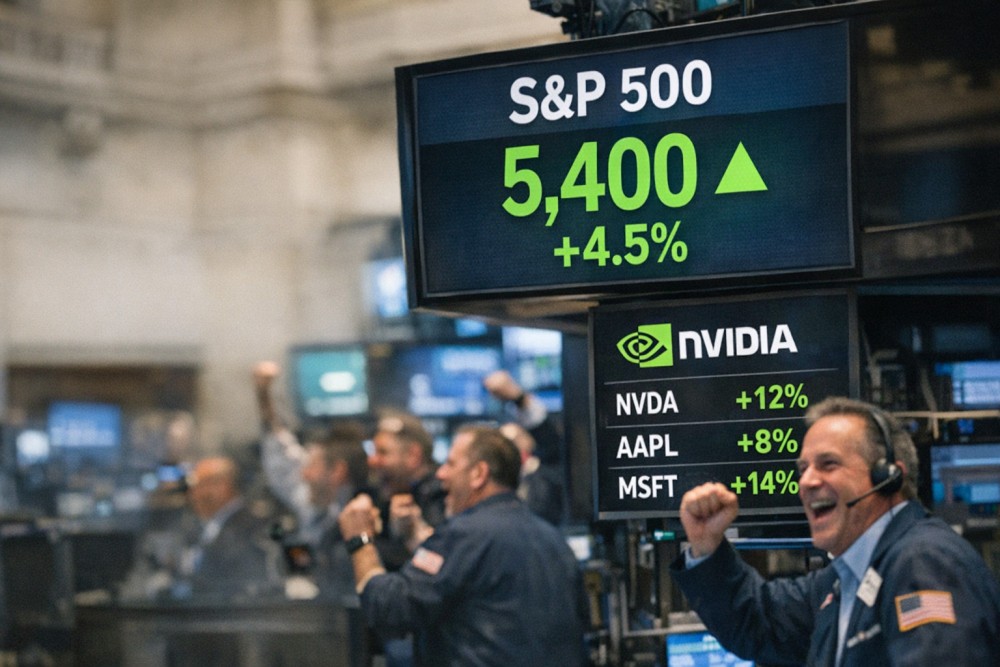
The S&P 500 tracks 500 of the largest publicly listed companies in the United States. It is often used as a broad measure of the US stock market.
Nasdaq 100
The Nasdaq 100 includes 100 of the largest non financial companies listed on the Nasdaq exchange. It is known for its higher exposure to technology and growth oriented stocks.
Dow Jones Industrial Average
The Dow tracks 30 large, well known US companies. It is price weighted, meaning higher priced stocks have a larger impact on index movements.
Each index reflects a different slice of the market and serves a different role for investors.
Why Indexes Matter to Investors
They provide market benchmarks
Indexes help investors evaluate performance. Comparing a portfolio to an index shows whether it is keeping up with, beating, or lagging the broader market.
They enable passive investing
Index funds and ETFs are built to track indexes. This allows investors to gain diversified exposure without selecting individual stocks.
They support diversification
By following an index, investors gain exposure to many companies at once, which helps spread risk.
They simplify decision making
Indexes reduce the need for constant stock selection and monitoring, which is why many long term investors prefer index based strategies.
Indexes vs ETFs and Index Funds
Indexes, ETFs, and index funds are related but different.
-
An index is a measurement tool
-
An index fund is a mutual fund designed to track an index
-
An ETF is a traded product that often tracks an index and can be bought or sold throughout the trading day
Understanding this distinction helps investors choose the right products for their goals.
Limitations of Indexes
Indexes are useful, but they have limits.
- They reflect average performance, not individual stock outcomes.
- They can become concentrated in certain sectors during market cycles.
- They do not protect against market declines.
This is why some investors combine index investing with other strategies based on their risk tolerance.
Conclusion
An index is a benchmark that tracks the performance of a group of assets. It forms the backbone of ETFs, index funds, and passive investing strategies.
By understanding how indexes work and what they represent, investors can make more informed decisions and better evaluate their own performance.
If you want to start investing using index based strategies, you can explore US index ETFs through the Gotrade app. Fractional shares make it easier to build diversified exposure and invest gradually.
FAQ
What is an index in investing?
An index is a benchmark that tracks the performance of a group of assets, such as stocks or bonds.
Can investors buy an index directly?
No. Investors use ETFs or index funds that are designed to follow an index.
Why are indexes important for passive investing?
Indexes provide the structure that passive funds use to track market performance without active stock selection.
Do indexes change over time?
Yes. Indexes are reviewed and updated to reflect changes in the market.
Reference:
Investopedia, Index Definition, 2026.
S&P Global, What Is An Index, 2026.
Disclaimer
Gotrade is the trading name of Gotrade Securities Inc., which is registered with and supervised by the Labuan Financial Services Authority (LFSA). This content is for educational purposes only and does not constitute financial advice. Always do your own research (DYOR) before investing.