
Gotrade News - Iran war airspace closures and jet-fuel spikes have slashed Air India US route capacity by 77.4% year-over-year. Foreign carriers including Lufthansa, Cathay, and Swiss are absorbing the displaced India-origin demand at record pace.
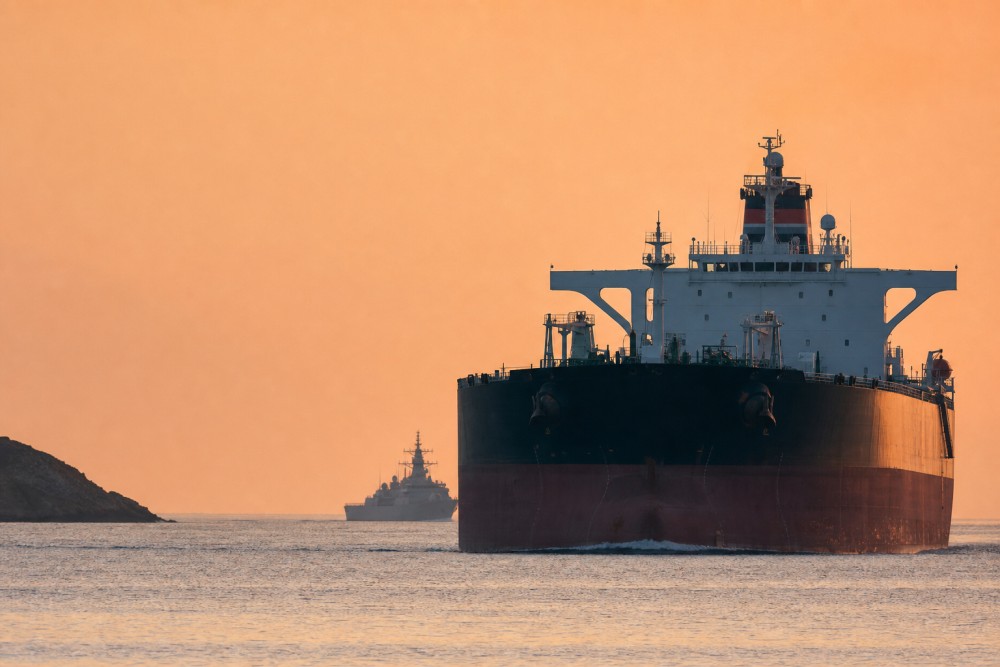
The conflict has graduated from a regional flashpoint to a cross-asset supply-chain shock with energy and defense implications. Chinese tankers stranded in the Strait of Hormuz now give Washington unusual leverage entering the Beijing summit.
Key Takeaways
- Foreign airlines captured 58.4% of India-origin international flights in March-May, up from 51.2% a year earlier.
- Air India group projects record fiscal 2025-26 losses exceeding $2.12 billion as the war disrupts its transformation plan.
- Trump heads to Beijing with a $14 billion Taiwan arms package, Nvidia and Boeing CEOs, and Iran leverage in hand.
Aviation Routes Redrawn By Conflict
According to Reuters via Investing.com, Air India scheduled only 6,404 international flights from India in March-May. That figure marks a 17.5% year-over-year decline driven by closed Iranian and Pakistani airspace corridors.
The US route segment was hit hardest, falling 77.4% year-over-year on rerouted long-haul economics. Detours add hours and fuel burn, making transpacific and polar alternatives more attractive for competing carriers.
Swiss International Air Lines scheduled 247 India flights during the same window, a 39% jump year-over-year. Its flagship Delhi-Zurich service expanded by 76%, illustrating how quickly European hubs absorbed the displaced traffic.
US legacy carriers including American Airlines (AAL) and United Airlines (UAL) stand to capture spillover premium-cabin demand on India-US corridors. Network planners are already reallocating widebody capacity toward the reopened revenue pool.
Bauer of BAA and Partners told Reuters that the war has attacked every leg of Air India's transformation plan. The carrier's CEO Wilson cited a massive rise in jet fuel prices alongside airspace closures as compounding pressure.
Energy Leverage Shapes Beijing Summit
Per Reuters via Investing.com, Secretary Rubio said Chinese ships stuck in the Gulf give Beijing direct self-interest in helping resolve the Iran crisis. The framing turns Tehran from a Chinese asset into a Chinese liability overnight.
A $14 billion Taiwan arms-sales package awaits Trump's signature as he flies to meet Xi this week. The package is widely read as pre-summit leverage stacked alongside the Hormuz tanker exposure.
Trump's delegation includes Nvidia CEO Jensen Huang and the chief executive of Boeing (BA), signaling commercial access as a parallel negotiation track. Chip export licenses and widebody aircraft orders are the obvious carrot-and-stick instruments.
Boeing in particular has years of pent-up Chinese demand for 737 MAX and 787 deliveries. A summit-linked order announcement would lift sentiment across the broader US aerospace supply chain.
Energy markets remain the wildcard if Hormuz tanker traffic deteriorates further. Sustained disruption would pressure refining margins globally and reroute crude flows toward Atlantic Basin suppliers.