
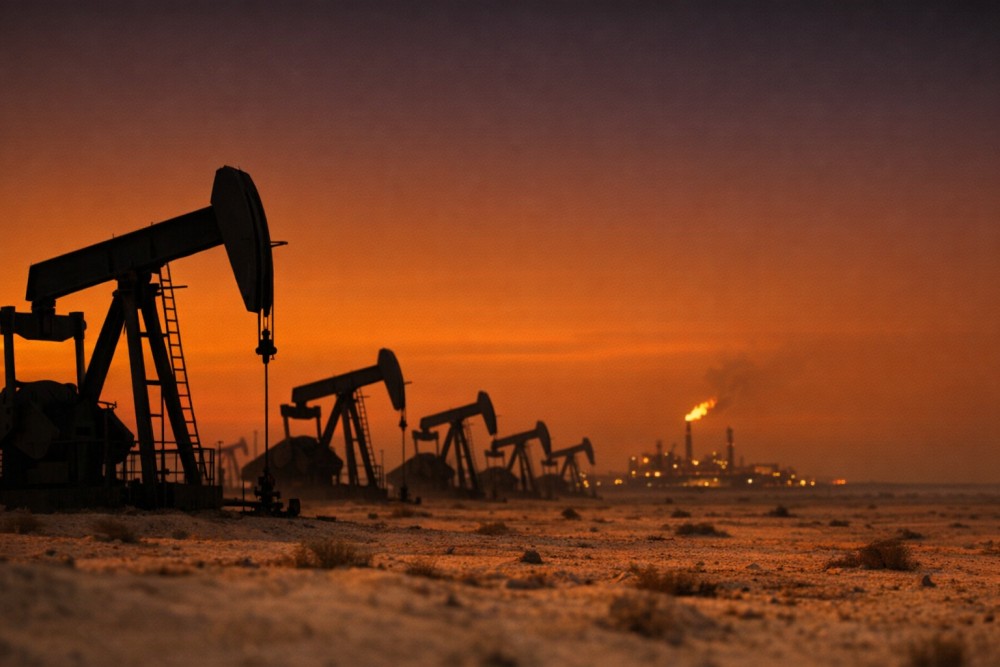
Gotrade News - OPEC's total oil output has plunged 27%, dropping from 28.7 million to 20.8 million barrels per day as conflict disrupts Middle Eastern supply chains. A US Navy blockade of Iranian ports, ordered by President Trump on Monday (14/04), has compounded an already severe supply shock.
Iraq bore the steepest decline, with production collapsing from 4.2 million to just 1.6 million barrels per day, a 61% drop. According to CNBC, Kuwait fell 53%, the UAE dropped 44%, and Saudi Arabia declined 23% from 10.1 million to 7.8 million barrels per day.
Key Takeaways:
- OPEC production fell 27% overall, from 28.7M to 20.8M barrels per day, driven by infrastructure damage and the Hormuz blockade.
- US crude (May delivery) crossed $100/barrel, with Brent June futures peaking at $103.88 before pulling back to $99.37.
- Full production recovery is estimated at three to four months, according to the CEO of Kuwait Petroleum Corp.
Supply Damage and Price Surge
The East-West pipeline was struck during the conflict, cutting an additional 700,000 barrels per day in transport capacity. This infrastructure loss has made a fast supply recovery structurally difficult, even if the political situation stabilizes quickly.
According to MetroTV News, Brent crude (June futures) climbed as high as $103.88 per barrel before correcting to $99.37, still up 4.4% on the day. WTI crude reached a session high of $105.62 per barrel before also pulling back to close above $99.
The Strait of Hormuz carries approximately one-fifth of the world's oil supply and has been under a US Navy blockade since Monday (14/04) at 10:00 ET. Trump stated 34 ships transited the strait on Sunday, describing it as the highest single-day traffic since the blockade began.
Kuwait Petroleum Corp CEO Sheikh Nawaf al-Sabah said full production recovery would take three to four months at minimum. That timeline means global oil markets face a sustained supply deficit that cannot be resolved through short-term diplomatic breakthroughs alone.
Diplomatic Signals and Market Pullback
Prices retreated from their highs after Trump indicated he had been contacted by appropriate parties seeking a deal, according to Bloomberg Technoz. WTI dipped below $98 per barrel on the news, reflecting the market's sensitivity to ceasefire prospects.
Iran's President Masoud Pezeshkian stated that Iran would only engage in future peace talks within established international legal frameworks. Previous negotiations led by US Vice President JD Vance in Pakistan collapsed after 21 hours without an agreement.
Key sticking points included Iran's nuclear activity, the Hormuz reopening, and Tehran's support for proxy groups including Hezbollah. Phase-two ceasefire talks are reportedly under discussion, but no timeline has been confirmed by either party.
Exxon Mobil and Chevron are among the US energy majors that investors are watching closely amid the price volatility. ConocoPhillips and the US Oil ETF (USO) are also widely used benchmarks for tracking directional moves in crude.Middle Eastern governments are reportedly attempting to broker additional ceasefire discussions outside the US-Iran bilateral framework. Without a clear diplomatic path forward, supply disruptions across the region are unlikely to ease meaningfully before Q3 2026.
Sources:
- OPEC Produksi Minyak Timur Tengah Anjlok 23,61 Persen - Kompas Money
- Wacana Negosiasi Baru AS-Iran Dorong Harga Minyak Turun - Bloomberg Technoz
- Harga Minyak Pangkas Sebagian Besar Kenaikan Usai Trump Blokade Selat Hormuz - Metro TV News