

Gotrade News - Wall Street closed mixed on Monday as the Nasdaq and S&P 500 slipped on surging oil prices and rising Treasury yields. The Dow Jones Industrial Average managed a modest gain, defying the broader pullback in technology and growth shares.
The selloff reflected renewed concern about inflation persistence and higher borrowing costs ahead. Energy strength offered limited offset as investors rotated away from rate-sensitive megacap technology names.
Key Takeaways
- Nasdaq and S&P 500 fell as oil prices and bond yields jumped sharply.
- The Dow eked out a small gain, supported by energy and industrial shares.
- Investors weighed inflation risks against signs of resilient consumer spending.
Index Performance and Market Drivers
According to Kompas, the Nasdaq Composite led declines as technology shares retreated on higher discount-rate fears. The S&P 500 also closed lower, with growth sectors absorbing most of the day's losses.
The Dow Jones Industrial Average finished modestly higher, helped by energy producers and select industrial names. Trading volumes were steady as investors digested fresh macroeconomic signals and corporate guidance.
Broad-market exposure through the SPDR S&P 500 ETF Trust (SPY) tracked the benchmark's softer tone on Monday. Tech-heavy positioning via the Invesco QQQ Trust (QQQ) bore the brunt of the rotation away from rate-sensitive growth.
As reported by Kabar Bursa, blue chips outperformed as defensive positioning gained traction. The split tape highlighted investor caution rather than outright risk-off behavior.
Oil Surge and Yield Spike Pressure Equities
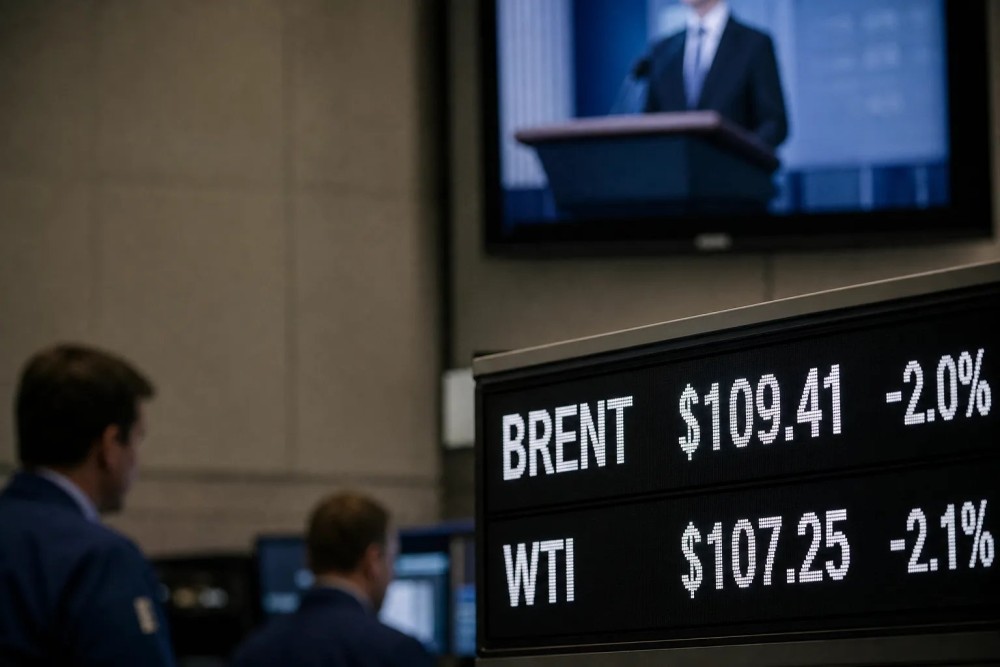
Crude oil prices climbed sharply, reigniting worries that energy costs could keep core inflation sticky. Higher oil typically pressures corporate margins outside the energy sector and crimps consumer discretionary spending.
Per Katadata, the 10-year Treasury yield jumped, tightening financial conditions for borrowers and equity valuations. Rising real rates weigh hardest on long-duration assets like high-multiple technology stocks.
The yield move followed renewed concern about the federal deficit and the supply of new government debt. Traders also reassessed the timing of potential Federal Reserve rate cuts later this year.
Megacap technology names felt the squeeze as investors recalibrated valuation models to higher discount rates. Mega-cap exposure through SPDR Dow Jones Industrial Average ETF (DIA) proved more defensive amid the rotation.
Energy producers rallied alongside crude, providing a counterweight inside the broader indexes. Financials saw mixed action as steeper yields helped net interest margins but raised credit-risk concerns.
Defensive sectors such as utilities and consumer staples drew incremental buying interest. Cyclical names tied to global demand showed mixed performance amid lingering trade and growth uncertainty.
Outlook and Investor Positioning
Market participants are watching upcoming inflation prints and Federal Reserve commentary for direction. Any signal that disinflation has stalled could keep pressure on growth-heavy benchmarks.
Corporate earnings remain a key support, with several megacap reports still ahead this quarter. Forward guidance on capital expenditure and artificial-intelligence demand will be closely scrutinized.
Volatility gauges ticked higher but remained well below stress levels, suggesting orderly repositioning. Options activity skewed toward downside protection in technology and consumer discretionary names.
Investors are increasingly favoring quality balance sheets and durable cash flows in the current backdrop. Strategists expect choppier trading until clearer signals on inflation and policy emerge.