If you have ever wondered why owning a dividend stock on the wrong day means you miss the payout, the answer is the ex-dividend date and the timeline around it. Understanding the dividend timeline explained here is the difference between collecting a payout and watching it land in someone else's account.
Every cash dividend moves through four scheduled dates, and only one of them controls whether you qualify for the payout.
This guide walks through each date, why the ex-dividend date matters most, what happens to the share price, and how to time a purchase for income.
The Four Key Dividend Dates
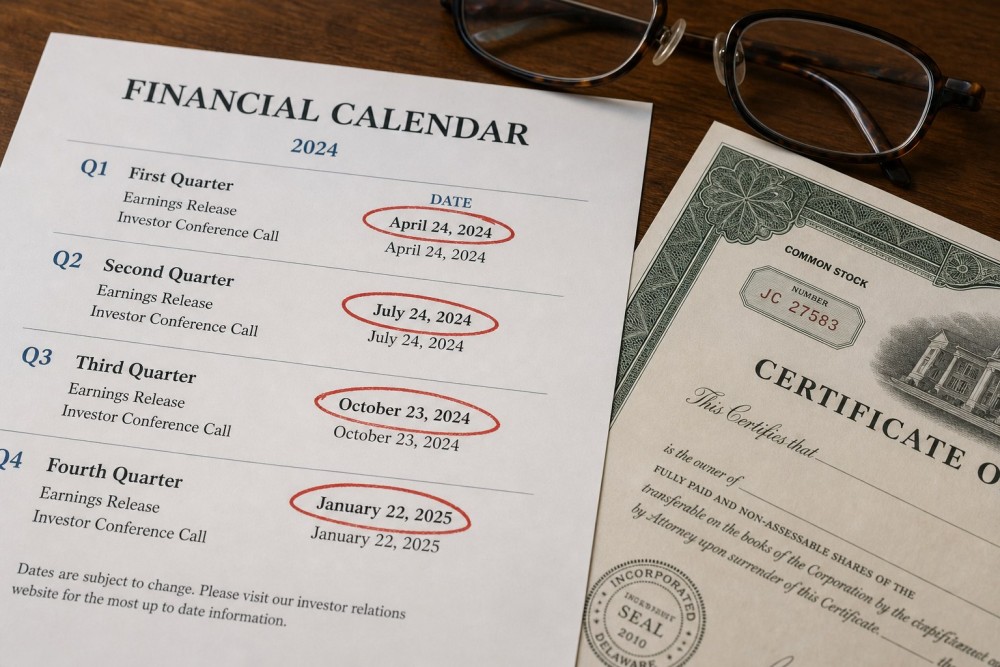
A dividend is not a single event. It is a short calendar the company publishes when it commits to paying shareholders, and knowing each date lets you plan around it.
Declaration and record dates
The declaration date is when the board announces the per-share dividend amount and the schedule. The record date is the cutoff: you must be a shareholder of record at the close of that day to be entitled to the payment. Steady payers like Johnson and Johnson publish these dates every quarter, so income investors can map them out in advance.
Ex-dividend and payment dates
The ex-dividend date is when the stock starts trading without the right to the upcoming dividend. The payment date is when the cash hits your account, usually a few weeks after the record date. According to Fidelity, the downward adjustment in the stock price takes place on the ex-dividend date, not the payment date, which is why timing the buy matters more than waiting for the cash.
Why the Ex-Dividend Date Matters Most
Of the four dates, the ex-dividend date is the only one that decides eligibility for a buyer. To receive the dividend, you must own the stock before the ex-dividend date. Buy on or after it, and the seller keeps the payout even though the shares are yours.
Settlement is the reason. US trades settle on a T+1 basis, one business day after the transaction, so your purchase must be placed at least one business day ahead to land on the books in time. Under T+1, the ex-dividend date and the record date now typically fall on the same day. For the next dividend from a telecom payer like Verizon, the rule is simple: own the shares before the market opens on the ex-date.
Trade US stocks from $1 with fractional shares so you can build a dividend basket gradually instead of buying a full share at once, and time each entry around the ex-dividend dates that matter to you.
What Happens to the Share Price
A dividend is not money created out of thin air. It is cash leaving the company's balance sheet, so the market adjusts for it. On the morning of the ex-dividend date, the share price typically opens lower by roughly the dividend amount.
The logic is mechanical. If a stock trades at $60 and pays a $0.50 dividend, a buyer on the ex-date no longer receives that $0.50, so the shares are worth about $59.50 to them. A consumer-staples name like Coca-Cola sees this small step-down every quarter. The open rarely matches the dividend to the cent, since overnight market moves shift the price too, but the adjustment is real and predictable in direction.
How to Time Dividend Purchases
This price drop is exactly why chasing a payout the day before the ex-date rarely works. Two factors usually cancel out the income.
The dividend capture trap
Buying just before the ex-date and selling right after, a tactic called dividend capture, looks like free money but seldom is. According to Charles Schwab, the dividend you collect is largely offset by the automatic price decline on the ex-date, so the net benefit is close to zero before costs. Add taxes, and the math can turn negative.
Taxes and transaction costs
The dividend is taxable income in most non-retirement accounts, reported whether or not you reinvest it. Trading costs and the risk that the price keeps falling after the ex-date both eat into any edge. For most investors, a buy-and-hold approach to quality payers beats gaming the calendar, and reinvesting payouts compounds the position over time, as our explainer on dividend reinvestment walks through.
Conclusion
The dividend timeline is a four-step calendar: declaration, ex-dividend, record, and payment. The ex-dividend date is the one that decides whether you qualify, and to receive a payout you must own the stock before that date settles under T+1.
Remember that the share price typically drops by roughly the dividend amount on the ex-date, which is why dividend capture rarely produces free money once the price adjustment and taxes are counted. Holding quality dividend payers through the cycle is the more reliable path to income.
Trade US stocks from $1 with fractional shares so you can start a dividend portfolio in small, deliberate steps and add to it around the ex-dates that fit your plan.
FAQ
When do I have to buy a stock to receive its dividend?
You must own the stock before the ex-dividend date, which under T+1 settlement means buying at least one business day ahead.
Why does the share price fall on the ex-dividend date?
The price drops by roughly the dividend amount because new buyers no longer receive that payout.
What is the difference between the record date and the payment date?
The record date sets who qualifies, while the payment date is when the cash actually arrives in your account.
Does the dividend capture strategy make money?
It rarely does, because the price drop on the ex-date and the taxes on the dividend usually cancel out the income.