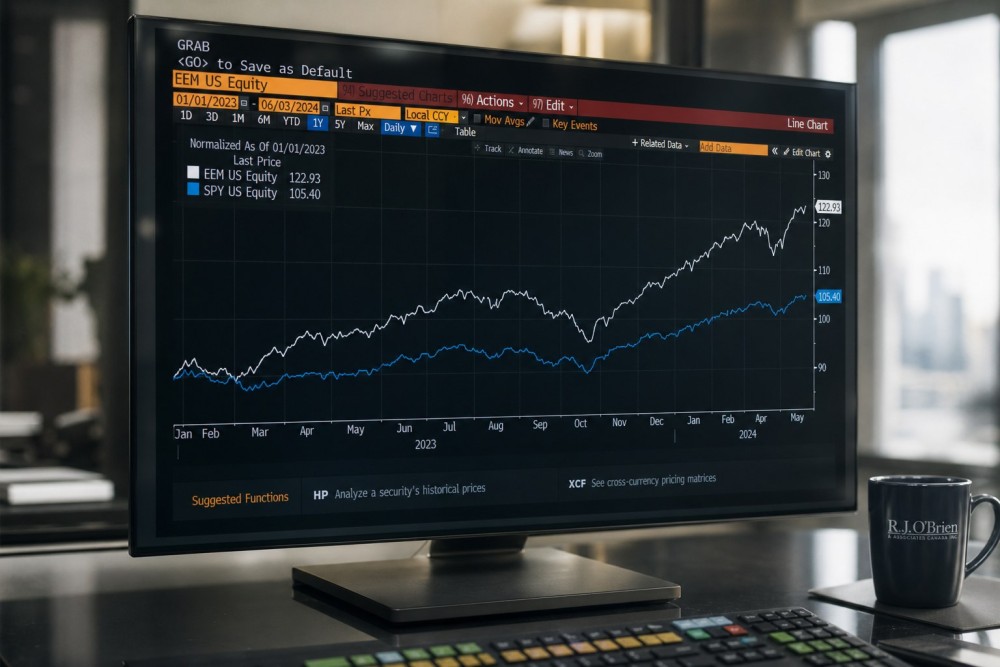
Historical volatility measures how much an asset’s price has fluctuated over a specific period in the past. The historical volatility meaning, also known as realized volatility, refers to the actual observed price movements of an asset rather than expected future volatility.
Volatility is a key concept in trading and risk management. By analyzing historical price fluctuations, investors can better understand how risky or stable an asset has been.
This information helps traders evaluate potential price behavior and adjust their strategies accordingly.
What Is Historical Volatility?
Historical volatility represents the degree of price variation an asset has experienced over a defined timeframe. It is typically expressed as a percentage that reflects how much prices have moved relative to their average value.
For example:
A stock with high historical volatility tends to experience larger and more frequent price swings.
Historical volatility is commonly calculated using daily returns over periods such as 20 days, 30 days, or 90 days.
Because it focuses on past data, historical volatility describes what has already happened rather than predicting what will happen next.
How Historical Volatility Is Calculated
Historical volatility is calculated by measuring the standard deviation of an asset’s price returns over a specific period. The basic process involves several steps:
-
Calculate the percentage price change between each trading day.
-
Determine the average return over the chosen period.
-
Compute the standard deviation of those returns.
-
Annualize the result to express volatility as a yearly percentage.
The formula can be simplified as:
Historical Volatility = Standard Deviation of Returns × √Time
The result indicates how widely prices have fluctuated relative to the average price movement.
Higher values indicate greater price instability, while lower values indicate more stable price behavior.
Difference Between Historical and Implied Volatility
Historical volatility is often compared with implied volatility, another widely used market metric.
| Feature |
Historical Volatility |
Implied Volatility |
| Data source |
Past price movements |
Options market expectations |
| Focus |
Realized volatility |
Expected future volatility |
| Usage |
Risk analysis and trend evaluation |
Options pricing and sentiment |
| Time perspective |
Backward-looking |
Forward-looking |
Historical volatility reflects what actually happened in the market. Implied volatility reflects what traders believe may happen in the future based on options pricing.
Traders often compare both indicators to understand whether market expectations align with past price behavior.
How Traders Use Volatility in Risk Management
Volatility plays an important role in managing trading risk. Assets with higher volatility generally carry greater potential gains but also larger potential losses.
Traders use historical volatility in several ways.
Position sizing
Higher volatility assets may require smaller position sizes to control risk.
Stop-loss placement
Understanding typical price fluctuations helps traders place stop-loss orders at realistic levels.
Strategy selection
Certain trading strategies work better in high-volatility environments, while others perform better when volatility is low. Volatility analysis helps traders align their risk management practices with actual market conditions.
When Volatility Spikes
Volatility can increase suddenly during major market events. Common catalysts for volatility spikes include:
During these periods, uncertainty increases and price movements become larger. Volatility spikes often appear during market corrections or rapid rallies.
Although higher volatility increases risk, it can also create opportunities for traders who specialize in short-term market movements.
Conclusion
Historical volatility measures how much an asset’s price has fluctuated over time based on past market data. By analyzing realized volatility, traders and investors can better understand market risk and adjust strategies accordingly.
Although historical volatility does not predict future price movements, it provides valuable context for evaluating market behavior and managing trading risk.
FAQ
What is historical volatility?
Historical volatility measures how much an asset’s price has fluctuated in the past over a specific period.
What is realized volatility?
Realized volatility is another term for historical volatility, referring to actual observed price movements.
How is historical volatility different from implied volatility?
Historical volatility is based on past price data, while implied volatility reflects market expectations derived from options prices.
References