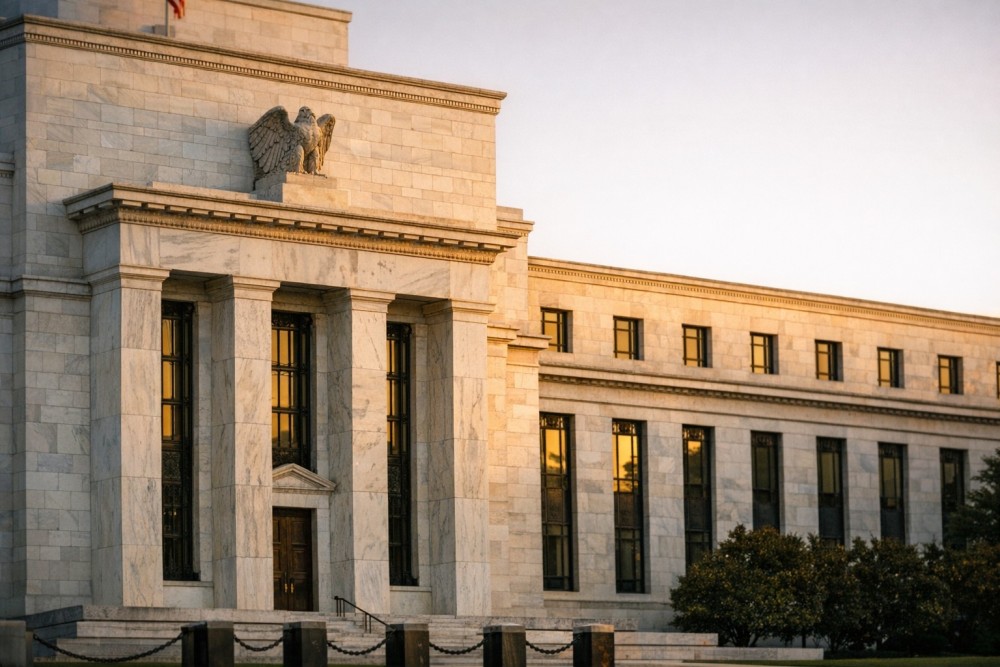
Jerome Powell ends his term as Federal Reserve chair on May 15, 2026. Kevin Warsh, a former Fed governor known for his hawkish stance on inflation, is positioned to succeed him. The transition lands in a divided FOMC and a market still pricing cuts that may not arrive on schedule.
Three scenarios for stocks follow. The goal: preparation, not prediction.
Timeline: Powell Out May 15, Warsh Positioned to Succeed
Powell confirmed at the April 29 FOMC press conference that he will leave the chair role on schedule. He plans to remain on the Board of Governors through his governor term, which runs to 2028.
The Senate Banking Committee advanced Warsh's nomination 13-11 along party lines that same day. According to Al Jazeera, the earliest the full Senate can vote is May 11, 2026, just inside the window before Powell's term ends.
Why the April FOMC matters as a baseline
The committee held the federal funds target at 3.50 to 3.75 percent. The 8-4 vote was the highest dissent count since 1992.
Stephen Miran wanted a 25-basis-point cut. Beth Hammack, Neel Kashkari, and Lorie Logan backed the hold but objected to the easing bias in the statement. Reading the rate hikes vs rate cuts framework helps decode this kind of split decision.
What Warsh signals as a policymaker
Warsh served as a Fed governor from February 2006 to March 2011. According to Wikipedia, he resigned over the Bernanke Fed's second round of quantitative easing, arguing the bond purchases would distort capital and stoke long-run inflation.
His commentary since has stayed consistent: skeptical of balance-sheet expansion, alert to inflation risk.
Scenario 1: Hawkish Hold Through Year-End
Warsh inherits the 3.50 to 3.75 percent range and keeps it. He uses his first two meetings to reset the language, dropping the easing bias.
Front-end yields drift higher. The dollar firms.
Rate-sensitive assets reprice. Long-duration Treasuries via 20+ Year Treasury ETF (TLT) typically struggle.
Quality megacaps with strong cash flows hold up better than unprofitable growth. Microsoft (MSFT) and Apple (AAPL) have weathered prior hawkish surprises through margins and buybacks.
The base case is a choppy summer with valuation compression at the index level. Sector dispersion widens as financials and energy outperform long-duration tech.
Scenario 2: Faster Dovish Pivot Than Expected
Warsh has historically been a hawk. A dovish pivot is less obvious.
If the labor market softens in May or June prints, or if disinflation reaccelerates, Warsh has room to cut. He has argued that AI-driven productivity gains may allow rate relief without fueling inflation.
Want to stress-test your rate exposure before the handover? Open the Fed Transition Scenarios checklist and review your portfolio in five minutes.
The curve steepens. Long-duration assets rally and 20+ Year Treasury ETF (TLT) leads.
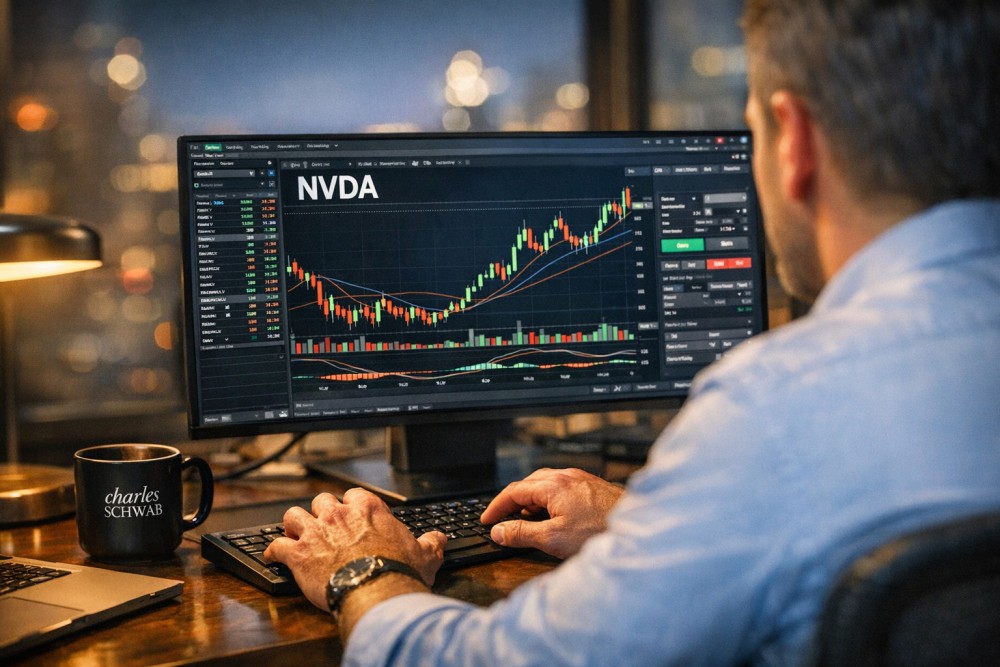
High-multiple growth and AI infrastructure beneficiaries get a tailwind. NVIDIA (NVDA) has outsized leverage to a lower discount rate.
The risk: a faster pivot pulls forward gains and leaves the second half underwhelming.
Scenario 3: Status Quo With a Different Communication Style
The third scenario is the most boring and possibly the most likely. Warsh keeps the current path intact but rebuilds the communication framework around it.
That means cleaner statement language, fewer dot-plot leaks, and a more hawkish tilt in press conferences without a policy change. The federal funds range stays at 3.50 to 3.75 percent through at least July.
For stocks, this is a continuation trade. The market has already digested the April hold. A status-quo Warsh removes the chair-transition risk premium without forcing a rotation.
Quality compounders keep working. Defensive sectors lag. The risk is complacency: any later hawkish surprise hits harder because positioning has rebuilt.
What Investors Should Watch Across All Three
Warsh's first FOMC press conference
The June meeting is the first real read. Watch the language on balance-sheet runoff, the easing bias, and how Warsh handles questions about the four April dissents.
A clear repudiation of the easing bias signals Scenario 1. Acknowledgement of softer data without a cut signals Scenario 3. An actual cut signals Scenario 2.
Front-end Treasury pricing
The two-year yield is the cleanest market vote. A rise of 20 basis points or more in two weeks leans Scenario 1.
A drop of 15 basis points or more leans Scenario 2. A flat range suggests Scenario 3.
Conclusion
Powell's exit on May 15 closes a Fed era that began in 2018. Warsh's likely arrival opens a new one with a different policy bias and a different communication style.
Stocks do not need a single scenario to be right to perform. They need investors positioned for the range of outcomes, with rate-sensitive exposures sized for each path.
Use the handover to review your rate-sensitive positions. The Fed Transition Scenarios checklist walks through duration, sector mix, and cash buffer in a quick portfolio scan.
FAQ
When does Powell officially step down as Fed chair?
Powell's term as Fed chair ends on May 15, 2026, but he plans to stay on the Board of Governors through his governor term, which runs to 2028.
Is Kevin Warsh confirmed as the next Fed chair?
Not yet. The Senate Banking Committee advanced his nomination 13-11 on April 29, 2026, and the full Senate vote is expected on or after May 11, 2026.
Will the Fed cut rates immediately after Warsh takes over?
Markets price some easing into the second half of 2026, but Warsh's hawkish record makes an immediate cut less likely than a status-quo hold.
Which sectors are most sensitive to the Fed transition?
Long-duration Treasuries, high-multiple growth stocks, real estate, and small caps carry the most rate sensitivity, while quality megacaps and energy stay more resilient.