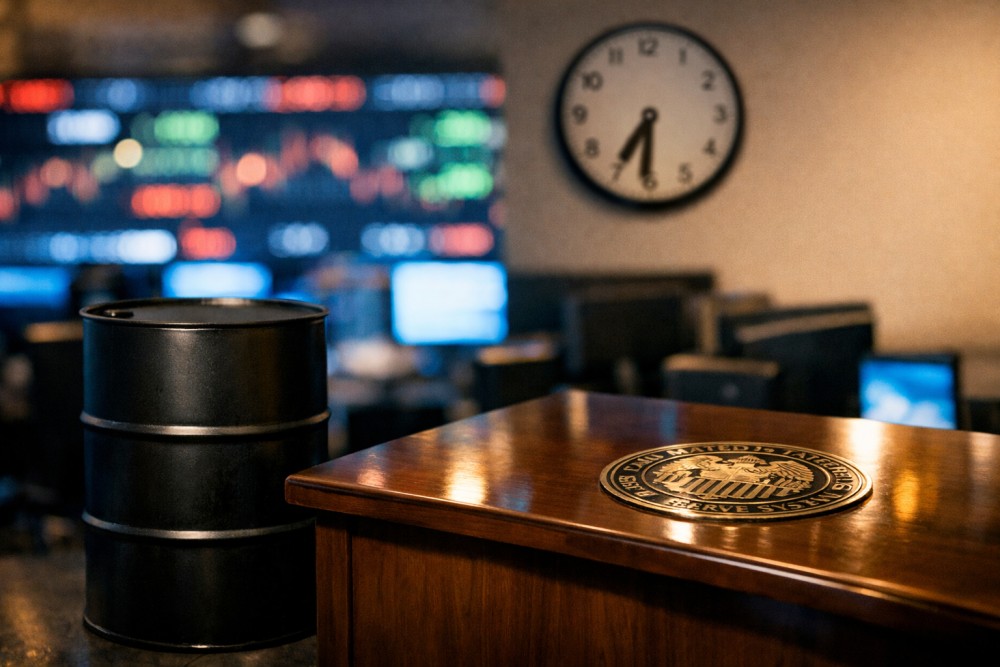


Gotrade News - Crude oil prices surged on Monday (May 11) after President Donald Trump rejected Iran's latest peace proposal. Brent crude jumped 3.5% to US$104.80 per barrel while WTI approached US$99.
The rejection extends a 10-week conflict around the Strait of Hormuz and triggered a fresh energy rally. US stock futures slipped and gold eased as investors weighed risks to inflation and safe-haven flows.
Key Takeaways
- Brent crude jumped 3.5% to roughly US$104.80 per barrel while WTI approached US$99.
- S&P 500 futures declined 0.3% and the dollar firmed against major peers.
- Gold slipped near US$4,689 per ounce after gaining nearly 2% the prior week.
Trump described Iran's response as "completely unacceptable" in a social media post over the weekend, dashing hopes for a quick de-escalation. According to Bloomberg Technoz, Iran had reportedly offered to relocate enriched uranium to a third country but refused to dismantle its nuclear facilities outright.
The Iranian state agency Tasnim disputed parts of that account, leaving the diplomatic picture murky. The Strait of Hormuz, which handles roughly a fifth of global oil flows, has been nearly closed since late February, an interruption the IEA has flagged as the largest supply shock on record.
Oil Market Drivers
Brent's 3.5% surge to US$104.80 per barrel marked its sharpest single-session jump in weeks, with WTI tracking closely toward the US$99 mark. Traders priced in a higher probability that the Hormuz chokepoint will stay constrained well into the summer driving season.
Integrated majors such as Exxon Mobil (XOM) stand to benefit from sustained crude strength via upstream margin expansion. The rally also lifted broader energy proxies including the United States Oil Fund, reflecting renewed positioning by macro funds.
As reported by Bloomberg Technoz, Brent had already surged 2.7% at Monday's market open before extending gains. The move came as approximately 40 countries continue to discuss a multinational mission to secure Hormuz transit routes.
Iran has publicly threatened a military response to any escorted convoys, raising the stakes for negotiators. That standoff anchors the supply-risk premium currently embedded in front-month oil contracts.
Spillover Into US Equities And Gold
S&P 500 futures slipped 0.3% at the open of Asian trading, signaling a cautious tone for Wall Street ahead of the cash session. The decline reflects concern that higher energy costs could reignite inflation just as the Federal Reserve had begun pivoting toward an easier stance.
Broad-market exposure through SPDR S&P 500 ETF (SPY) tends to move inversely with sustained oil shocks once gasoline pass-through hits consumer wallets. Investors are watching whether the dollar's renewed strength will compound the headwind for multinational earnings.
Gold, often viewed as a geopolitical hedge, instead traded lower near US$4,689 per ounce after climbing roughly 2% last week. Per Bloomberg Technoz, profit-taking and a firmer greenback weighed on bullion despite ongoing tensions.
The pullback dragged on gold-linked vehicles such as SPDR Gold Shares (GLD), which had hit consecutive record highs through early May. Inflation worries tied to crude could still reassert themselves if oil holds above US$100 for an extended period.
Bloomberg News reporter Matthew Burgess noted that the dollar strengthened against major currencies at the start of the Asian session. That move typically pressures dollar-denominated commodities while supporting US Treasury demand.
The 10-week conflict has already disrupted shipping insurance markets and tanker routing decisions across the Gulf region. Analysts caution that the longer the impasse drags on, the greater the second-order impact on global growth forecasts.
For now, the energy complex appears to be the clearest beneficiary of the diplomatic breakdown. Equity investors face a more nuanced picture in which inflation re-acceleration could limit upside even as headline indices stabilize.
Traders will closely watch any follow-up statements from the White House or Tehran during US trading hours. A renewed diplomatic channel could quickly unwind today's risk-off positioning across stocks, oil, and gold.
Sources
- Bloomberg Technoz, Oil Prices Surge After Trump Rejects Iran Peace Proposal, 2026.
- Bloomberg Technoz, US Stock Futures Slip After Trump Rejects Iran Peace Proposal, 2026.
- Bloomberg Technoz, Gold Prices Slip After Trump Rejects Iran Peace Proposal, 2026.