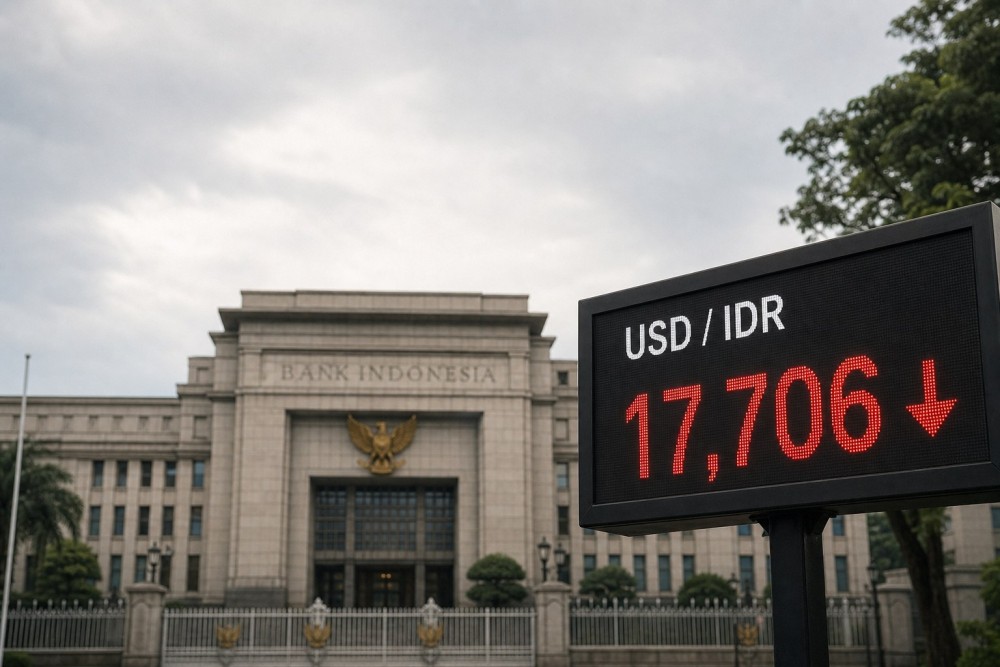

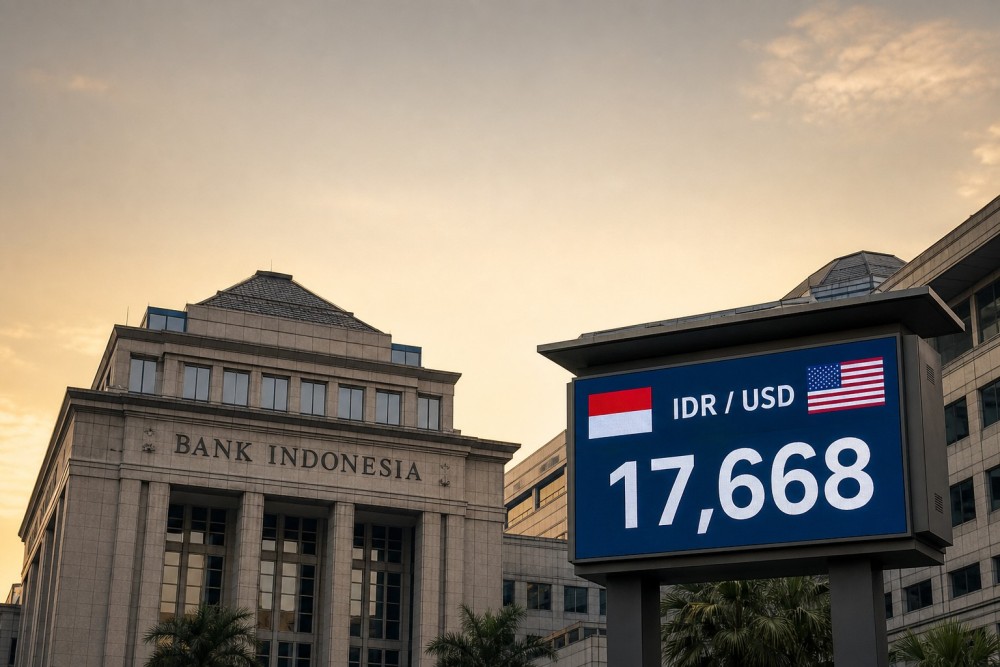
Gotrade News - The Indonesian rupiah breached 17,600 per US dollar on Monday, hitting a fresh historic low. Markets immediately began speculating that Bank Indonesia may deliver an emergency rate hike.
The slide reflects broad emerging-market currency stress and renewed US dollar strength against Asian peers. Global investors are now watching for safe-haven flows into Treasuries and dollar-denominated assets.
Key Takeaways
- The rupiah pierced 17,600 per USD, prompting traders to price in a possible Bank Indonesia rate hike.
- Analysts warn of capital outflow risk, potential layoffs, and pressure on Indonesian import-heavy sectors.
- Currency stress in Asia tends to lift the US dollar index and support flows into US Treasuries.
Why The Rupiah Cracked 17,600
According to Kompas, the rupiah's slide past 17,600 has triggered fresh speculation that Bank Indonesia will raise its benchmark rate. Traders cited persistent dollar demand and thin local liquidity as immediate catalysts.
The currency has weakened sharply against the greenback over recent sessions. A move of this scale typically forces emerging-market central banks to consider defensive policy tightening.
Bank Indonesia officials have publicly defended the country's macro fundamentals despite the pressure. As reported by Kabar Bursa, the central bank said economic fundamentals remain strong enough to support the rupiah over the medium term.
Officials pointed to controlled inflation, healthy reserves, and steady growth as anchoring factors. Still, market participants are pricing a near-term policy response if the slide continues.
What It Means For Global Investors
Per Kompas, sustained rupiah weakness raises the risk of foreign investor outflows and layoffs at import-dependent firms. Indonesian corporates with dollar liabilities face heavier debt-service costs.
For global retail investors, the immediate channel is the US dollar index. A stronger greenback typically lifts dollar-tracking instruments like the Invesco DB US Dollar Index Bullish Fund (UUP) during emerging-market stress episodes.
Emerging-market equity exposure is the other side of the trade. The Vanguard FTSE Emerging Markets ETF (VWO) tends to underperform when Asian currencies slide and risk appetite cools.
Safe-haven demand often rotates into long-duration US government debt. The iShares 20+ Year Treasury Bond ETF (TLT) historically catches bids when emerging-market currency volatility spikes.
Indonesia is Southeast Asia's largest economy and a bellwether for regional risk sentiment. A disorderly rupiah move can spill over into Malaysian ringgit, Philippine peso, and Thai baht pricing.
The next test will be Bank Indonesia's upcoming policy meeting and any unscheduled intervention signals. Traders are watching for verbal guidance, FX operations, or rate-path adjustments.
Until clarity emerges, dollar strength and EM caution are likely to define the cross-asset backdrop. Global investors should size emerging-market exposure with the rupiah trajectory in mind.